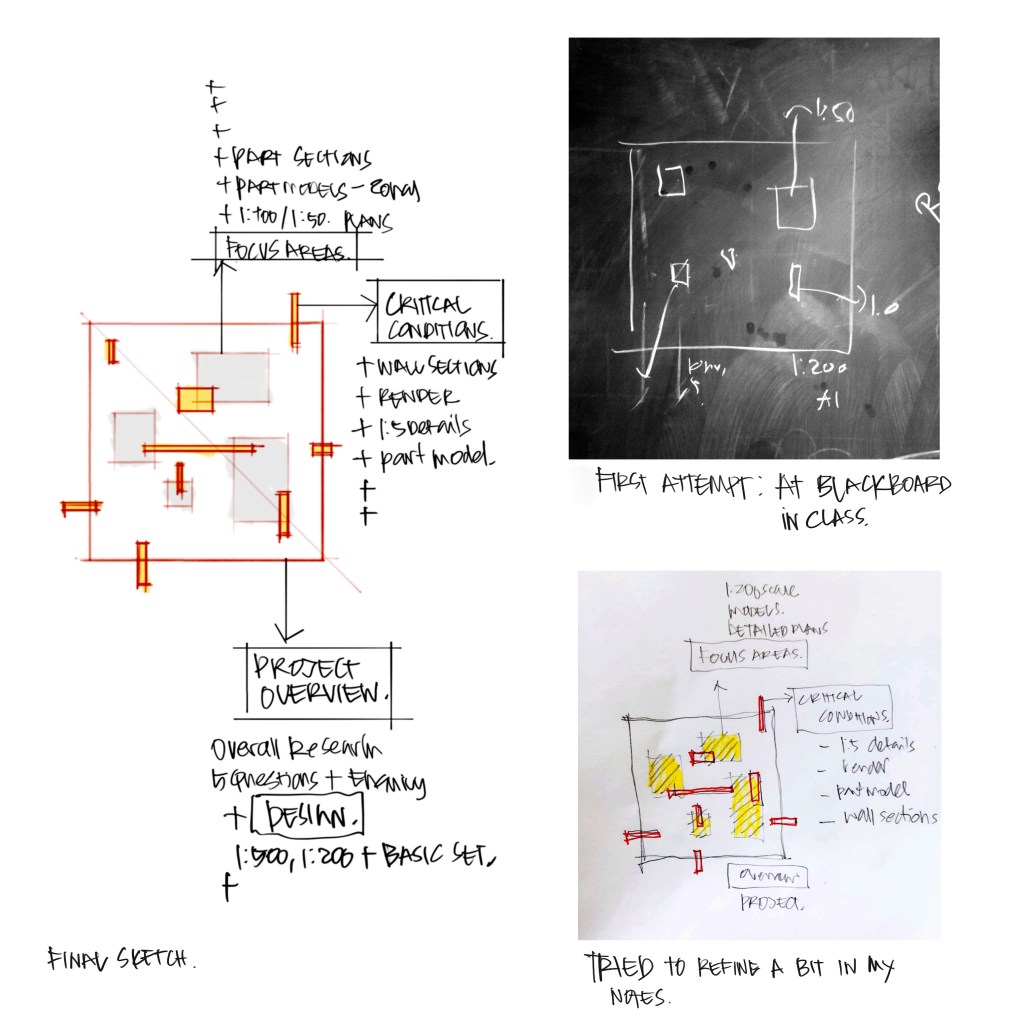
This thesis cycle, I set up a threshold discussion with students before their final submissions. We needed to talk about what was actually important to draw, design, and represent – because thesis work can get really overwhelming when you’re trying to figure out what needs to be documented. So I created a diagram to help them see the bigger picture. It maps out four levels of work and shows how they connect:
Project Overview – Your enquiry, key questions, and overall concept Design Deliverables – The basic set of drawings that communicate your project Focus Areas – Where you go deeper with detailed plans, sections, and strategies Critical Conditions – The moments that need the most resolution: wall sections, key renders, models, post-analytical diagrams
The diagram helps students clarify and reveal the connections between these layers. It shows them that not everything needs the same level of detail, and that their enquiry should guide where they invest their time and effort. Having this visual framework made a real difference. It wasn’t just a reference tool – it became a way for us to have meaningful conversations about strategic choices. Students could see where they were in the process and make informed decisions about what their thesis really needed to communicate.
Drawn and Traced in Morpholio Trace / Text Edited with LLM
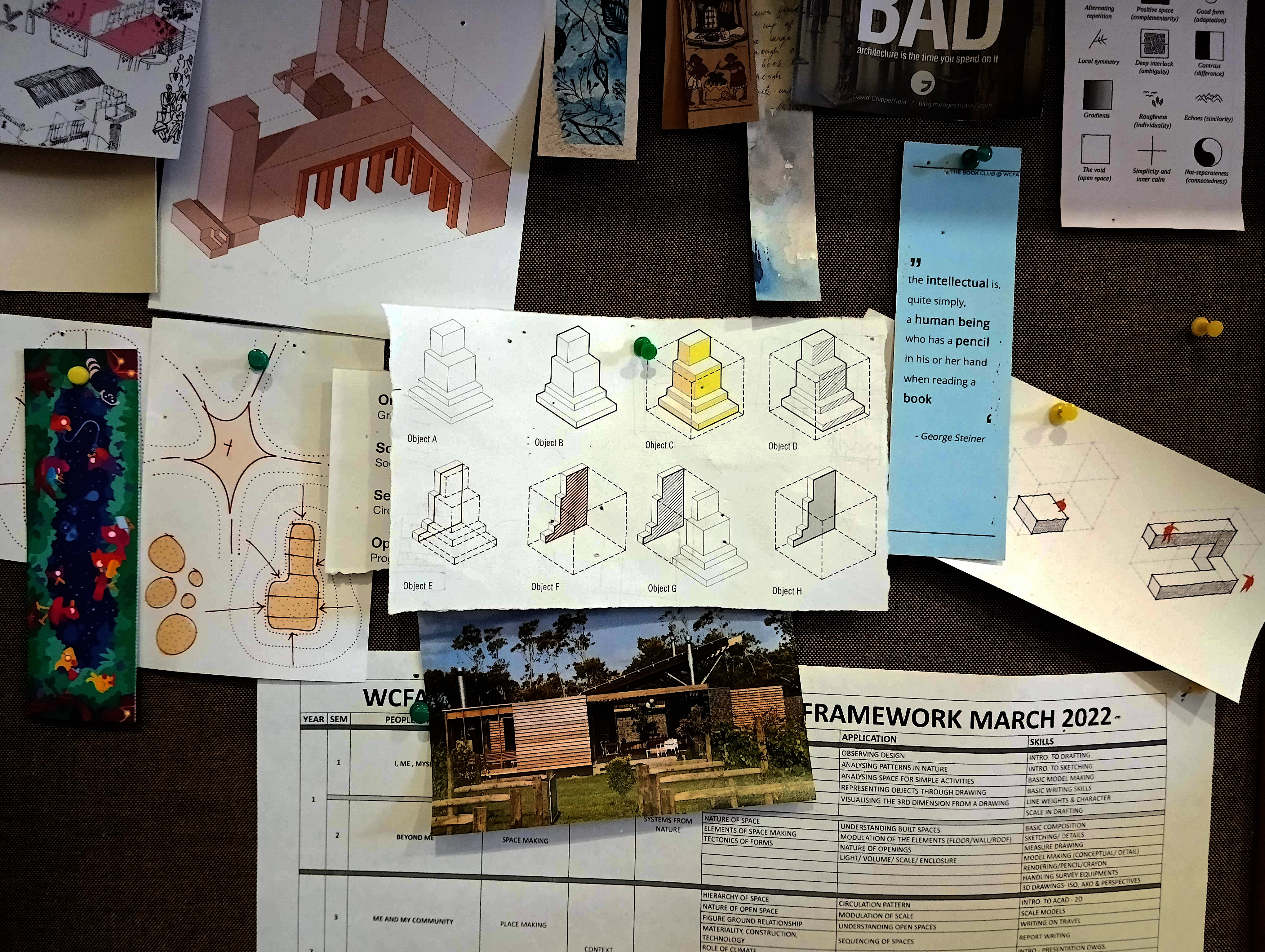
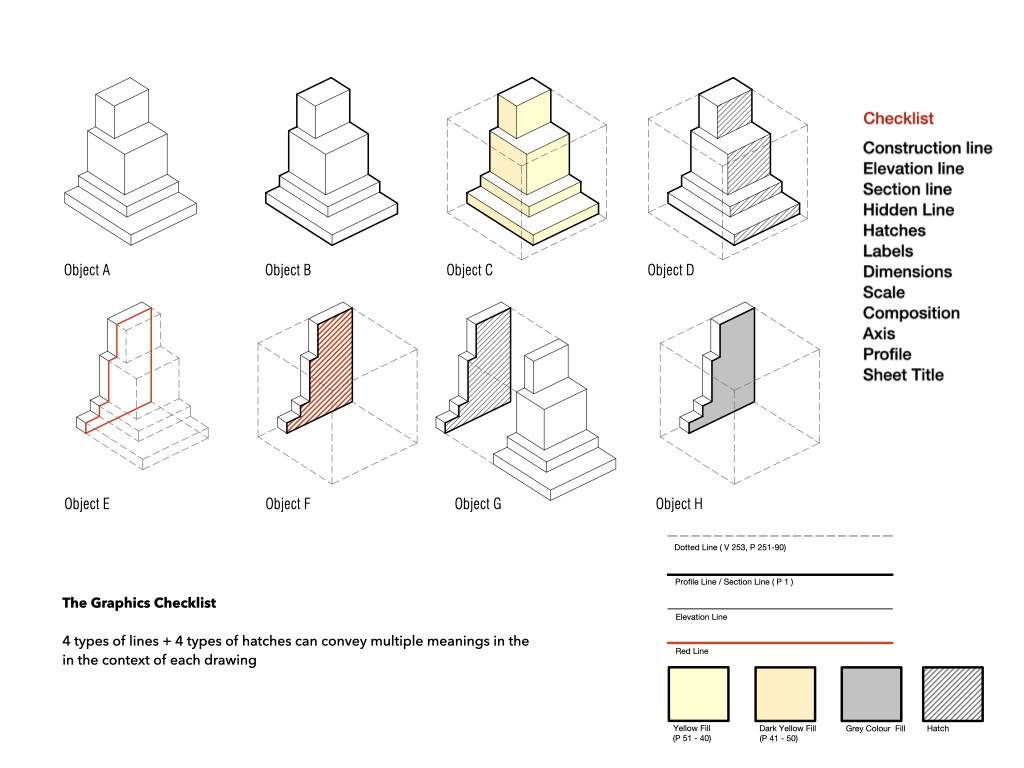
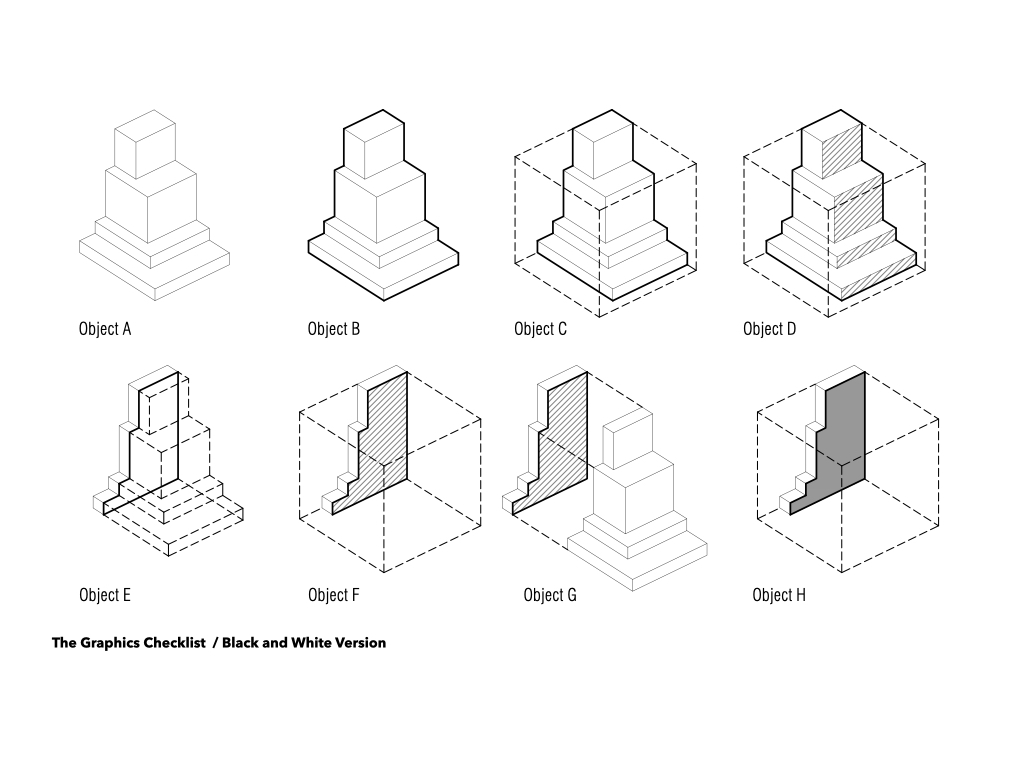
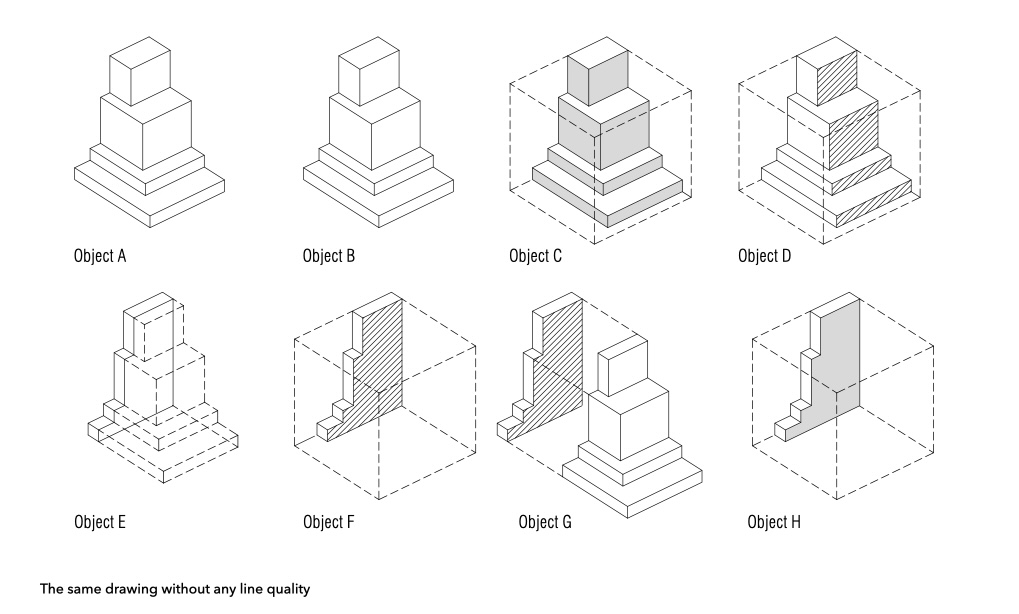
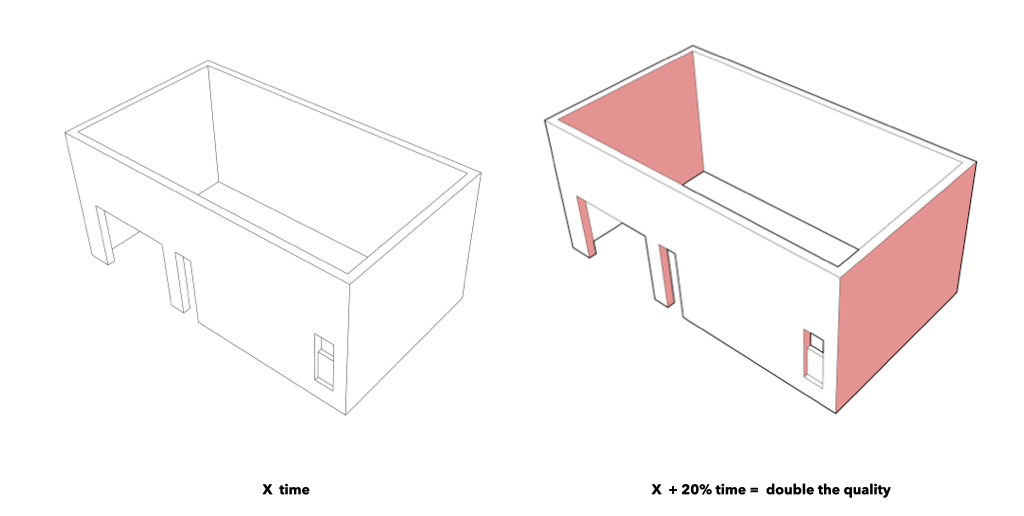
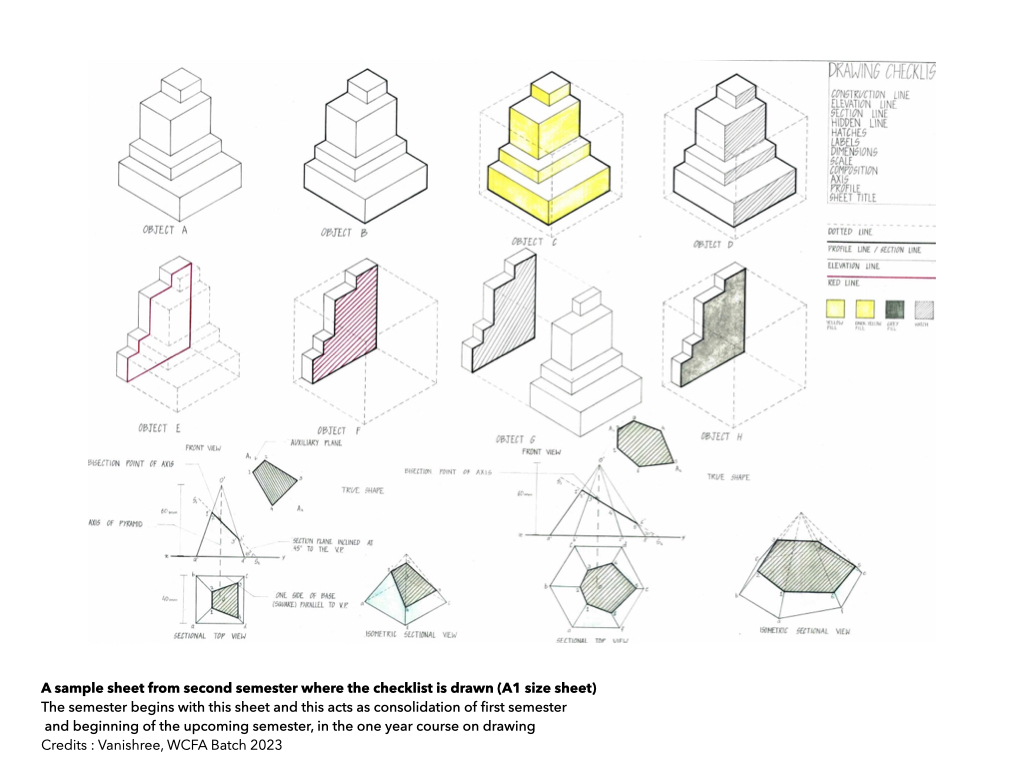
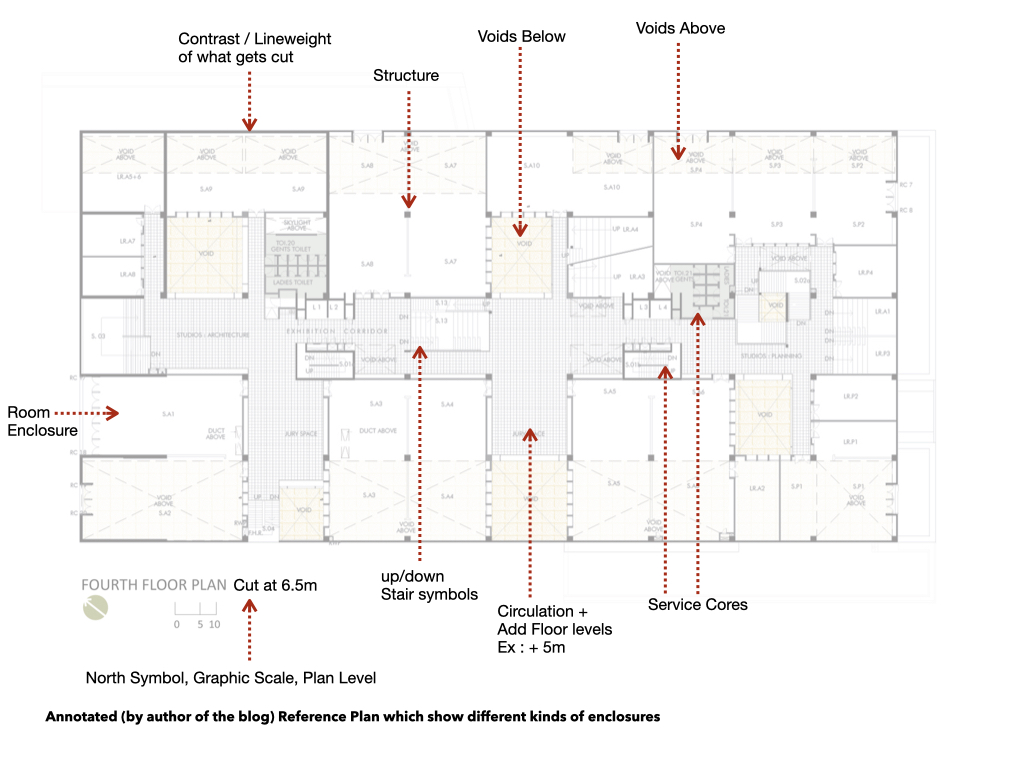
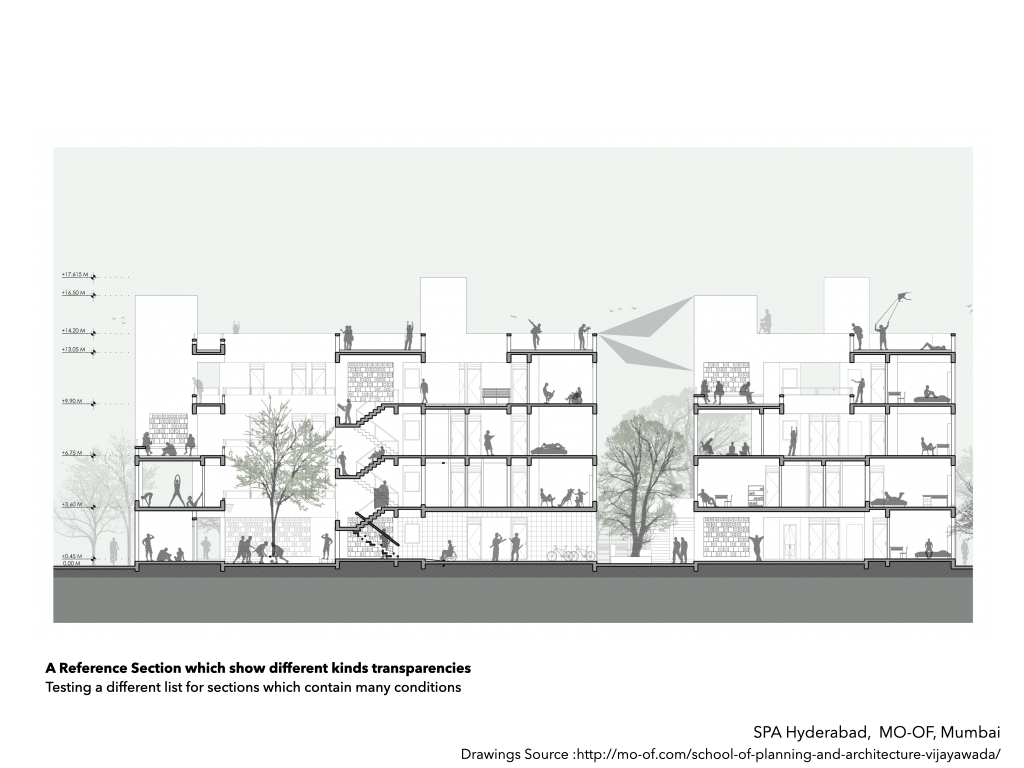
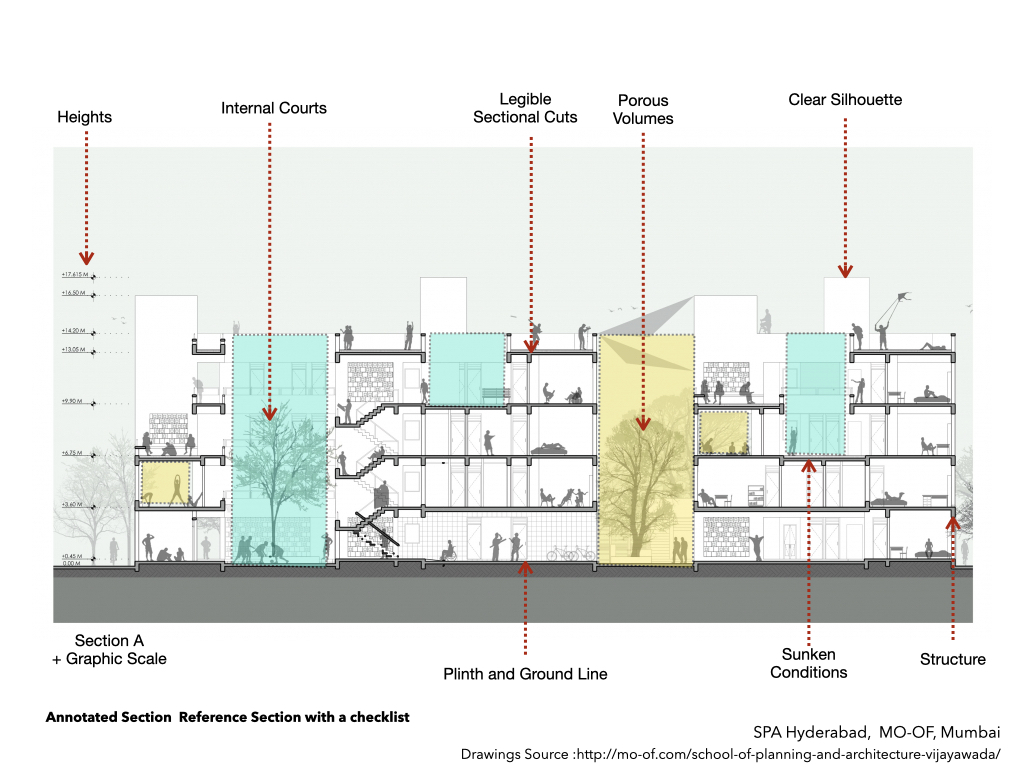
Checklists are the opposite of playlists (which I discussed in a previous blog post). This image above is from my tagboard at college, and the drawing in the center is the ‘Graphics Checklist’. It is a drawing checklist I made many years before and have been using consistently since then. While playlists are playful and flexible, checklists can feel dry, nerdy, and dull. But I appreciate them greatly and use them frequently in my teaching, to the point that my students may grow wary of them. My attachment to checklists likely stems from the frustration of repeatedly teaching basic drafting skills to first-year students and having to reinforce the same principles all the way through their thesis—and often in between.
To streamline this, I introduce the concept of a checklist in their first-semester drafting class and continue to use it as a reference tool whenever I meet them over the next five years. It’s not that these drawing conditions are hard to apply; they’re just easy to forget. Wittgenstein writes “The aspects of things that are most important for us are hidden because of their simplicity and familiarity.” We all rely on checklists, especially when we travel, and in many other contexts. They guide critical processes, from prepping an airplane for takeoff to setting up an operating theater or packing for a trip. Checklists are invaluable.
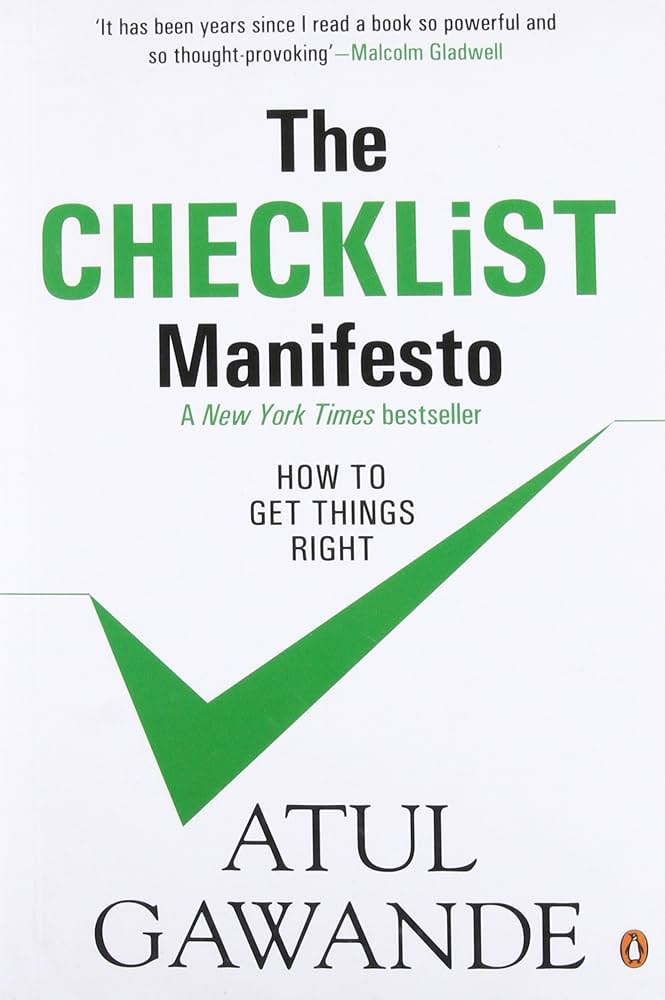
The book The Checklist Manifesto is one of the trigger to consolidate the fragmented rules into a single and visible narrative. This book is a great narrative on the simple need of lists and how they can be life saving (not exaggerating) – It traces the the birth of the checklist from the early plane (bombers), construction industry, etc. In the book , Gawande writes
“Substantial parts of what software designers, financial managers, firefighters, police officers, lawyers, and most certainly clinicians do are now too complex for them to carry out reliably from memory alone.”
“In a complex environment, experts are up against two main difficulties. The first is the fallibility of human memory and attention, especially when it comes to mundane, routine matters that are easily overlooked under the strain of more pressing events. (When you’ve got a patient throwing up and an upset family member asking you what’s going on, it can be easy to forget that you have not checked her pulse.) Faulty memory and distraction are a particular danger in what engineers call all-or-none processes: whether running to the store to buy ingredients for a cake, preparing an airplane for takeoff, or evaluating a sick person in the hospital, if you miss just one key thing, you might as well not have made the effort at all.
A further difficulty, just as insidious, is that people can lull themselves into skipping steps even when they remember them. In complex processes, after all, certain steps don’t always matter. … “This has never been a problem before,” people say. Until one day it is.
Checklists seem to provide protection against such failures. They remind us of the minimum necessary steps and make them explicit. They not only offer the possibility of verification but also instill a kind of discipline of higher performance.”
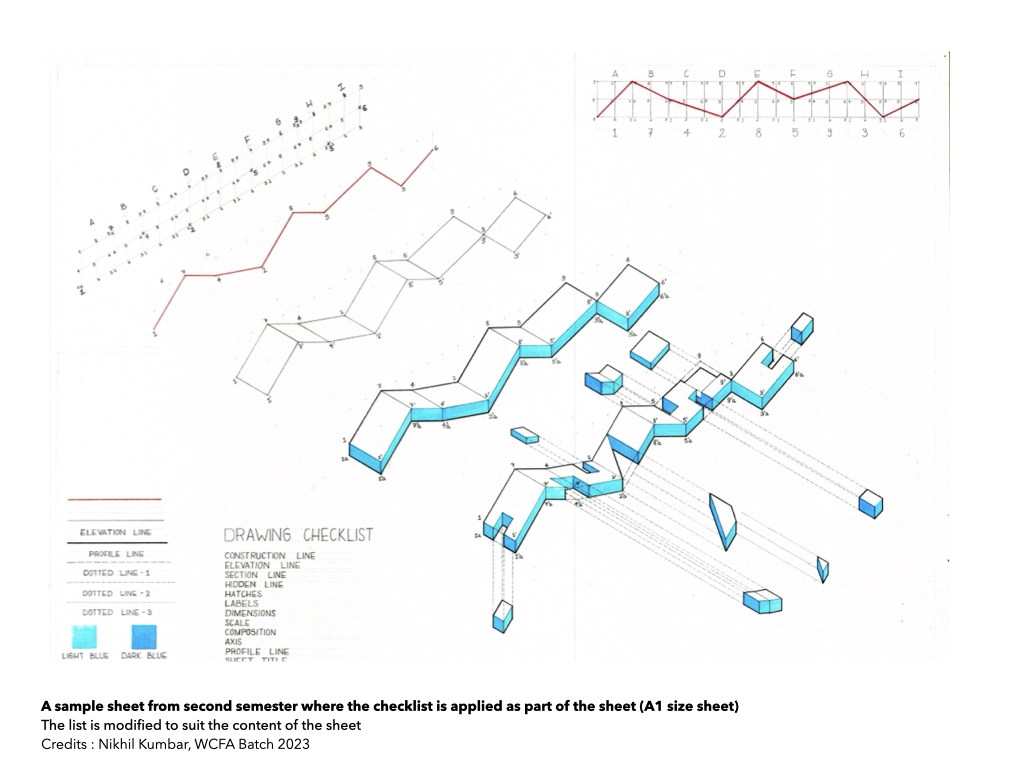
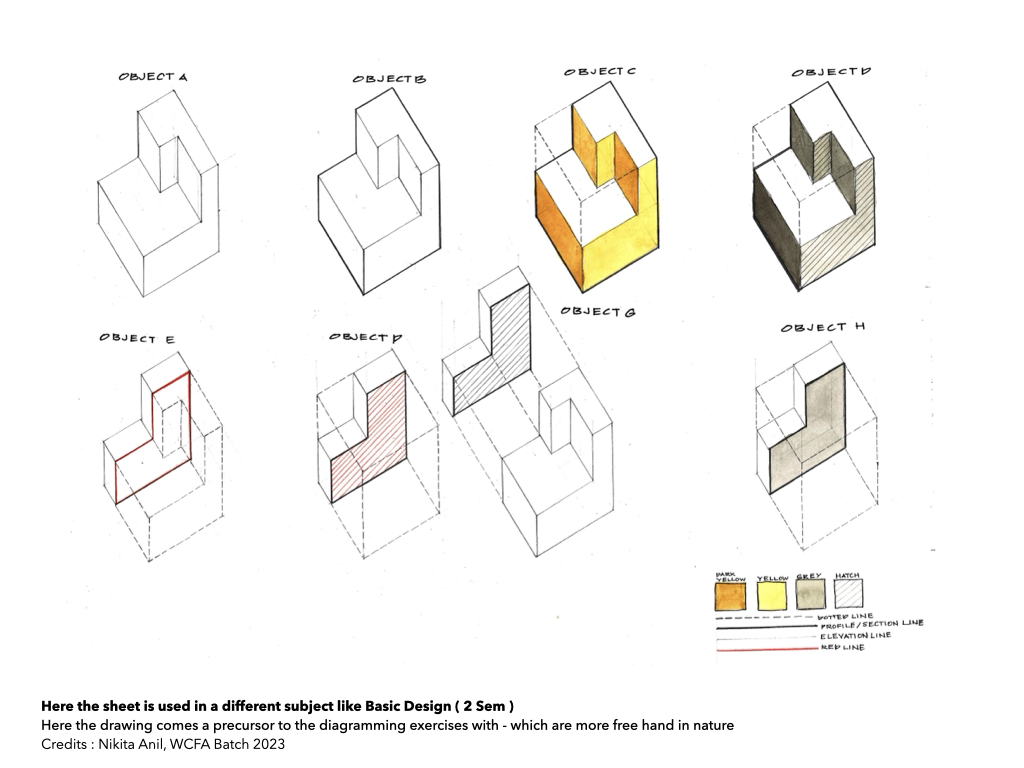
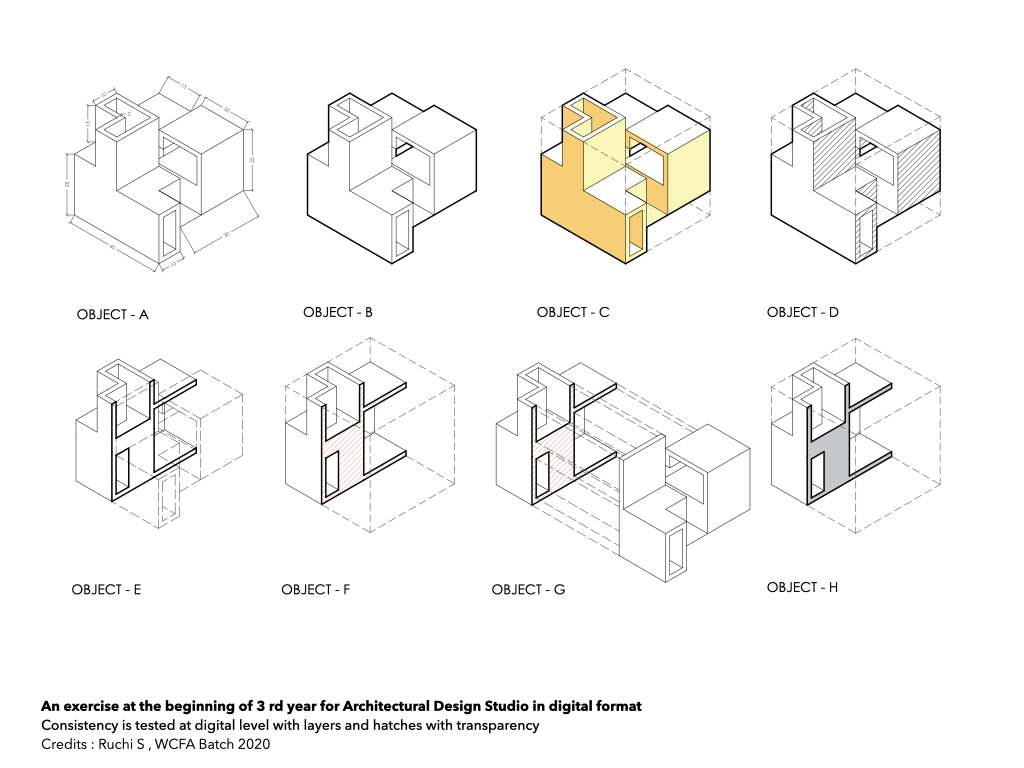
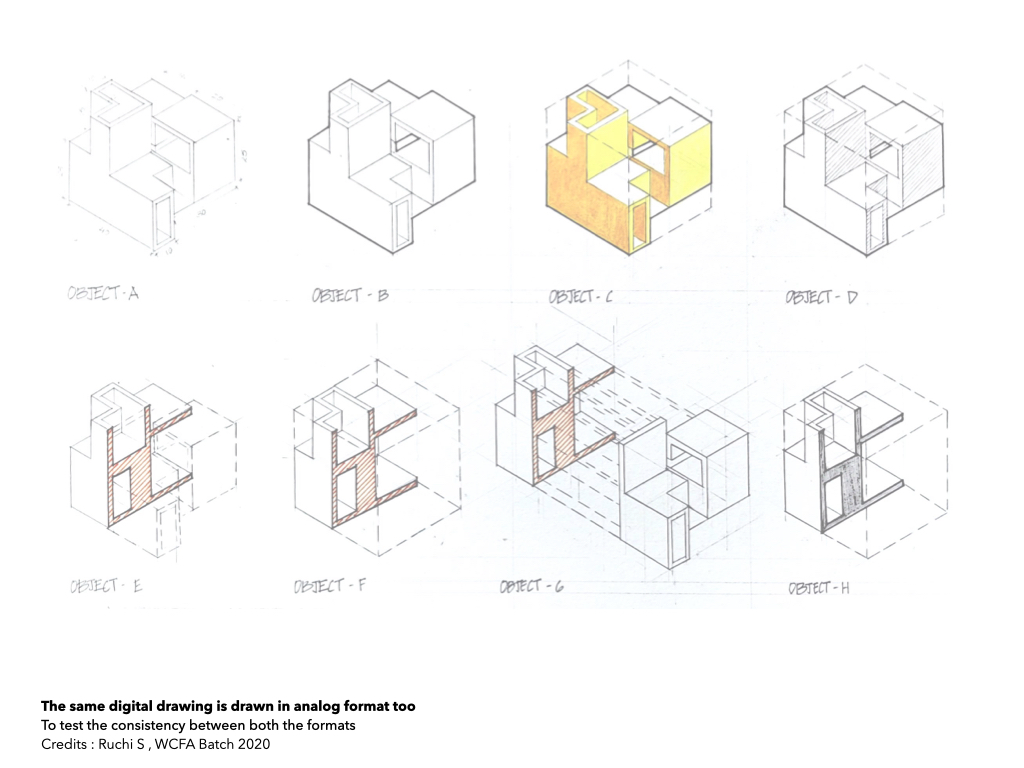
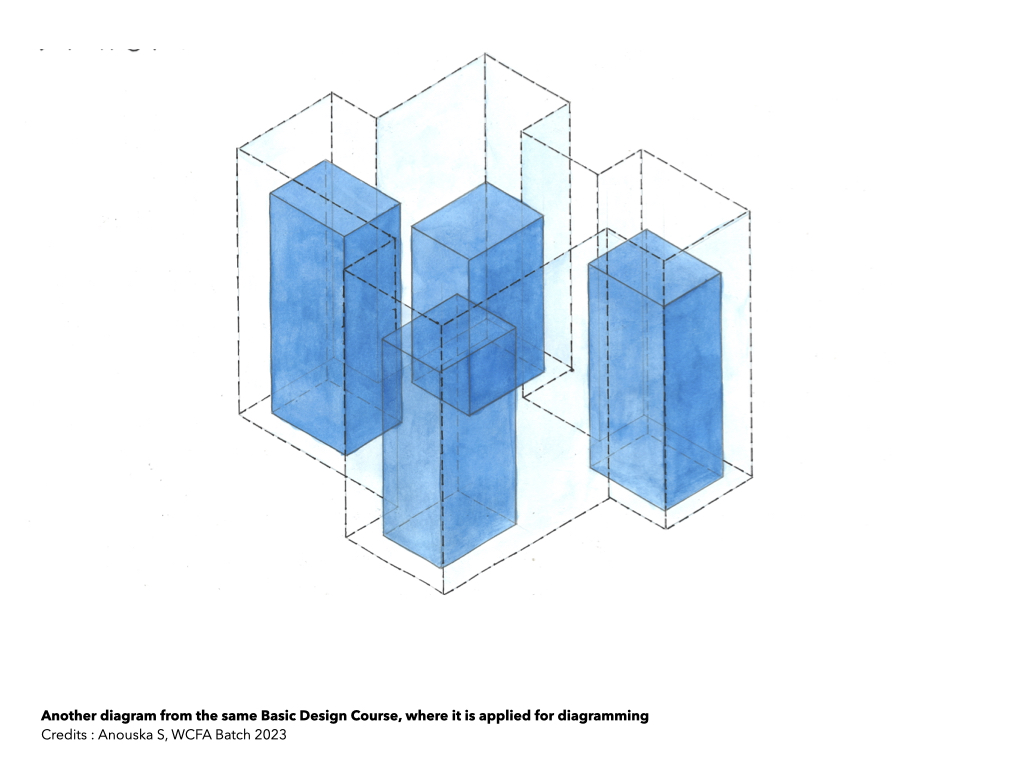
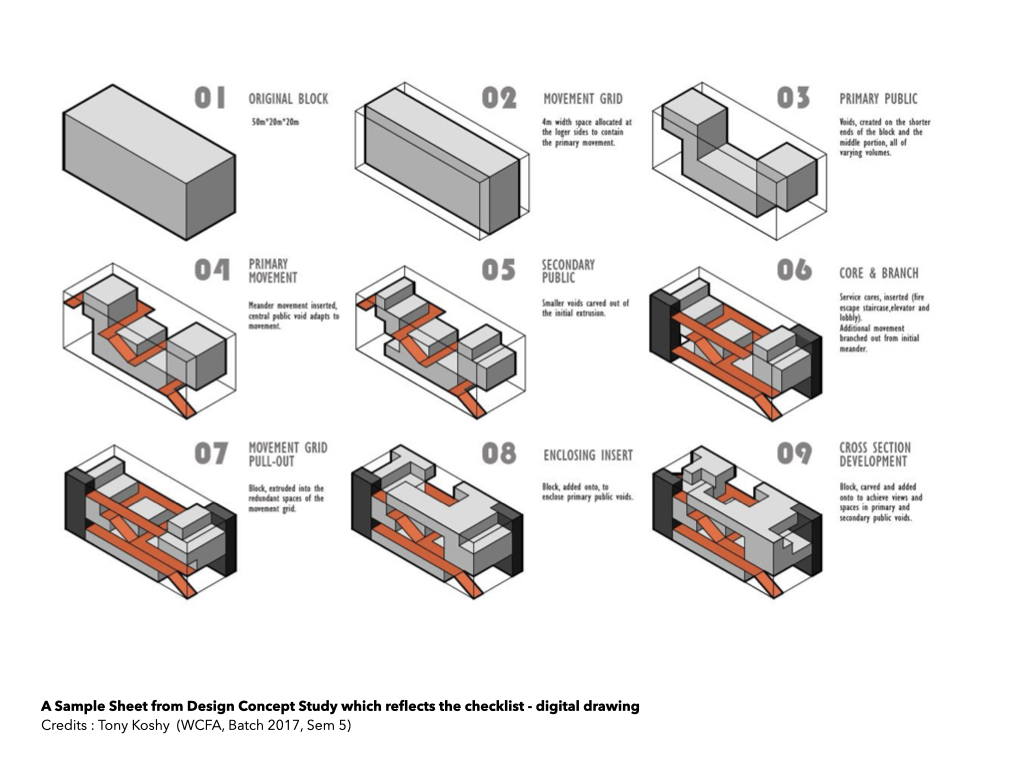
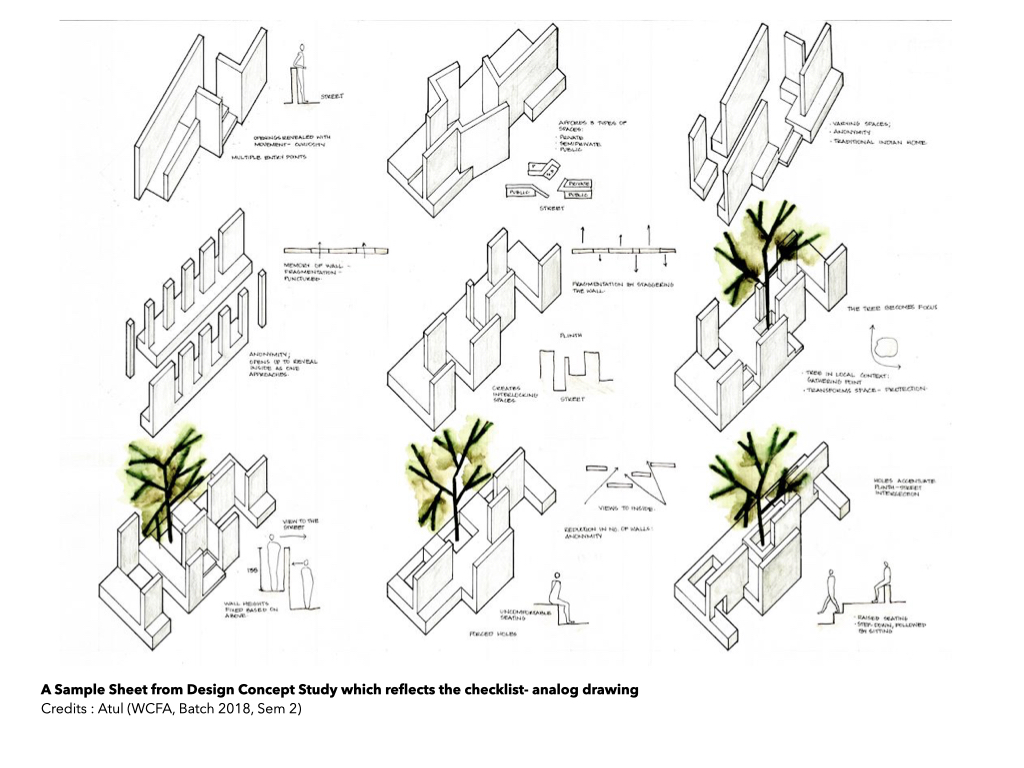
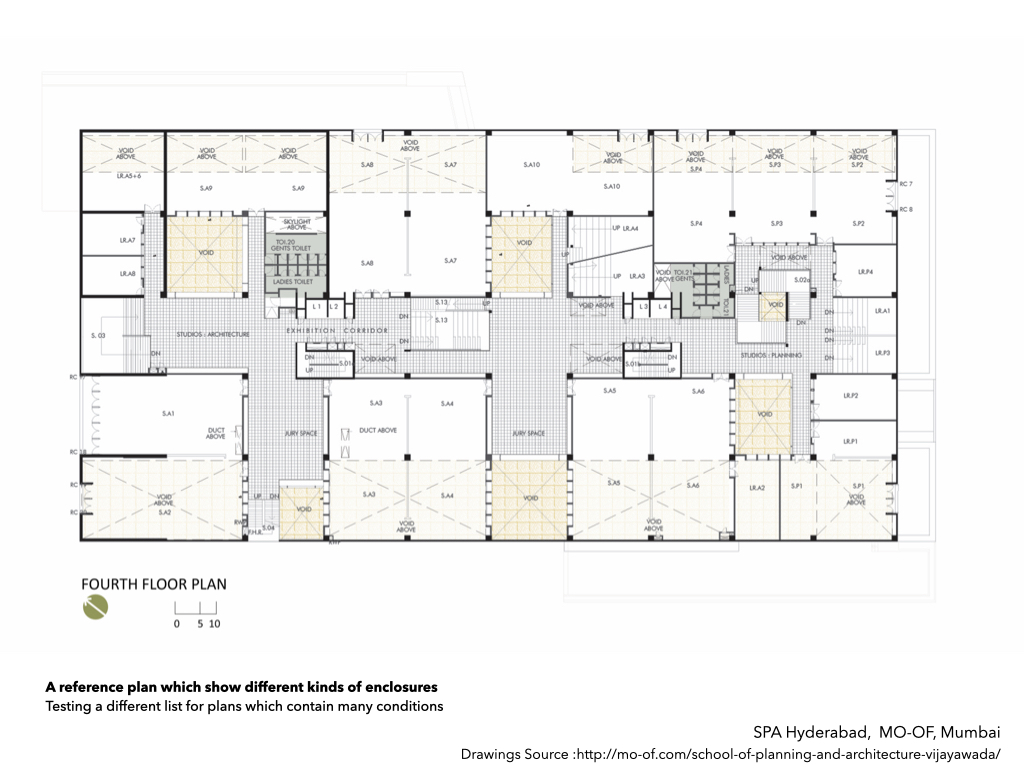
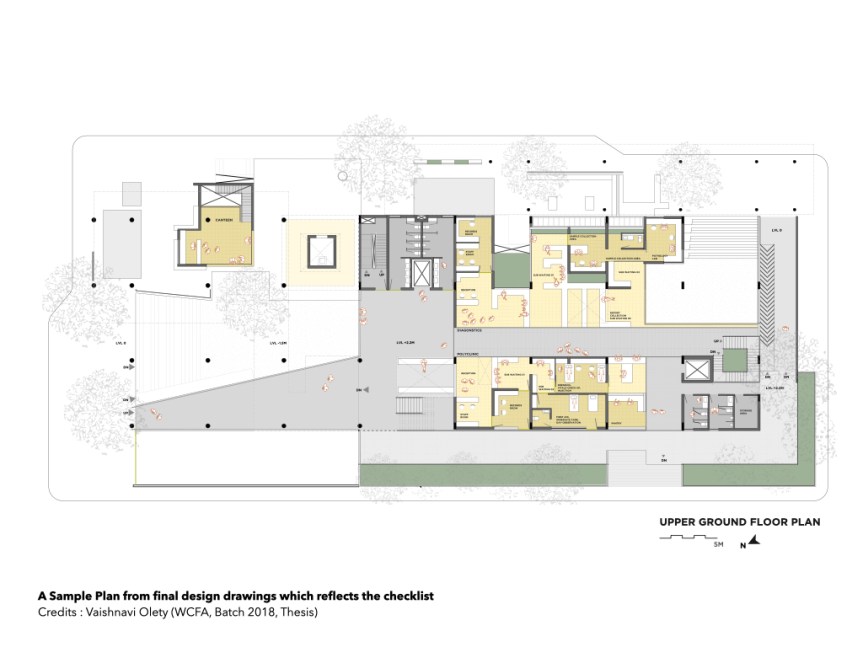
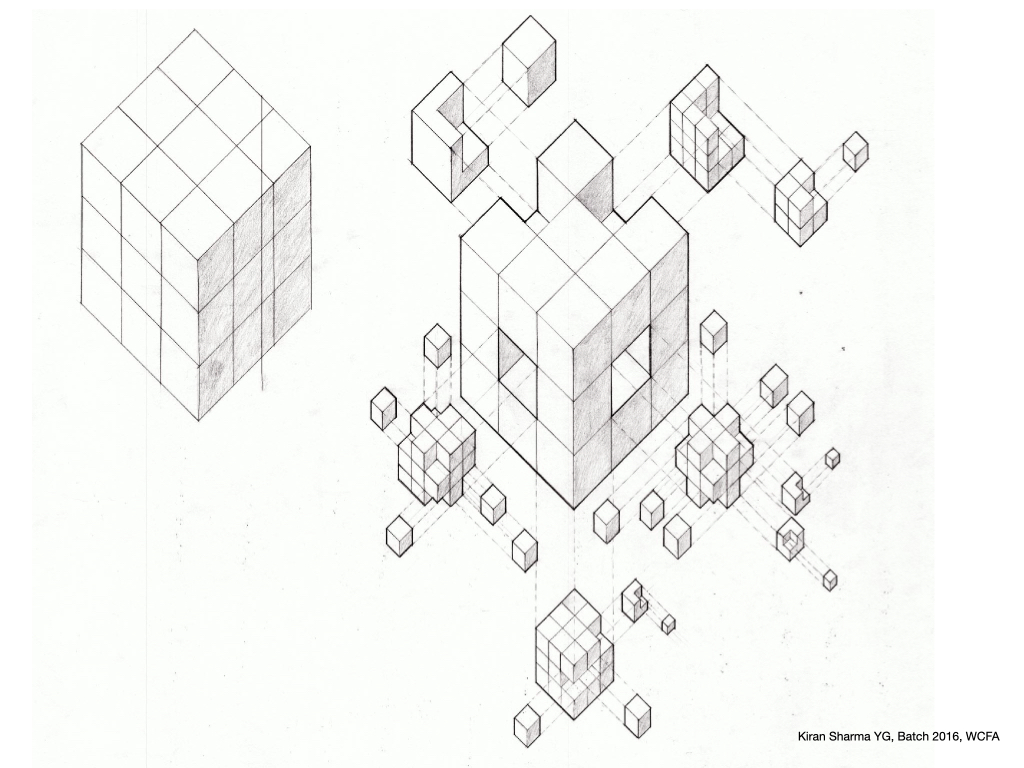
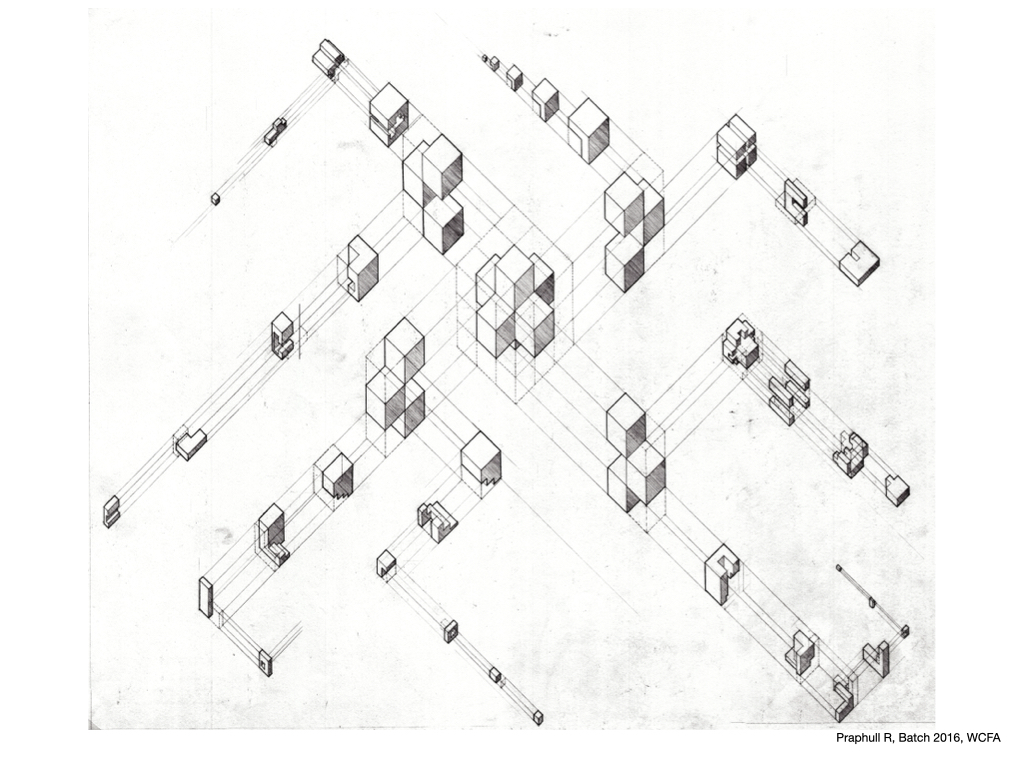
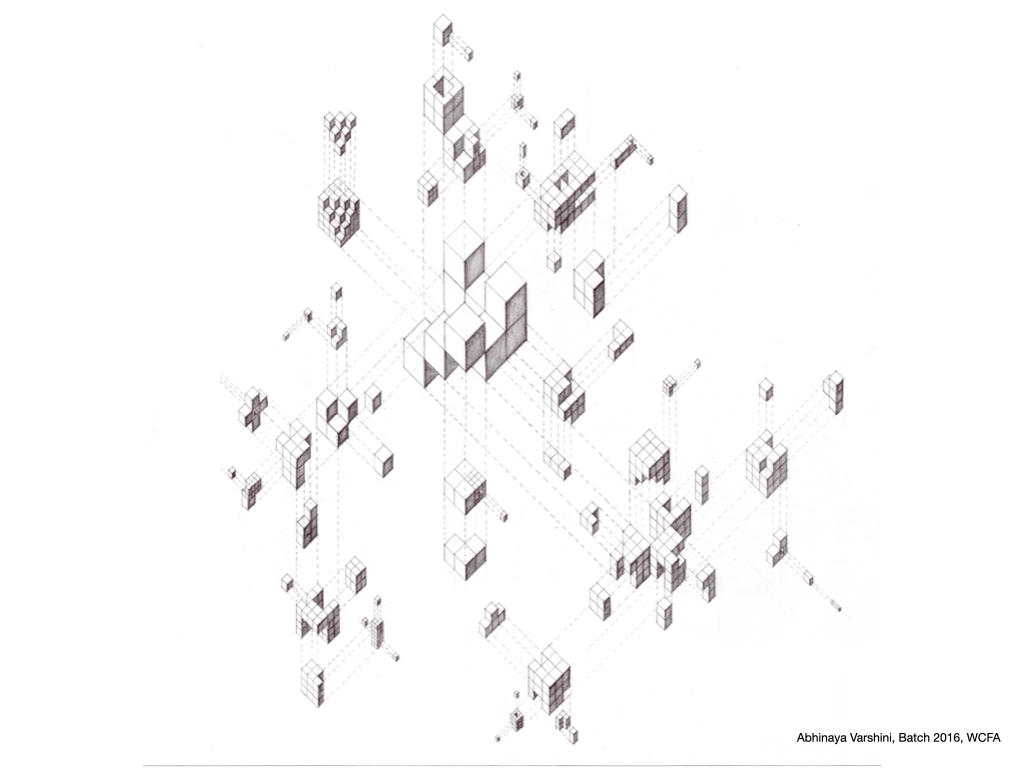
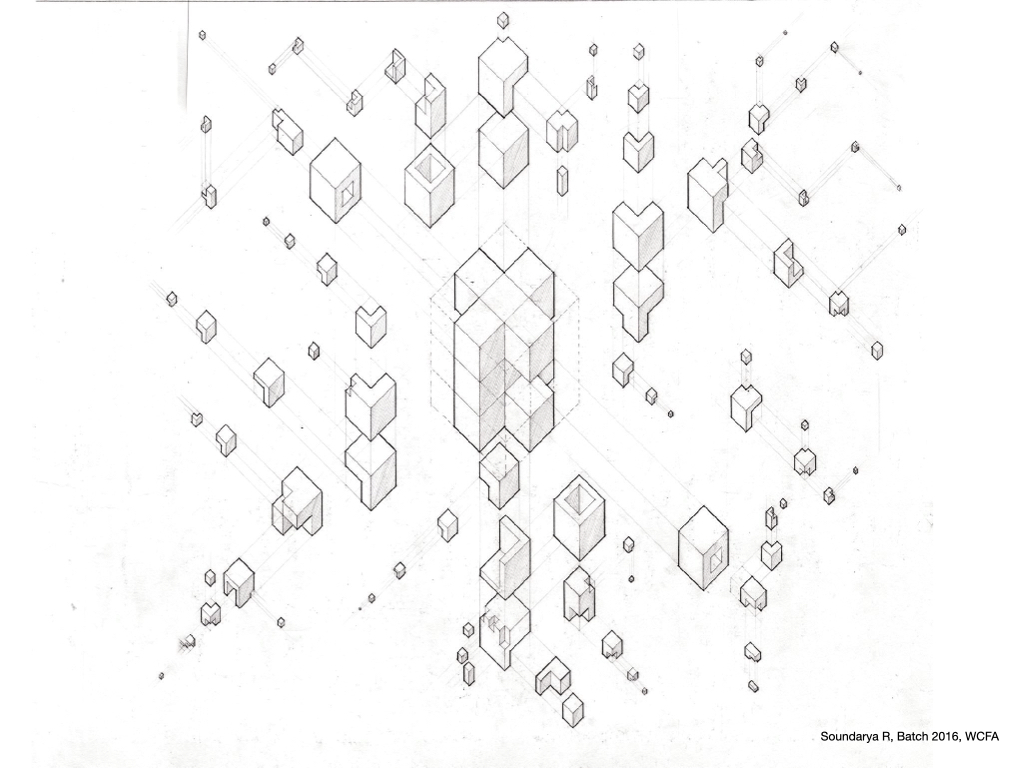
Below is the Graphics Checklist and many variations and reflections in student works at WCFA of it over the years – tested from first year drafting to various other semesters in different forms. Unless credited all the drawings are made by the author of the blog.
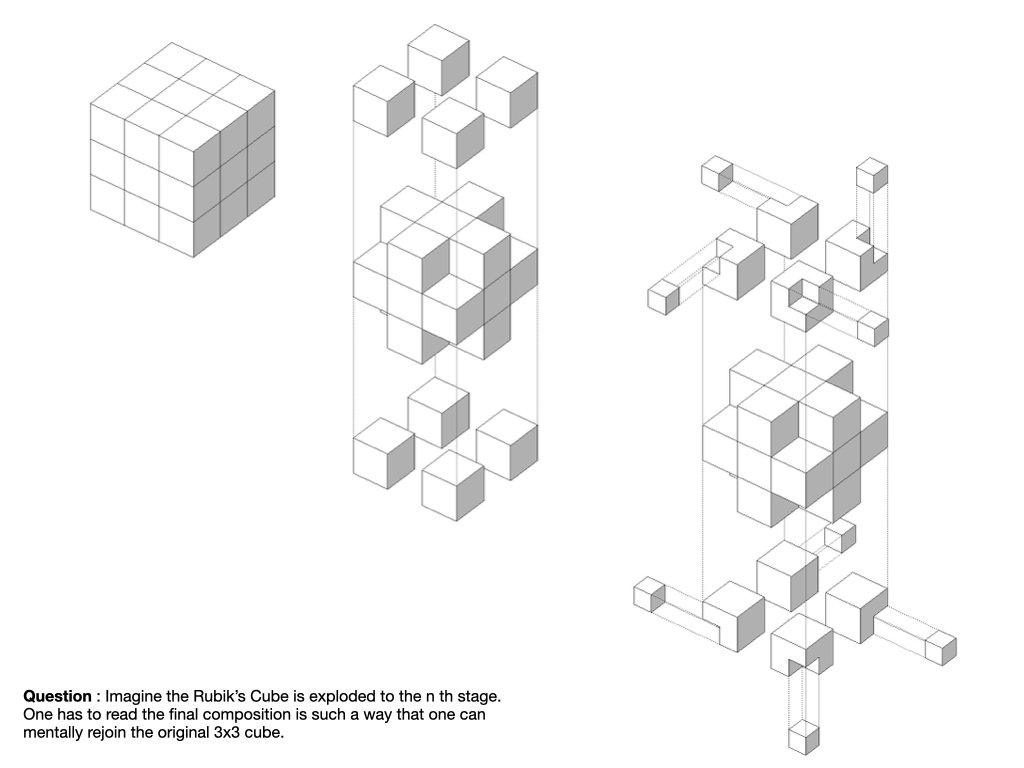
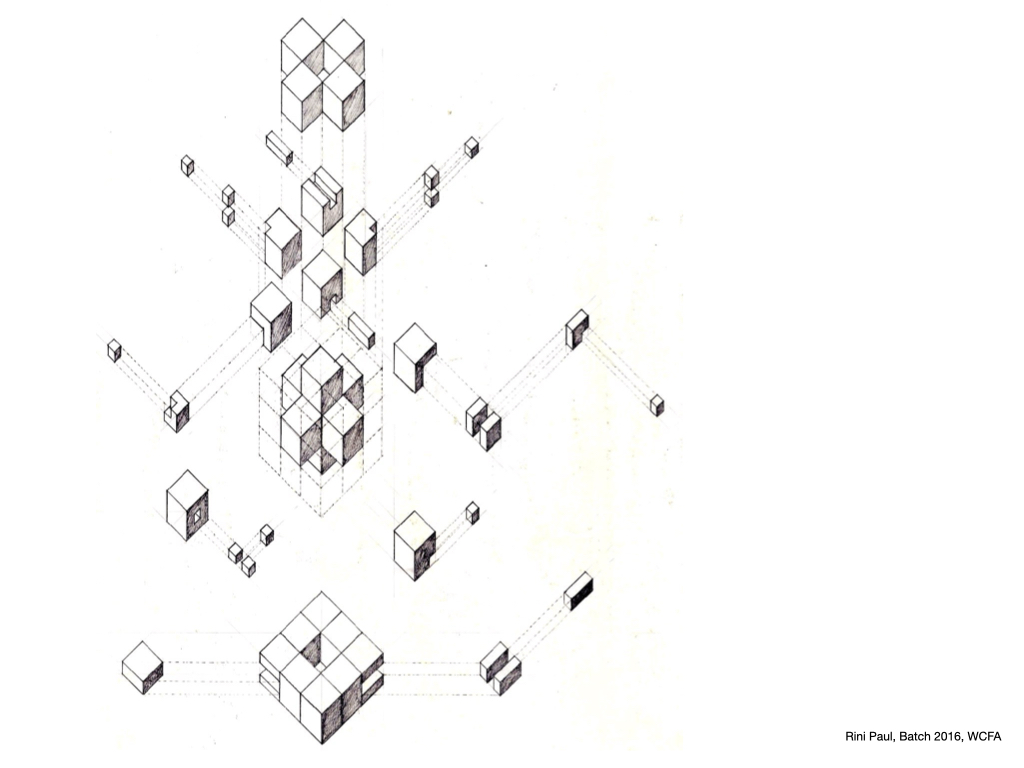
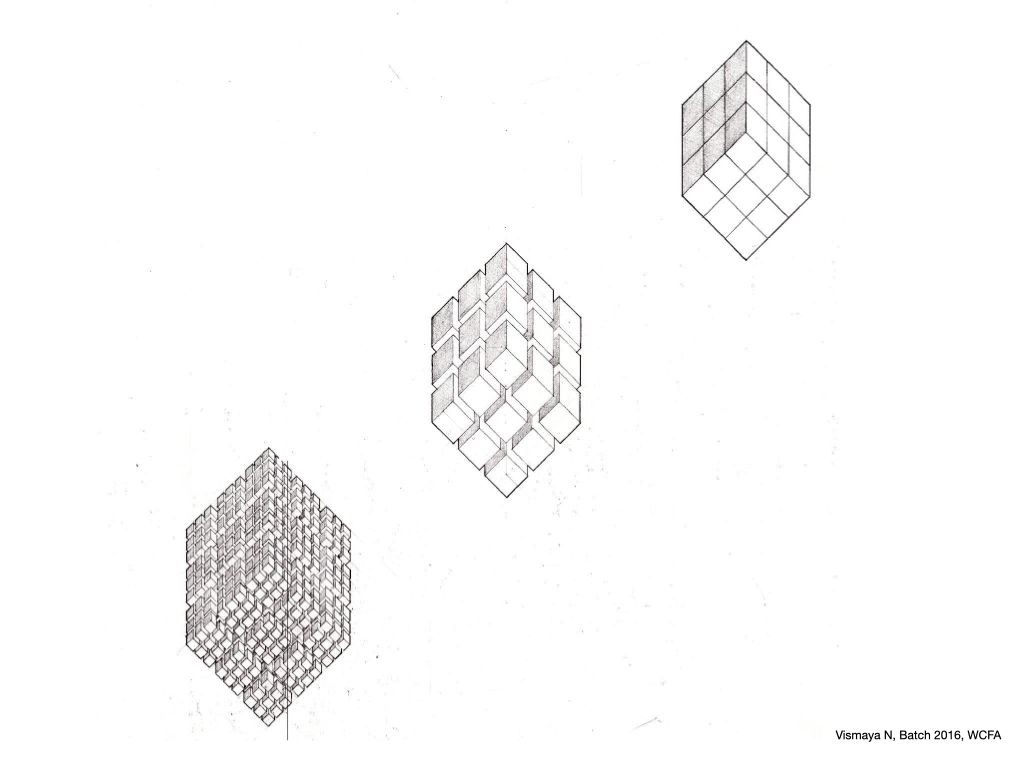
This exercise is one of my favorite problems to give second-semester drawing students. It serves as a reminder and recall of the fundamentals learned in the first semester.
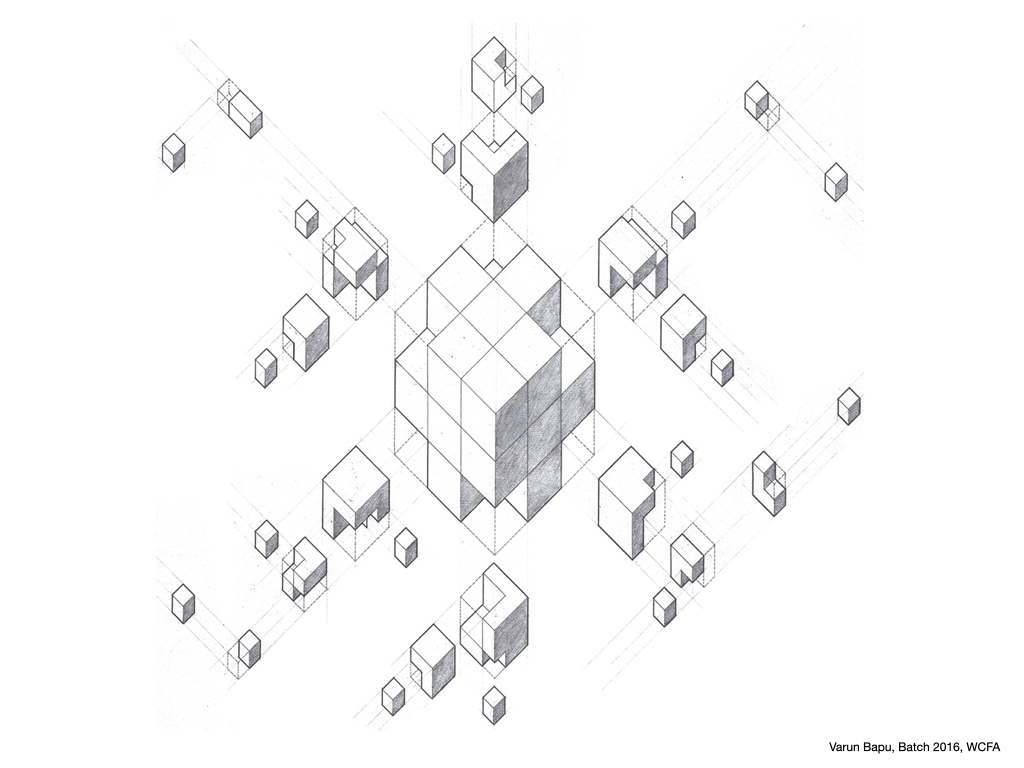
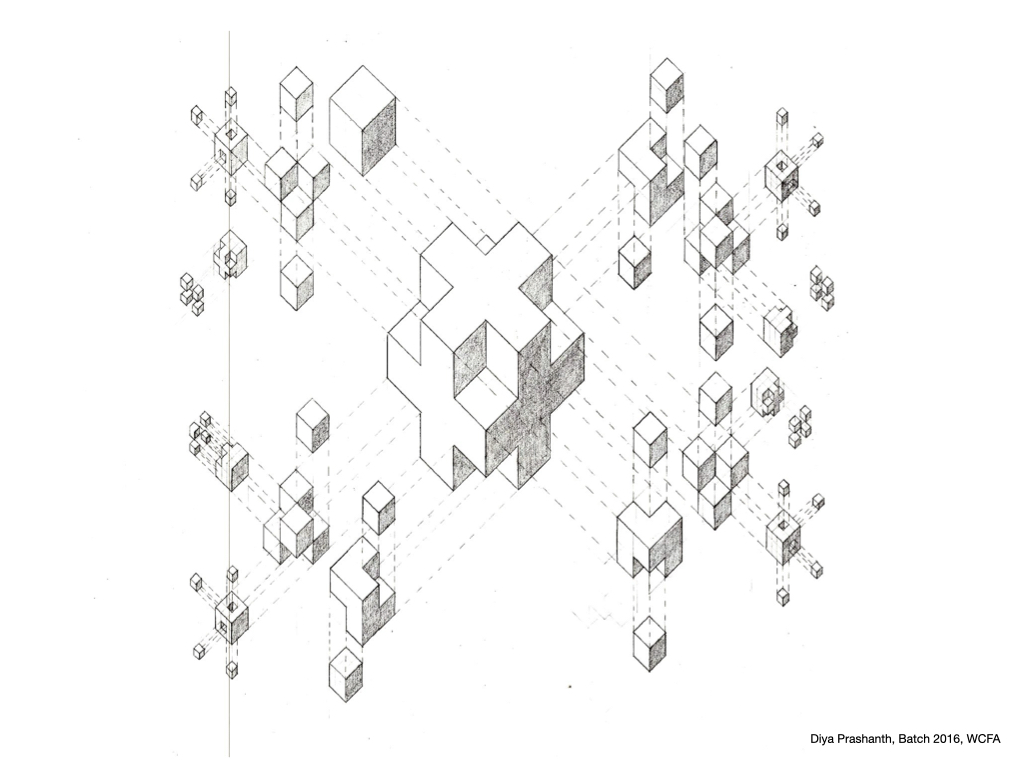
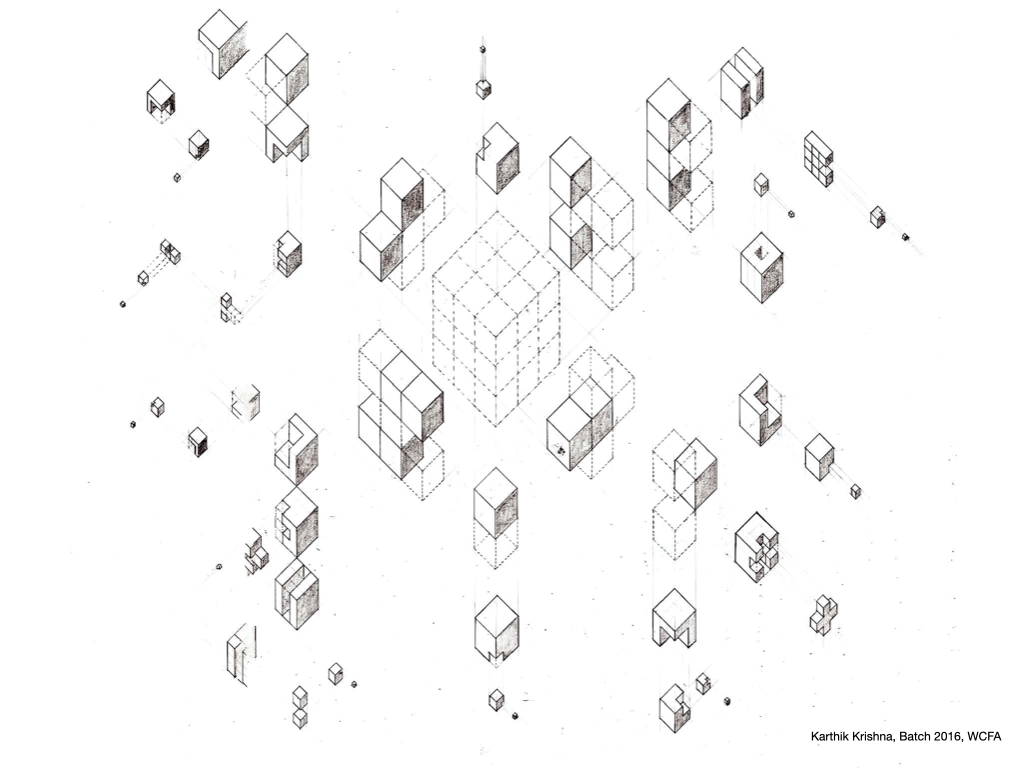
Elsewhere, I’ve written about this exercise: “This drawing exercise explores the possibilities of the exploded axonometrics technique. It involves exploding an imaginative Rubik’s cube in multiple stages, with each stage leaving a trace of its path. To start the drawing, one does not need to know exactly how it will end. The composition shapes itself as the drawing progresses. This method illustrates a wonderful quote on writing by E. L. Doctorow: ‘Writing is like driving at night in the fog. You can only see as far as your headlights, but you can make the whole trip that way.’“
This also connects to a brilliant quote by Brian Eno. ““Try to make things that can become better in other people’s minds than they were in yours ” He wrote this in the context of conceptual art and music, which perfectly fits what teaching means to me
All the drawings are from WCFA Batch 2016. Co Faculty : Rishi
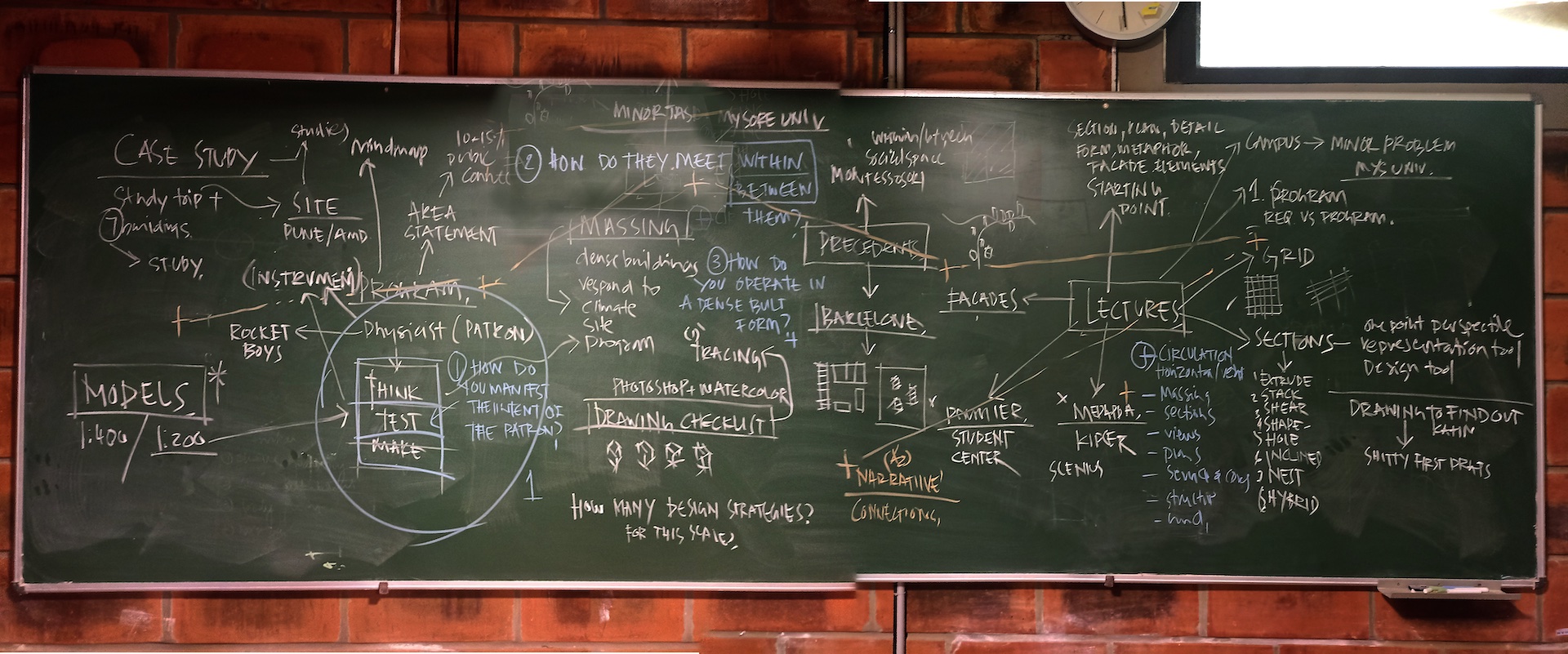
Blackboard – Semester 6, Batch 2020, WCFA, May 2023
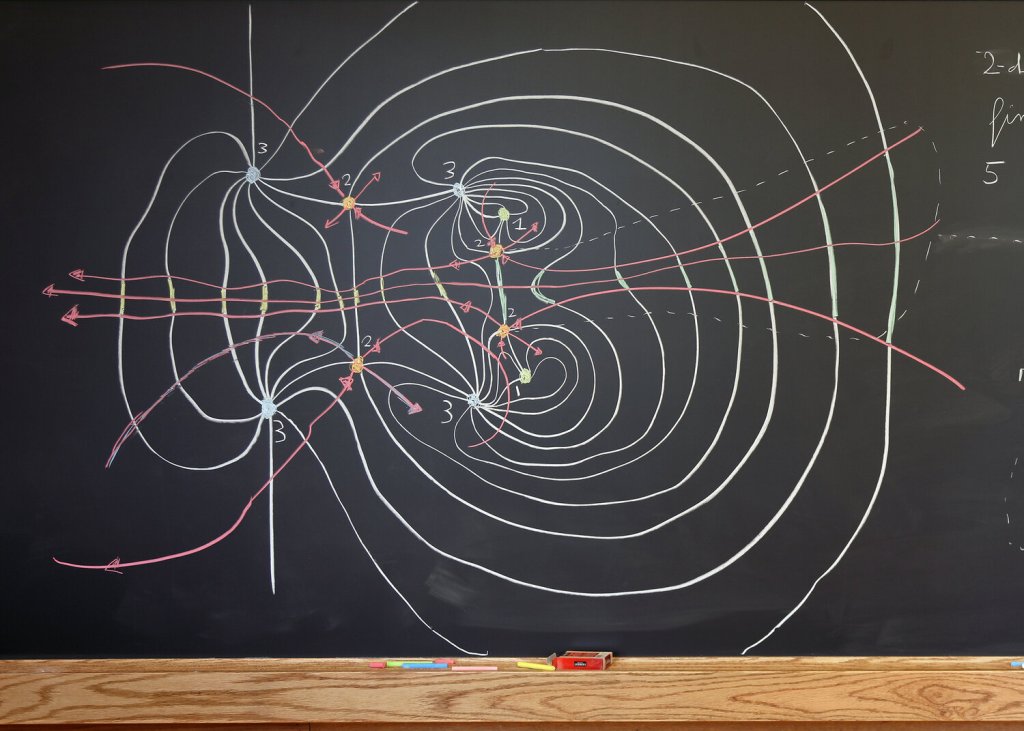
Here is the blackboard from a recent AD 06 class. I have discussed this earlier (here and here) on thinking aloud with the blackboard – “It traces the emphasis and the hesitations of the teacher, simultaneously” – This is a ritual i try once in the middle of the semester – taking stock of all the things we discussed in the semester – design brief, precedents, keywords, lectures (internal and external), case studies, assignments, casual references discussed / shared on classroom/whatsApp.
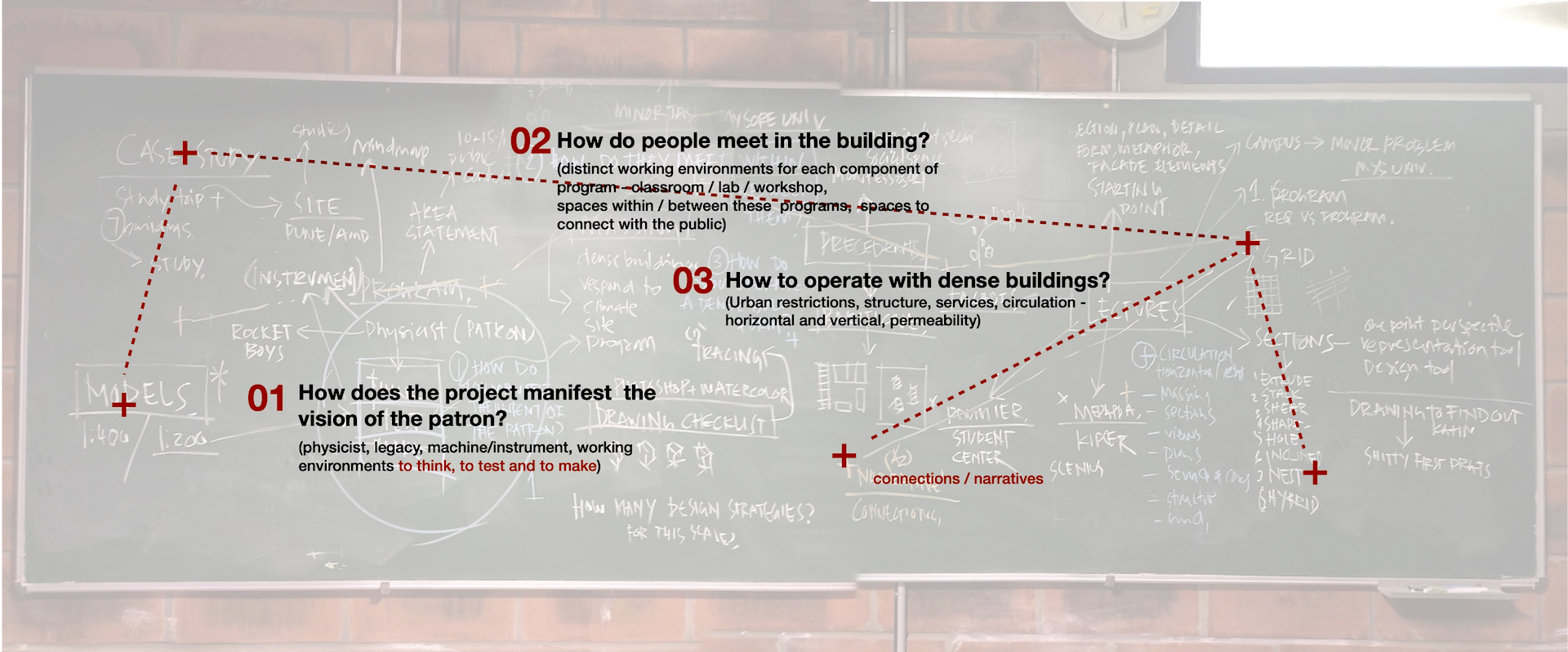
We are in the age of unopened classroom and whatsapp links. In a little survey I made, the probability of a link opened by a student is 2:15. I will give allowance for myself considering the links are not always directly design related. In context of that probability this act becomes a very useful event to first map all the things and make connections between them. It also brought more clarity to me on what are priorities for this semester. Even though what is listed can be overwhelming, i ended with the key question “How many design strategies or clues are required for a certain scale of project?”. Below is the post production of the class discussion as the structured narrative.
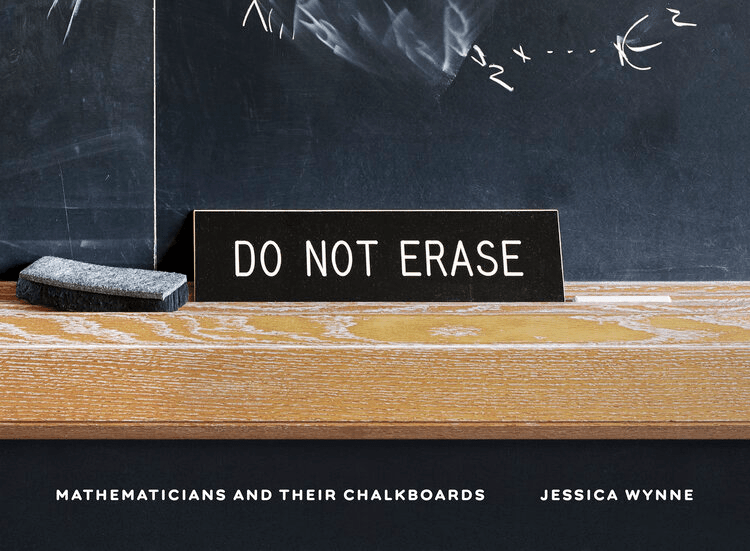
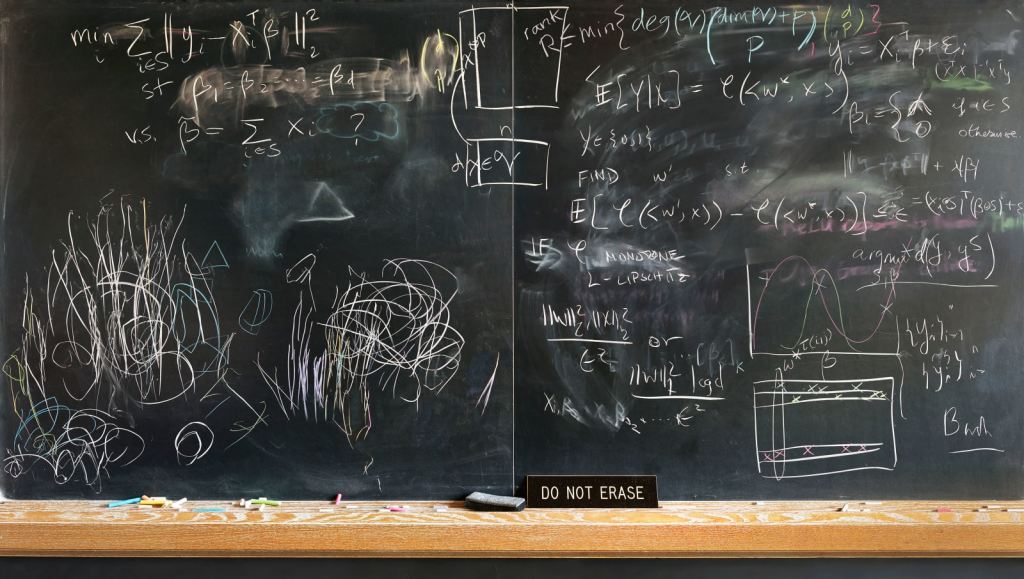
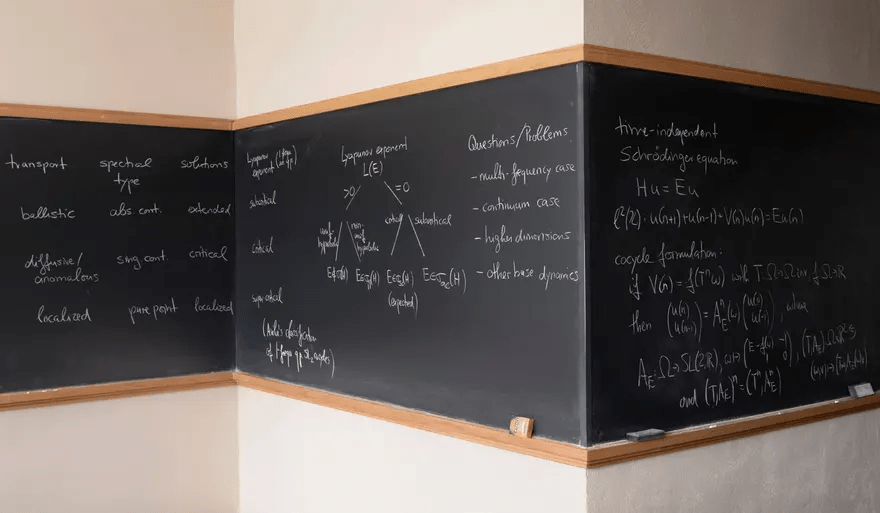
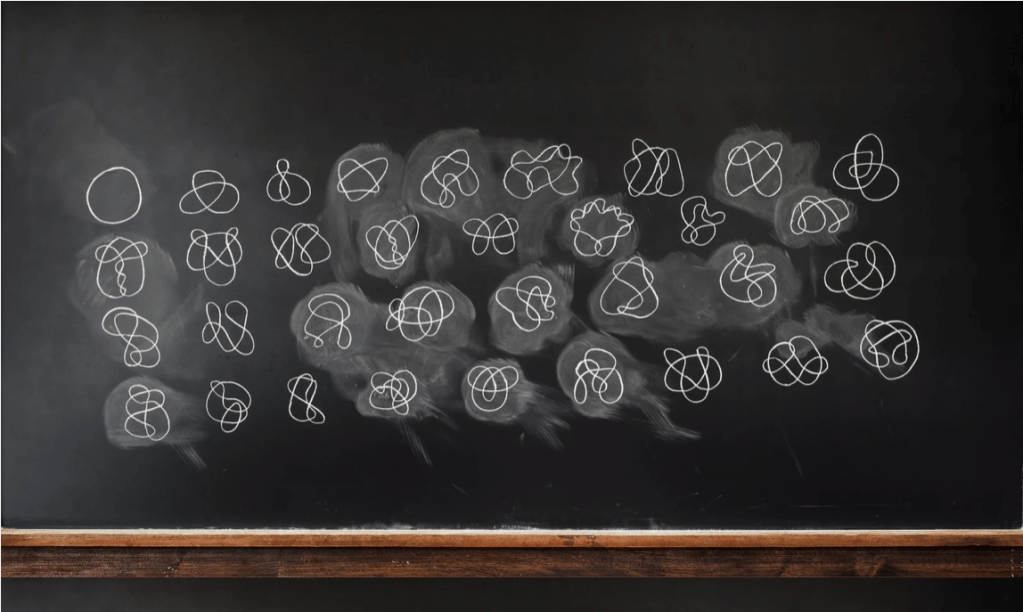
I came across this delightful curation by photographer Jessica Wynnes calledDo Not Erase which “presents remarkable examples of this idea through images of mathematicians’ chalkboards. While other fields have replaced chalkboards with whiteboards and digital presentations, mathematicians remain loyal to chalk for puzzling out their ideas and communicating their research….The photographs are accompanied by essays from each mathematician, reflecting on their work and processes. Together, pictures and words provide an illuminating meditation on the unique relationships among mathematics, art, and creativity… Do Not Erase is a testament to the myriad ways that mathematicians use their chalkboards to reveal the conceptual and visual beauty of their discipline; shapes, figures, formulas, and conjectures created through imagination, argument, and speculation“. (1) “Professor David Damanik, a mathematician at Rice University, who is among those featured, says he uses blackboards to build a narrative. “On the blackboard, it is easier to develop your story and your argument.” (2) Here are some images from the book :
Laura Balzano, University of MichiganDavid Damanik, Rice UniversitySahar Khan, Columbia UniversityHelmut Hofer, Institute for Advanced Study
This post is an overview of a thesis I recently guided at WCFA.
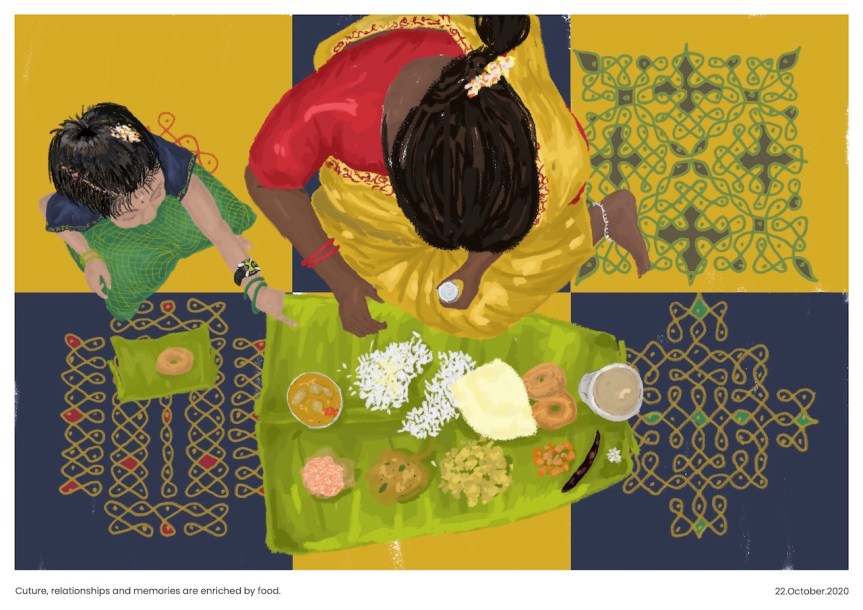
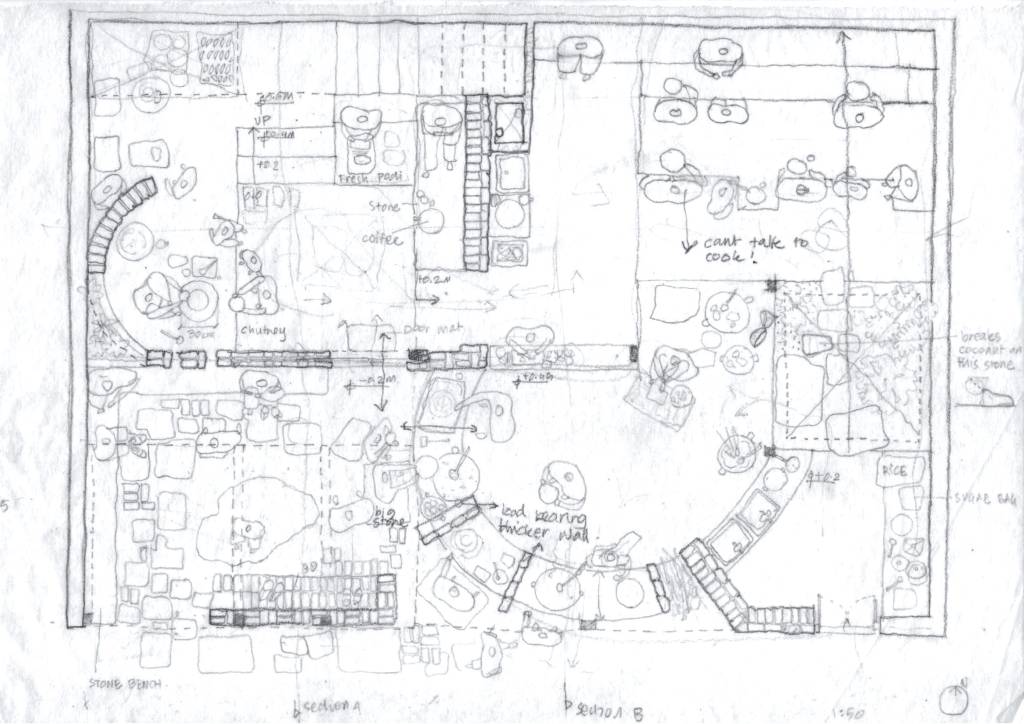
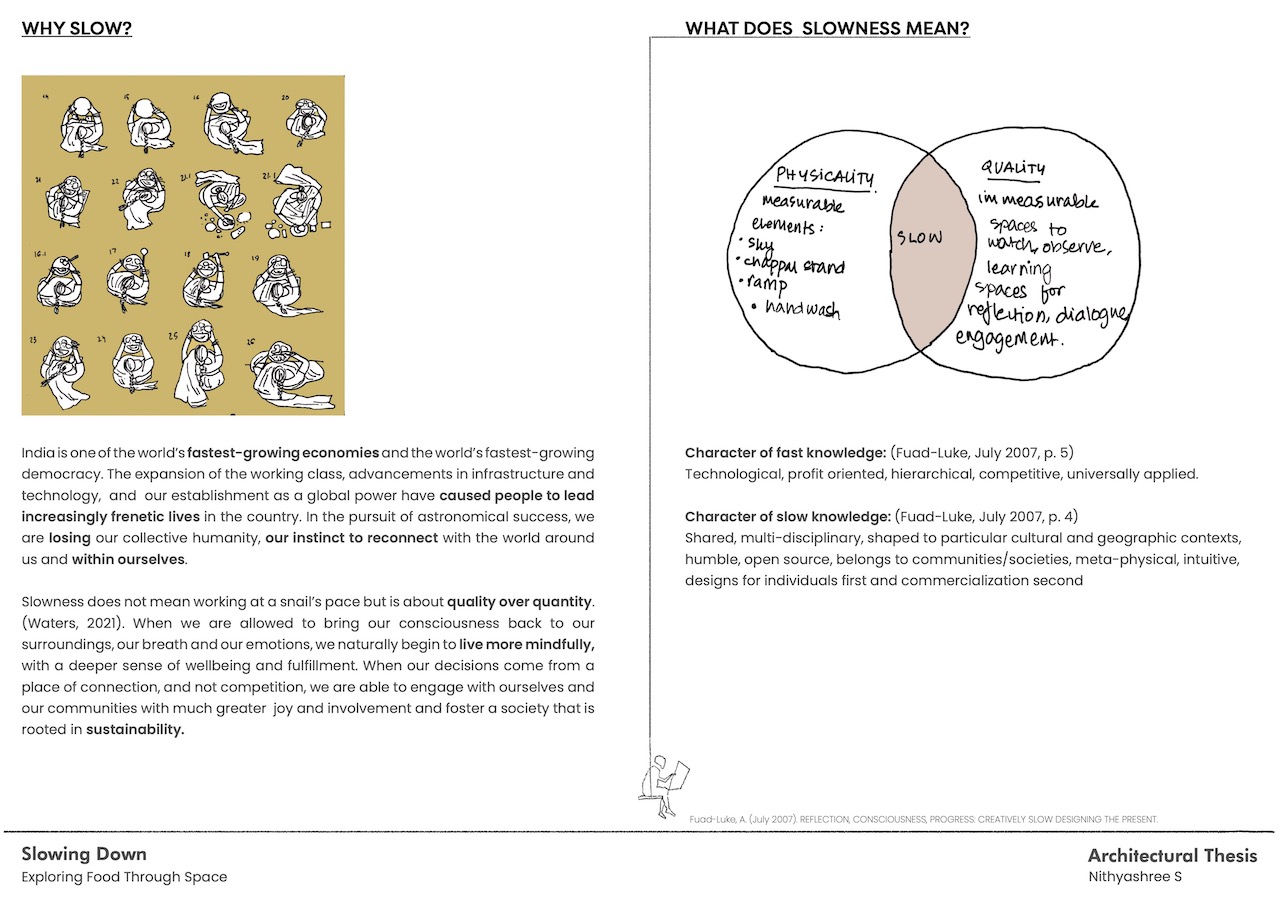
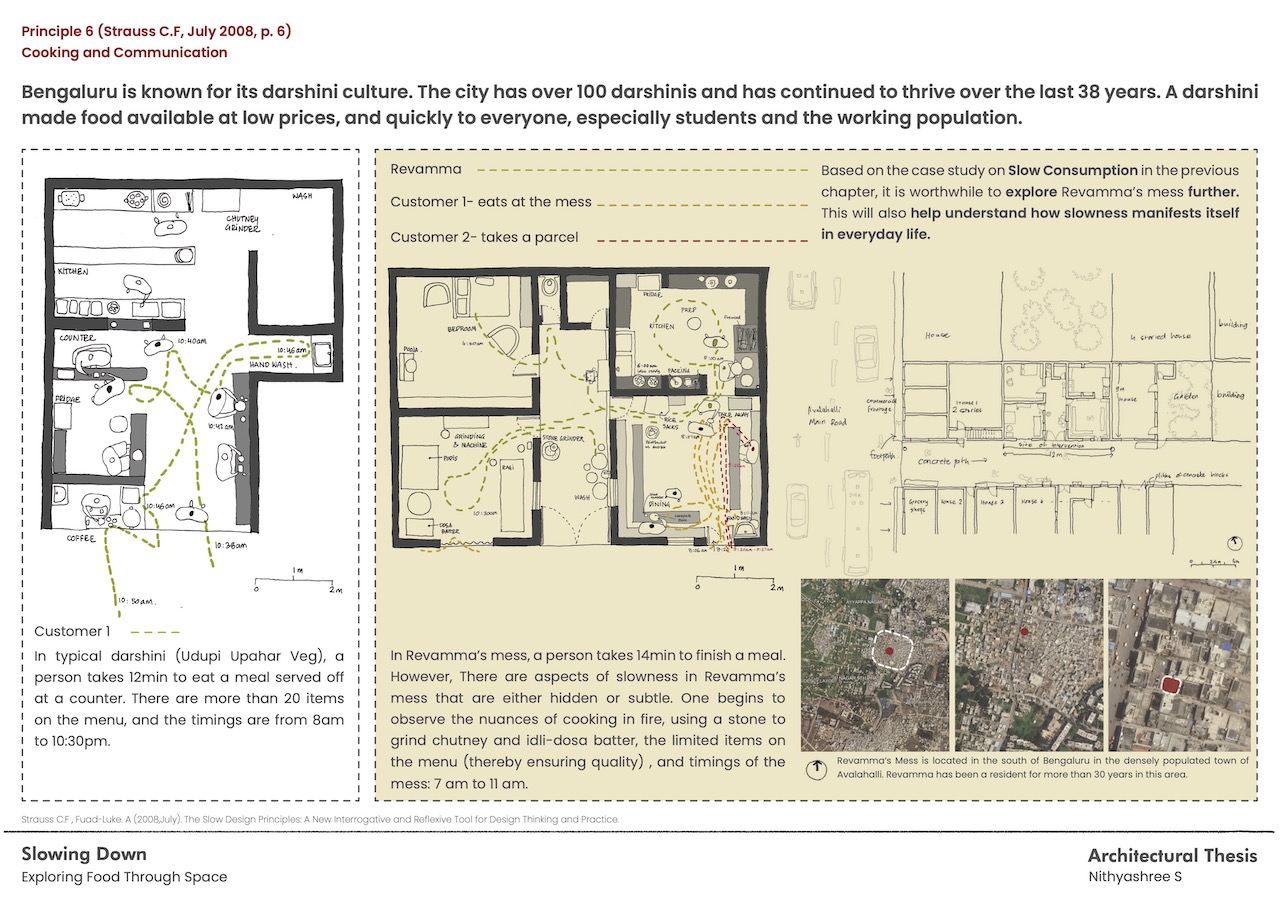
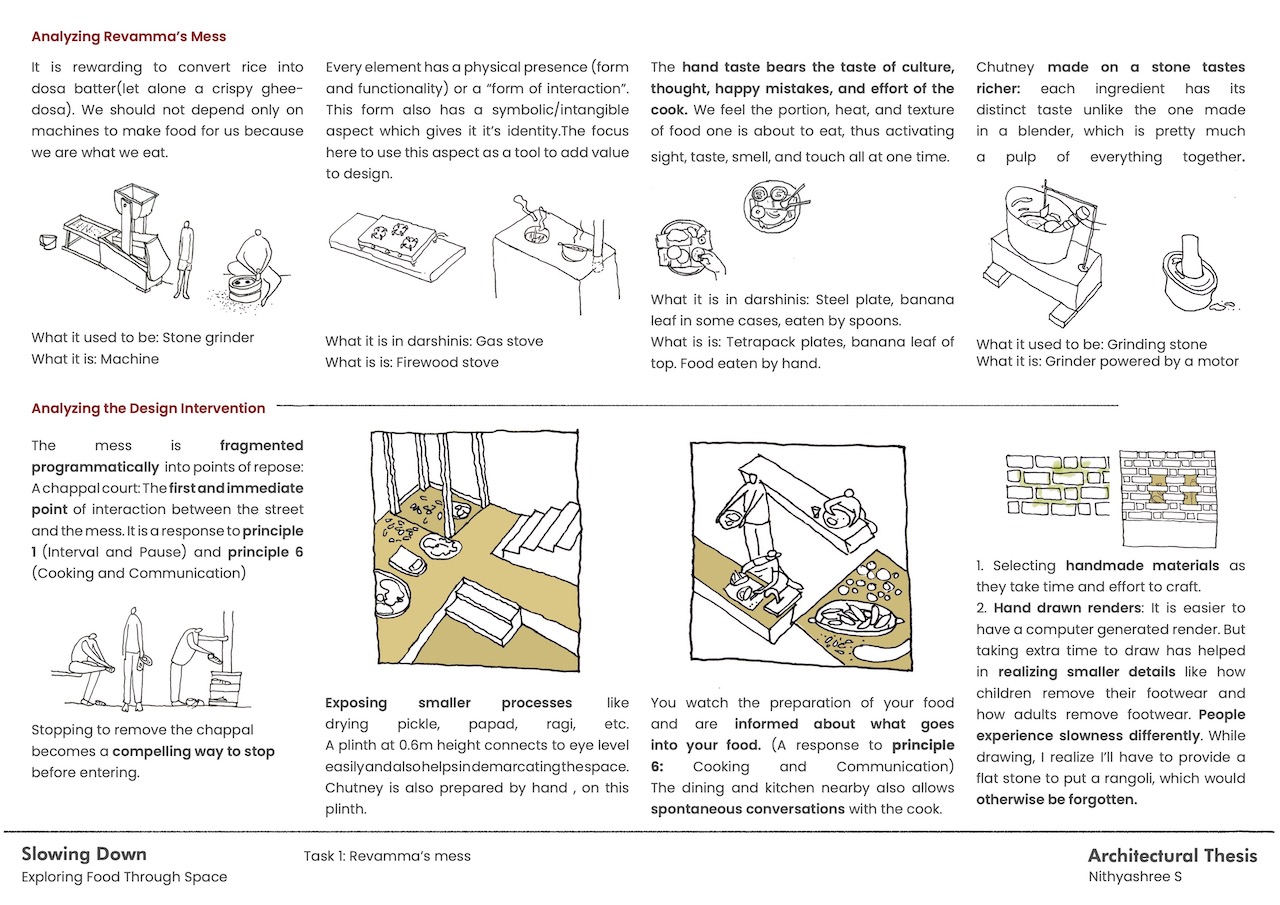
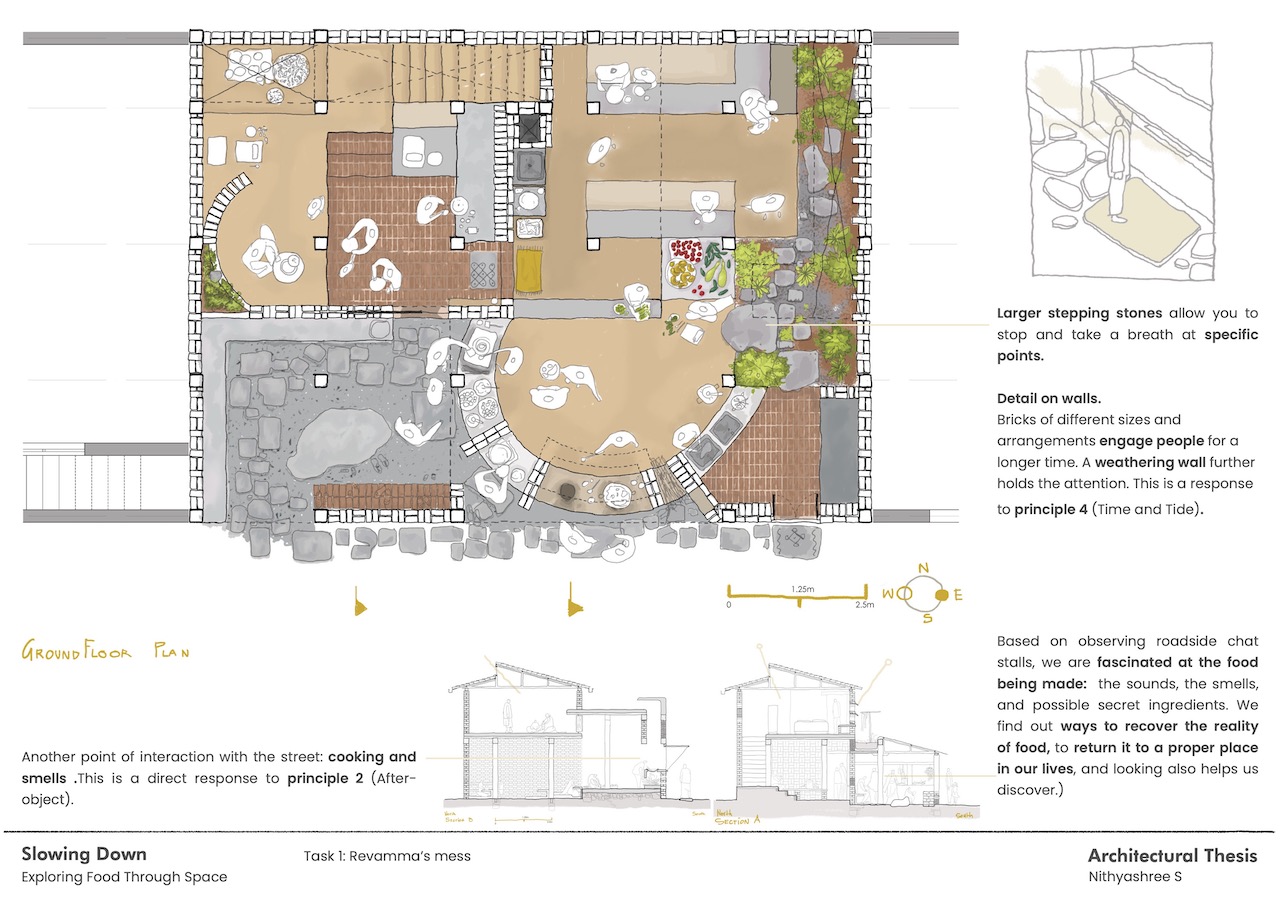
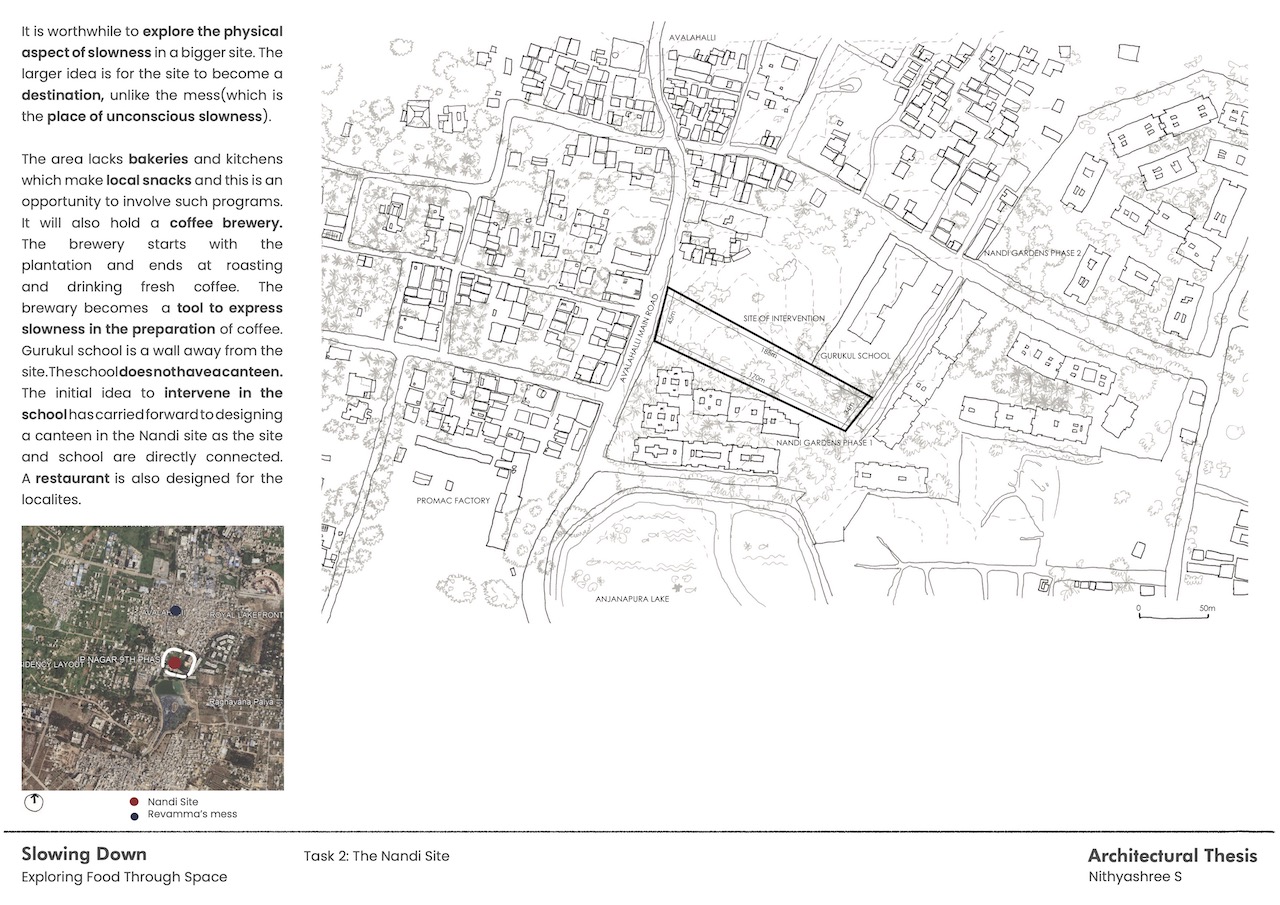
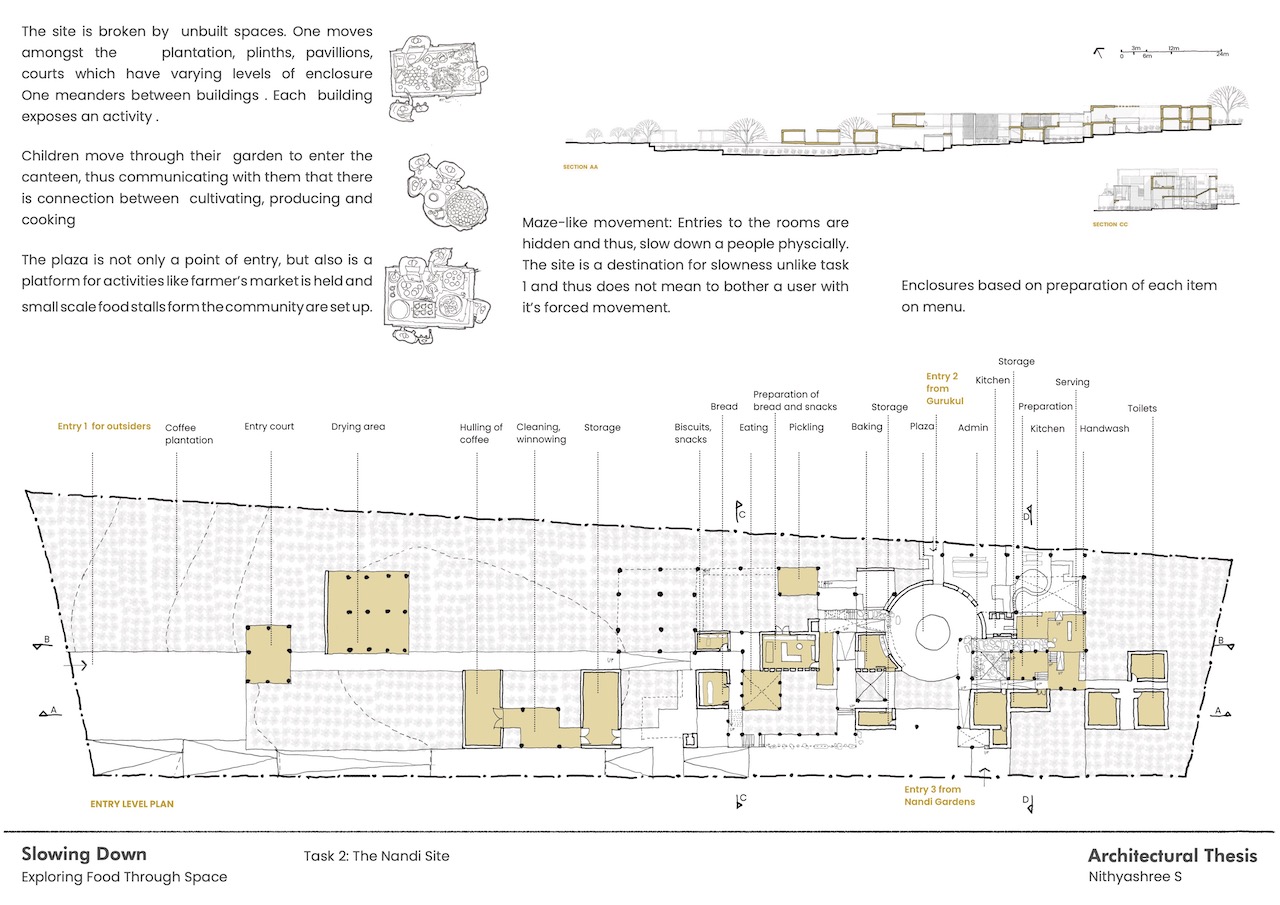
Nithyashree (WCFA, Batch 2017) comprehensively translated the initial research into design principles and spatial ideas. From the beginning, she sharply curated her intuitive sense of reading architectural space and environments into a focussed research on slowness and food. Her elegant and delicate drawing capabilities helped her carry the intricacies of slowness from an intellectual framework into an intuitive design process. I was also fascinated by her reading of an ordinary and simple space like Revamma’s mess and also imagine richer spatial possibilities in it. It was engaging to see Nithya pay attention to subtle environments and architectural possibilties hidden in the chaos of urbanity of Bangalore.
Nithya’s Note:
This project begins with an understanding that a thesis is a culmination of learnings from 4 years in architecture school. The thesis attempts to respond to a few un-answered questions regarding standard design formats accumulating over the years, and at the same time acknowledging ideas which are beyond the scope of the topic (in the hope that they can become other projects one day) because of its intuitive nature.
In search of places which offer comfort from the anxiety of moving away from home and living in a new city to pursue my studies, I found unusual spots, unpopular restaurants and new comfort food which slowed me down. The simplicity and spirit of these places and spaces is the core of this project and is manifested on paper through drawing and writing – two other acts of slowness.
Below are some key questions and drawings from thesis. The access to the complete report is here.
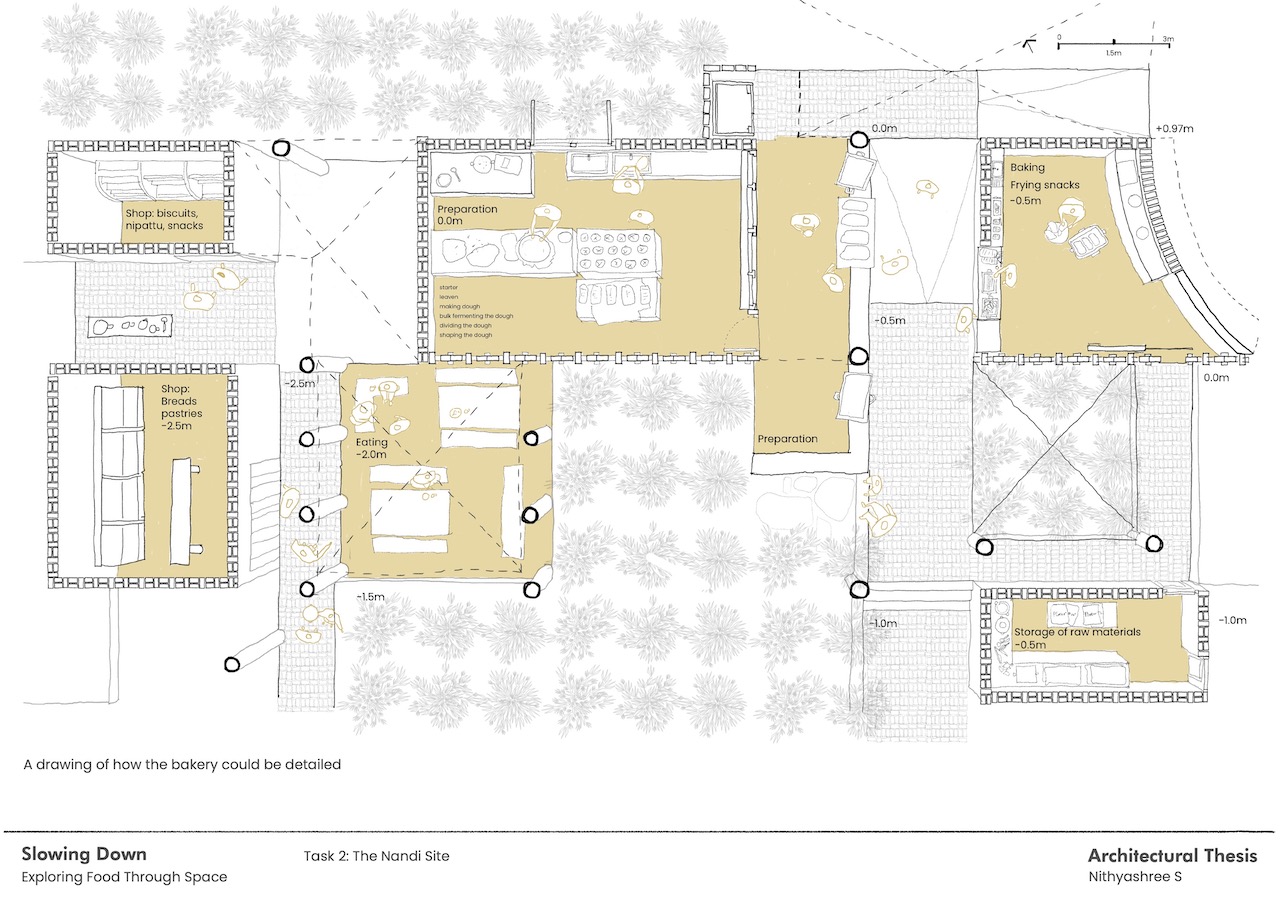
Reimagination of Revamma’s mess – a rich environment to explore the different subtleties of cooking and eating. This drawing encapsulates Nithya’s delicate explorations of the theme of slowness and food – and its intertwining. This process drawing – tracing in particular – simultaneously explores and reveals the intent of the project. A slow brewing of both the thought and the space. The drawing becomes a container to hold both space and time.
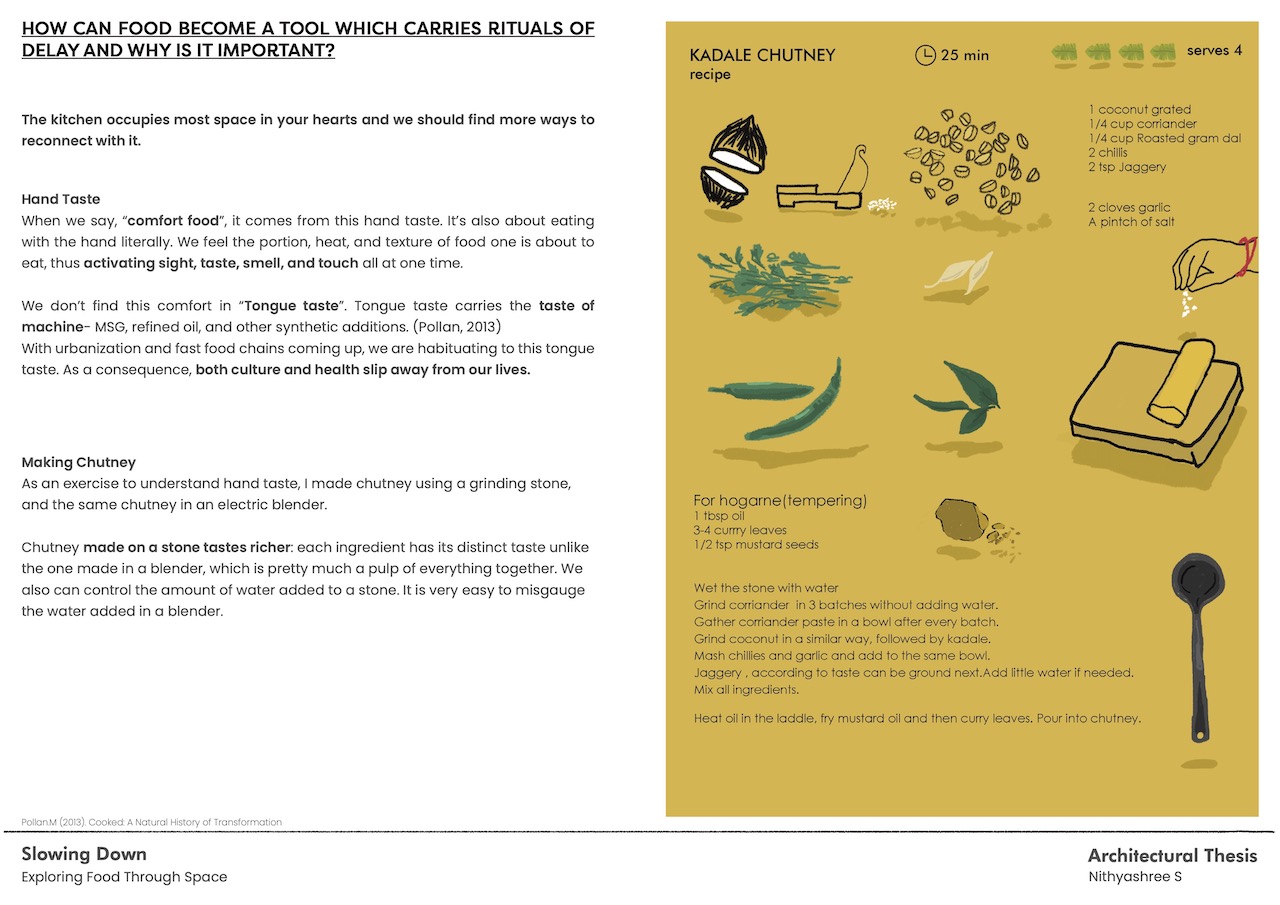
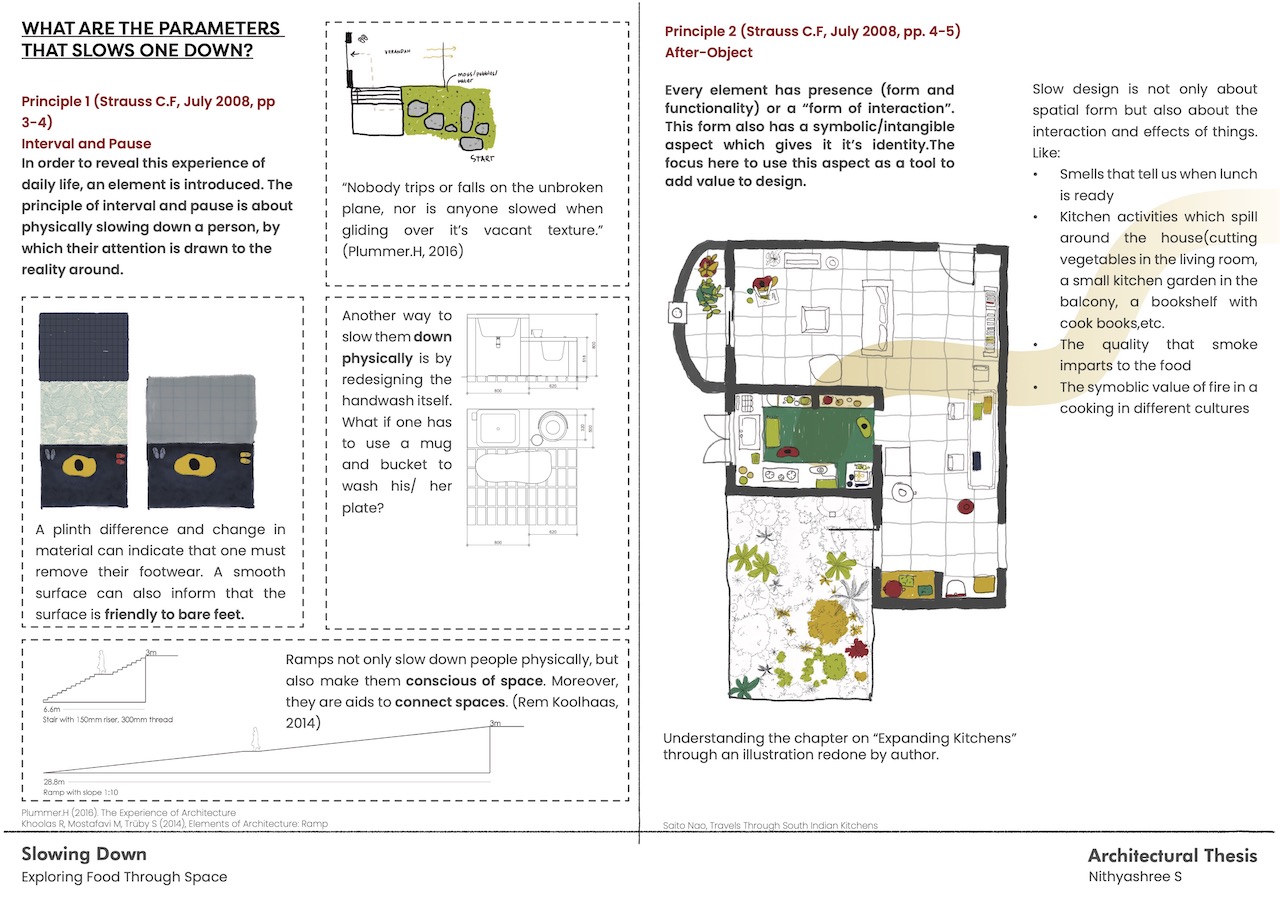
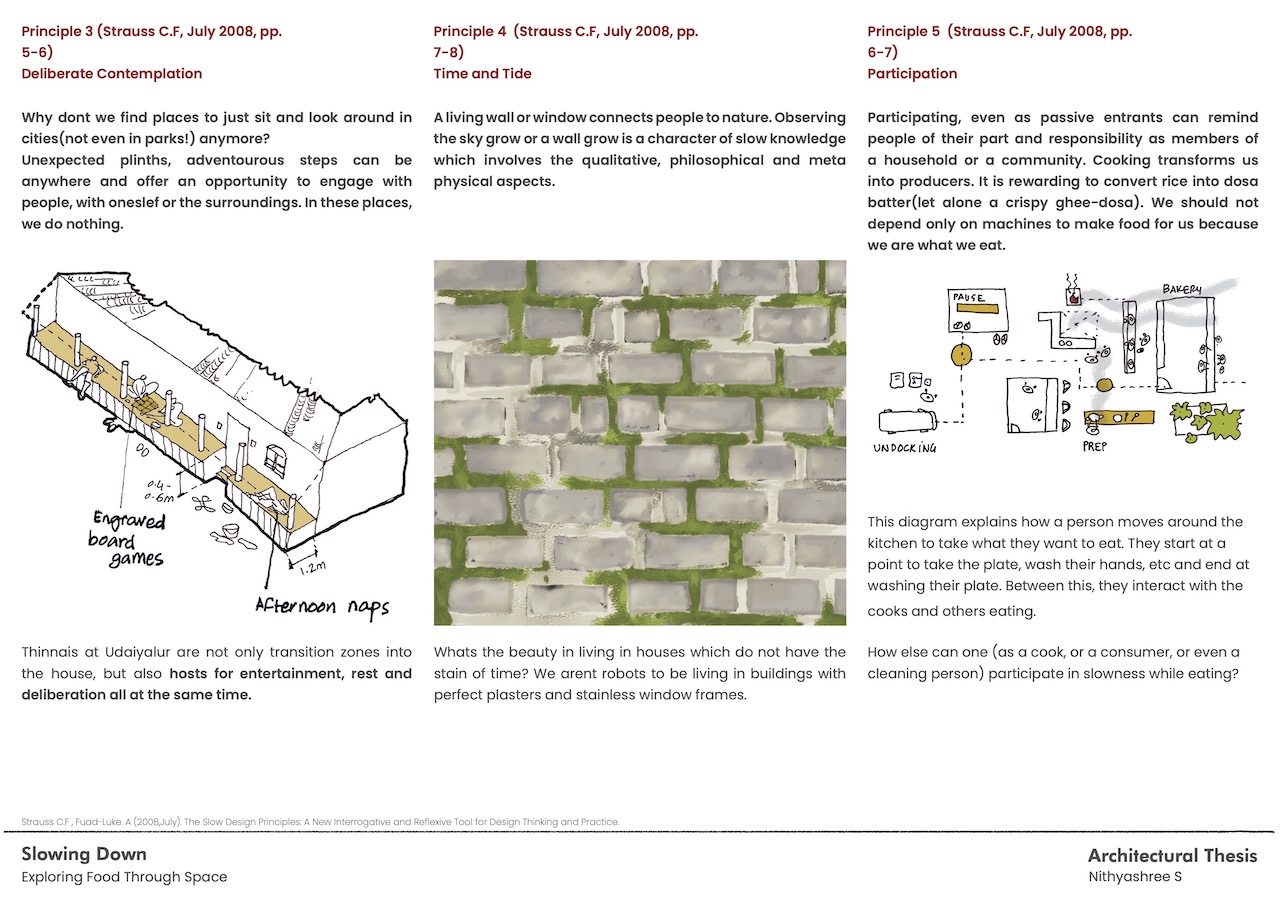
Here are few selected key moments from the thesis : (Click on the any of the images to view in larger format)







 mofussillab
You must be logged in to post a comment.