
About the workshop
This post takes a peek into the KVDF Workshop I participated in earlier this year. The workshop was spread over three days (Jan 30 – Feb 01, 2026). Kurula Varkey Design Forum is one of the key annual academic events in the country, revolving around shortlisted final year thesis projects from various schools. An event completely organized by the students at CEPT, which has been a consistent and distinguished platform since its inception. It is a vantage point to the finest thesis in the country. The previous formats had thematic discussions around curated categories of thesis projects . The discussions revolved around particular projects and spiraled from there to many delightful de tours attended by various mentors over the years. I had attended these forums between 2008 and 2010 at CEPT as a student. The ‘basement’ at CEPT would be buzzing with intellectual arguments for those 3 days. This is the 25th year since its inception.
KVDF, marking its 25th anniversary, embarked on an innovative format for its event. This year’s event was centered around workshops, featuring selected thesis students and CEPT students. Each group consisted of four thesis students whose work had been selected (and those who also have graduated since), along with three CEPT students from various years. They had to work together to create a project ( the outcome was open-ended; anything from a drawing to a video or a collage).
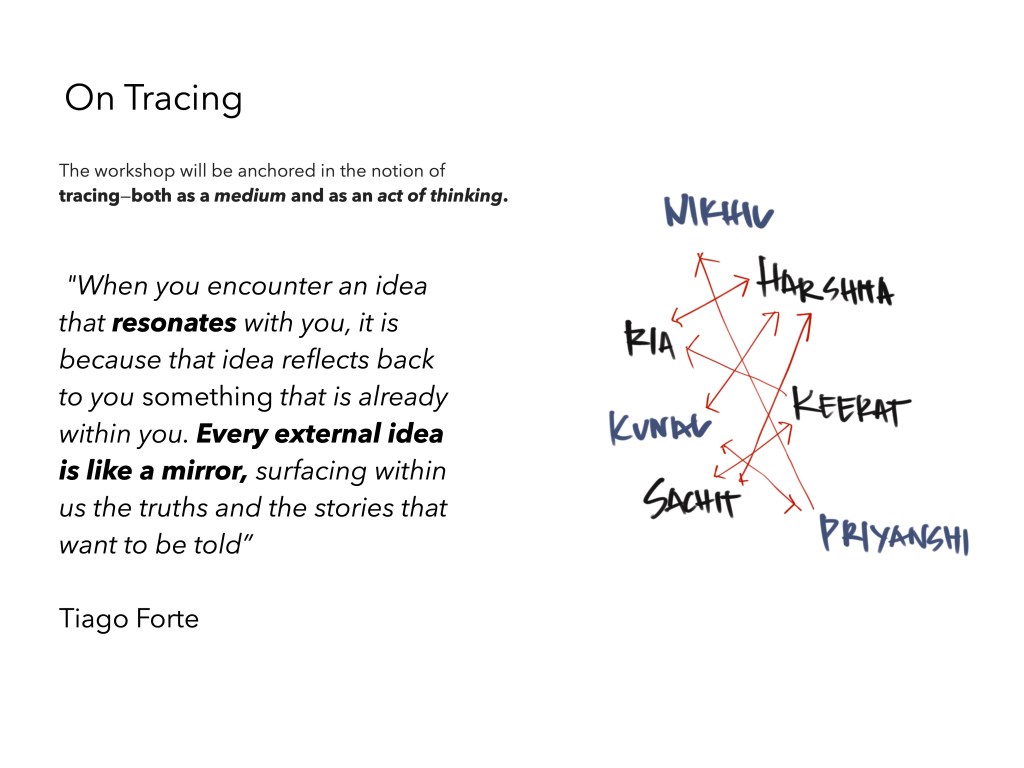
This is the list of participants from my group : Keerat Kaur Gill (SEA,Mumbai), Harshitha N Kumar ( SPA, Vijayawada ), Ria Desai (LS Raheja, Mumbai), Sachith Vithange (University of Moratuwa, Sri Lanka), and CEPT Students – Kunal Barve, Priyanshi Shah, Nikhil Joshi
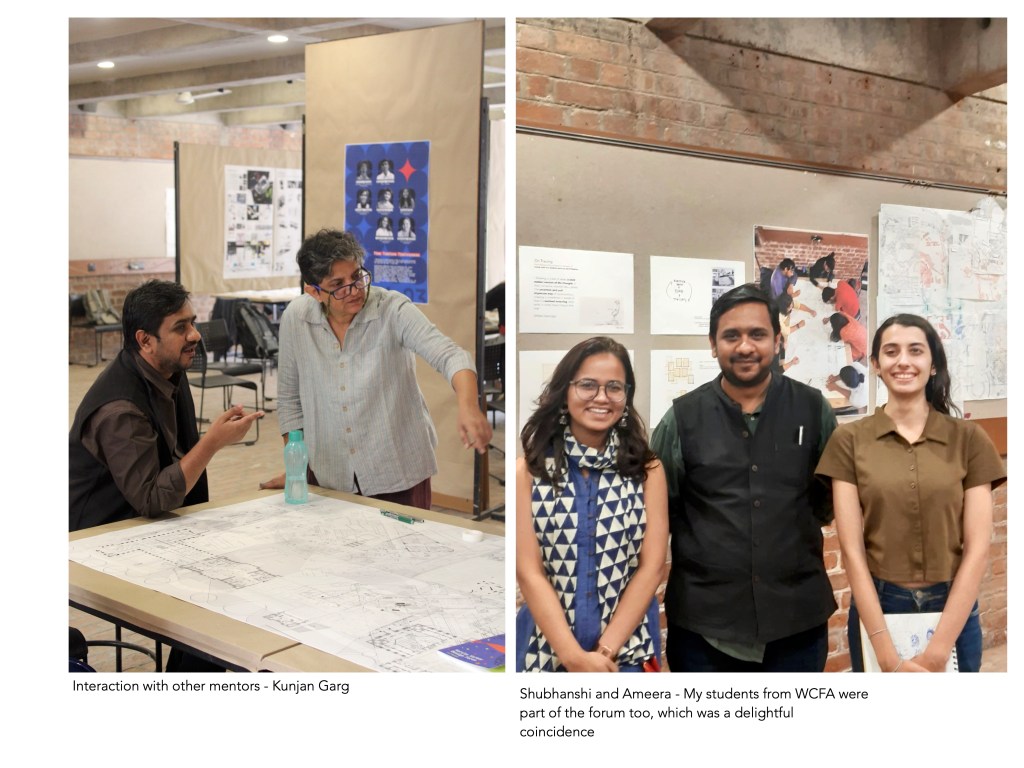
The other mentors were an impressive line of heavy hitters like Smit Vyas, Kunjan Garg, Ujjwal Dawar, and Saurabh Malpani. Before the workshop started and when the list was announced, I was intimidated by this list and the past legacy of the forum. It almost took me the first day of the workshop to settle. The new format and the premise of the workshop also challenged me. It was a nice opportunity to step from the everyday classes at Mysore and to experiment a bit with students whom I had not met before. The format was also an experiment, where I got to test some of my pedagogical ideas of drawing, tracing, and collaboration in creative work.
Note for the theme of the workshop – ( I wrote this before I went to the workshop as the premise to operate.)
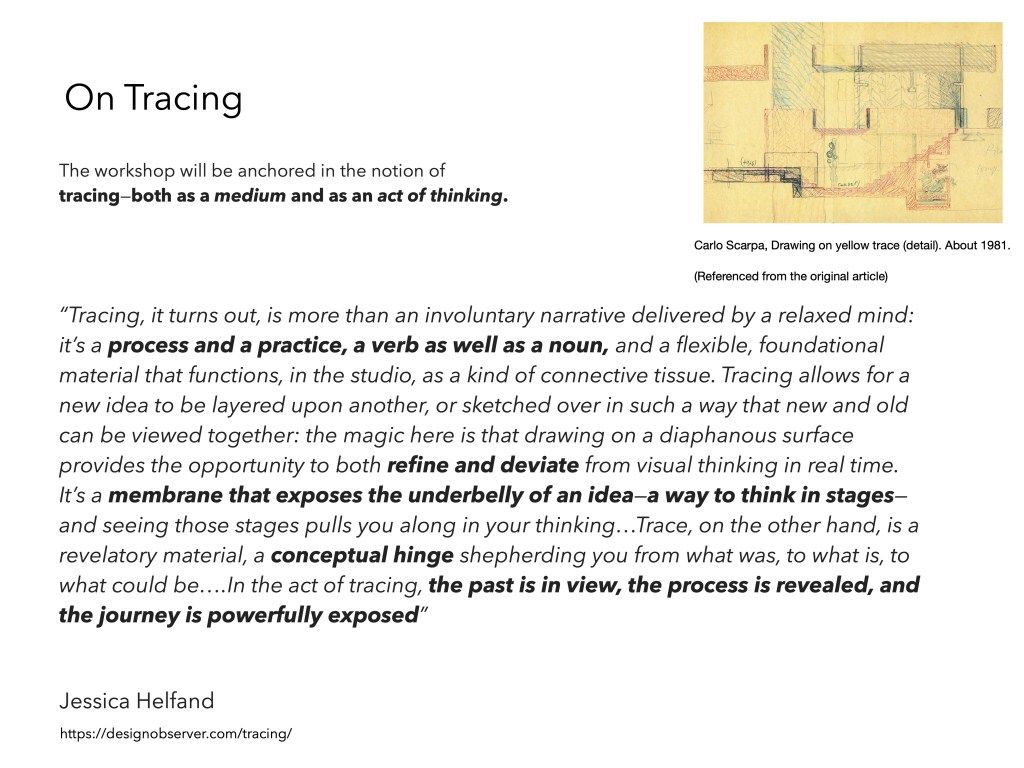
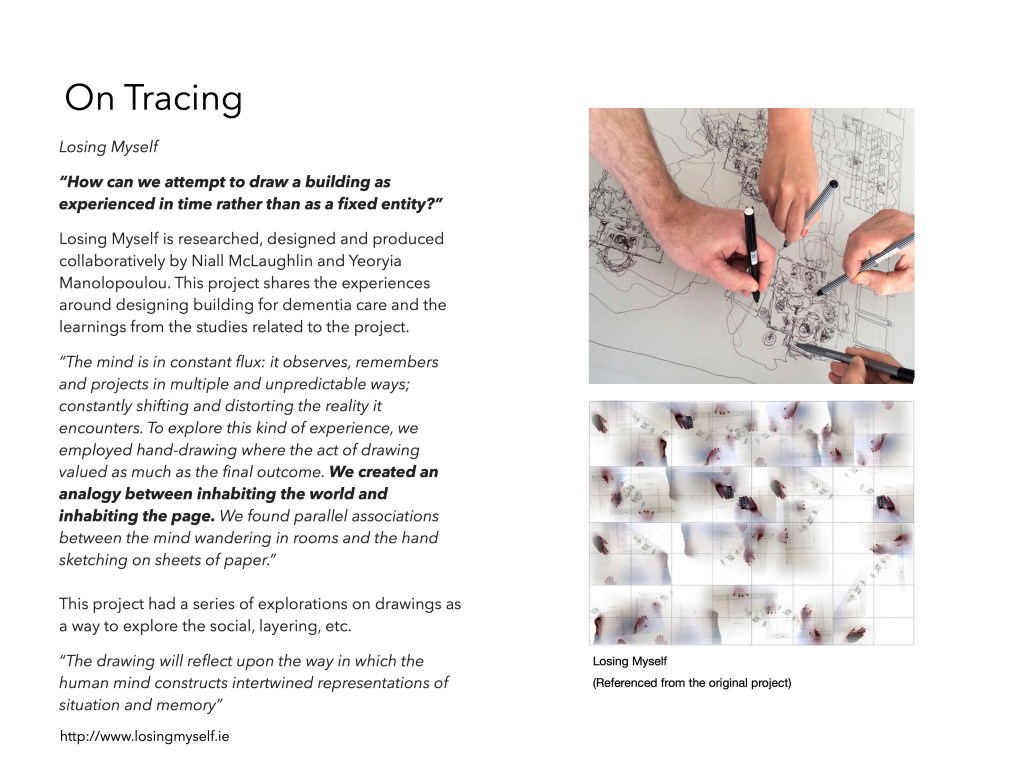
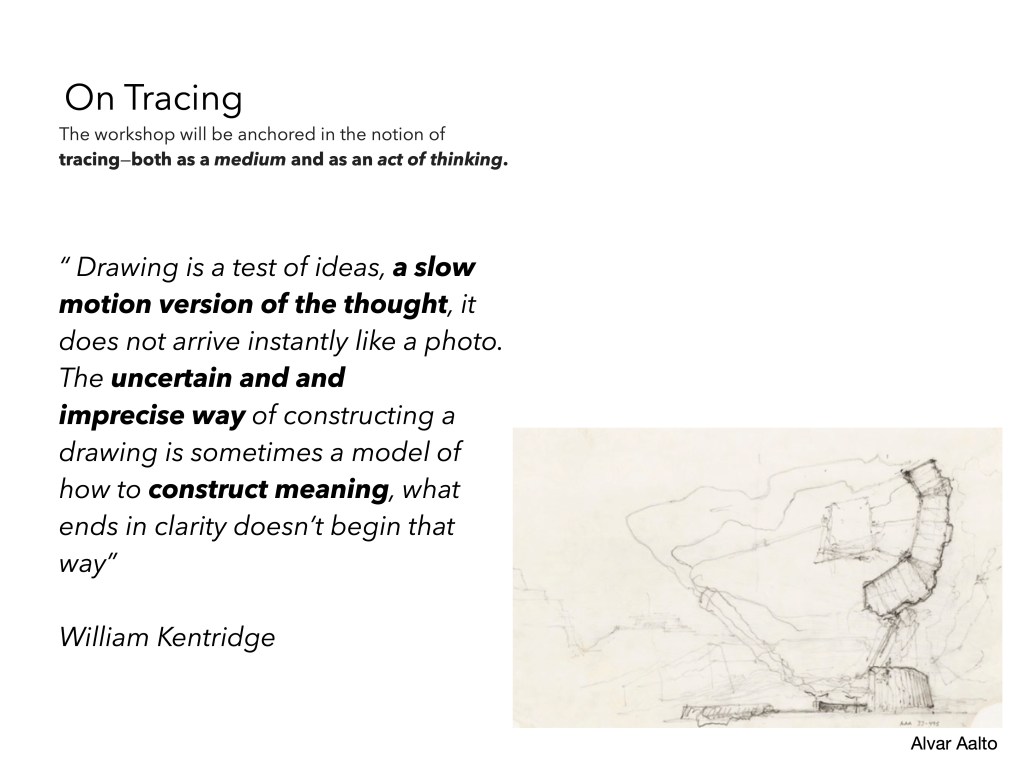
The workshop will be anchored in the notion of tracing—both as a medium and as an act of thinking.
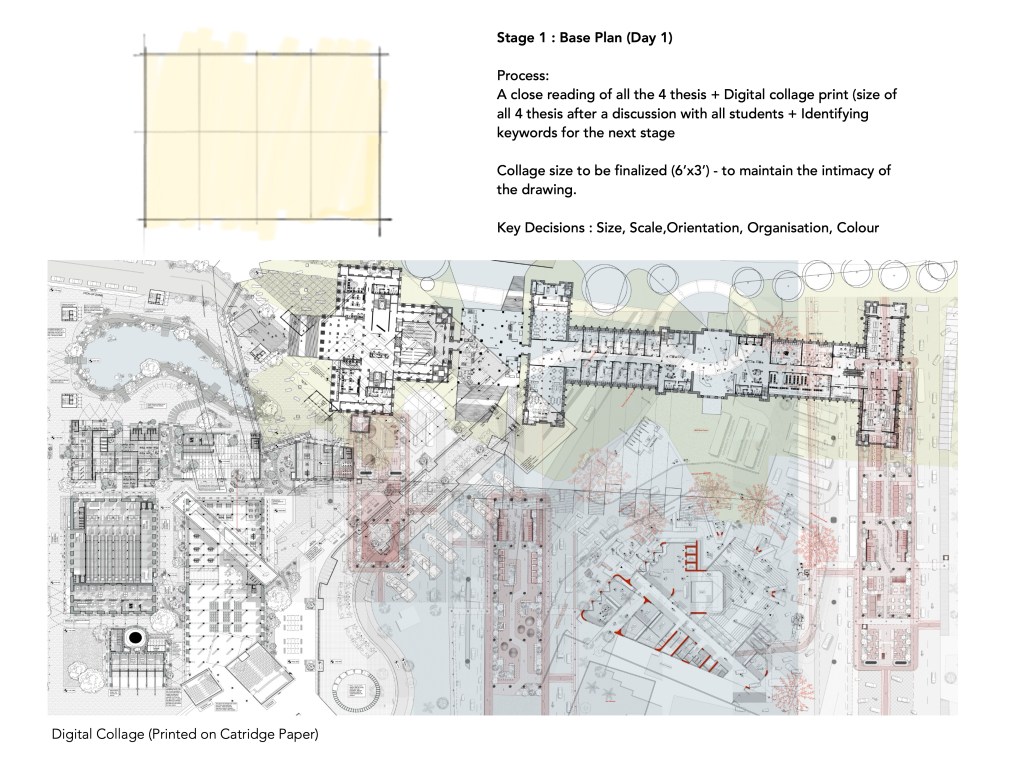
Building on this premise, the workshop will begin with the creation of a large base drawing (digital collage print to save time), conceived as a stitched collage of plans. This composite drawing will act as a ground. Over this, multiple layers of tracing will be developed—varying in scale, theme, and intent—using overlays to incrementally build meaning. The emphasis will be on layering, deviation, refinement, and the productive tension between continuity and departure. The workshop will be drawing-intensive, supported by a small number of short interactions to frame and reflect on the process. This is more on the method yet, finding a way to anchor with the theme of ‘time‘.
Process:
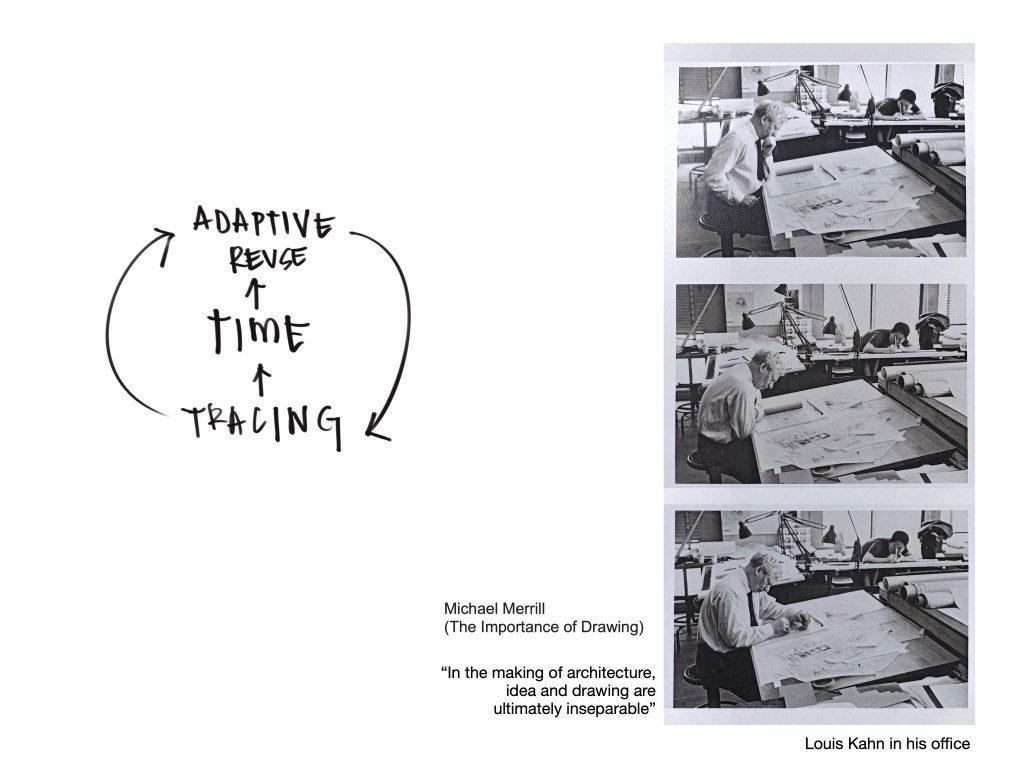
As this was an open-ended workshop, the mentors were given a theme note two weeks earlier, while the students’ work was shared only two days prior to the workshop.One of the starting points for me was the question: how can four students—deeply embedded in their thesis work, yet now carrying some distance after graduation—engage with the workshop together? Alongside them were three CEPT students from the third and fifth year. I was keen to explore collaboration within this mix. The students came from varied schools and backgrounds, with very different methods of enquiry. Coincidentally, all the theses in this group were related to adaptive reuse. At a personal level, I have been revisiting tracing as a way to slow down—an embodied mode of thinking and exploration. This became the premise I set for the workshop. The concept note on Tracing from Jessica Helfand and Niall McLaughlin explorations on the same theme (shared below) are key anchors and precedents for this workshop.
Act of drawing:
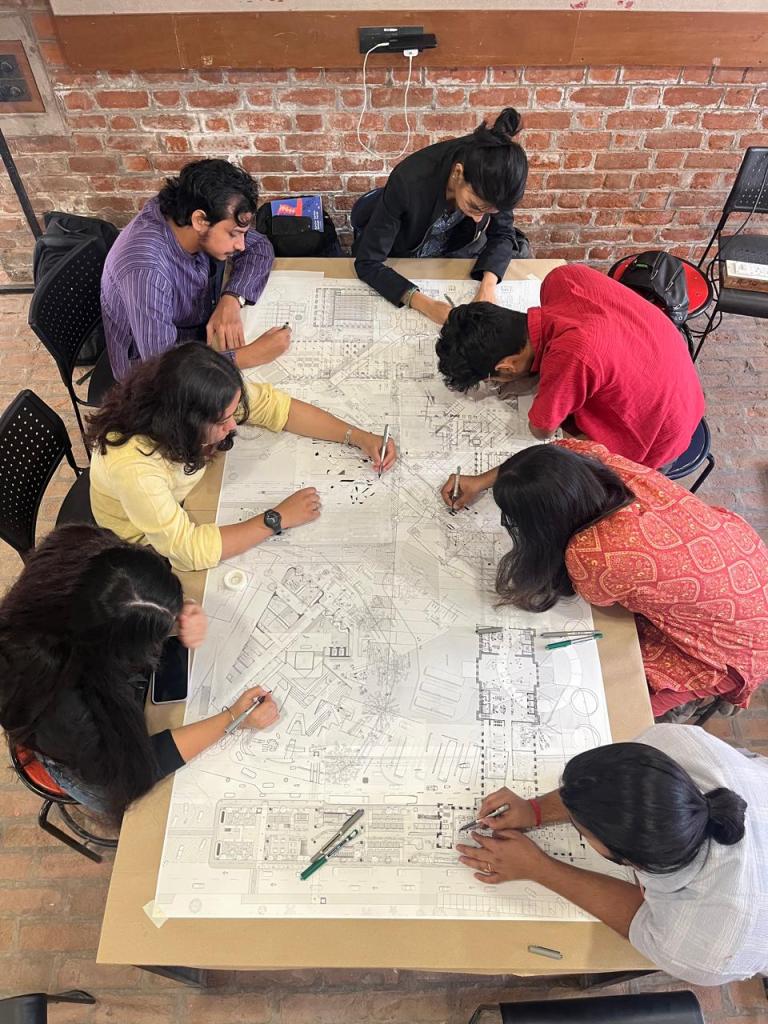
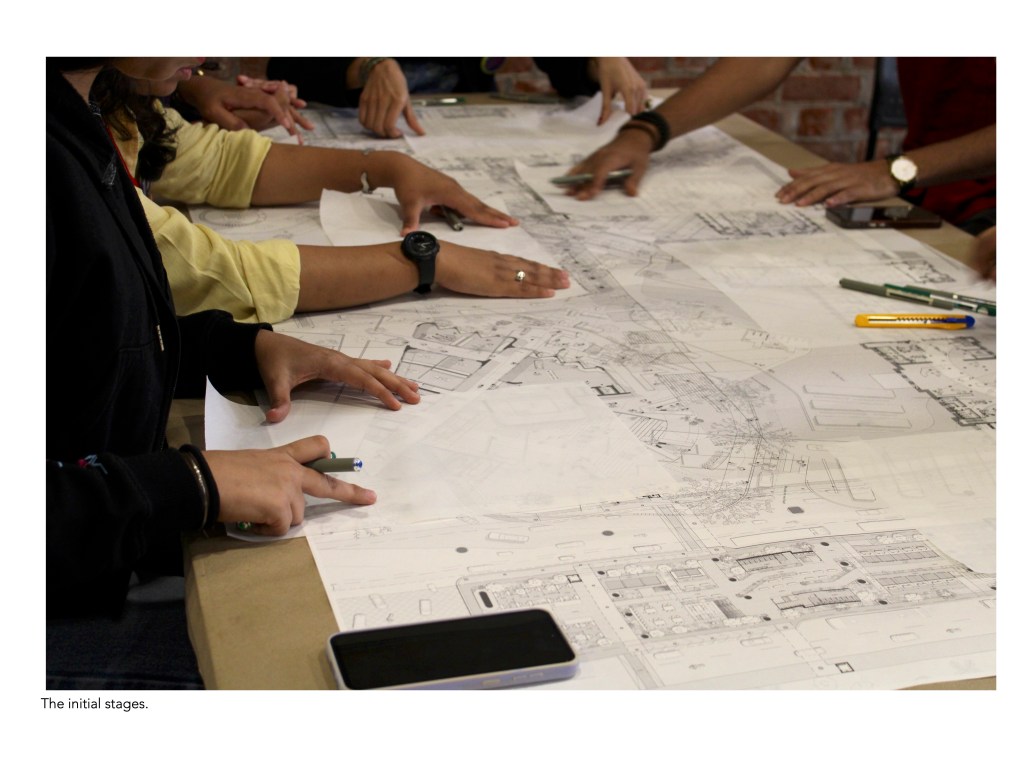
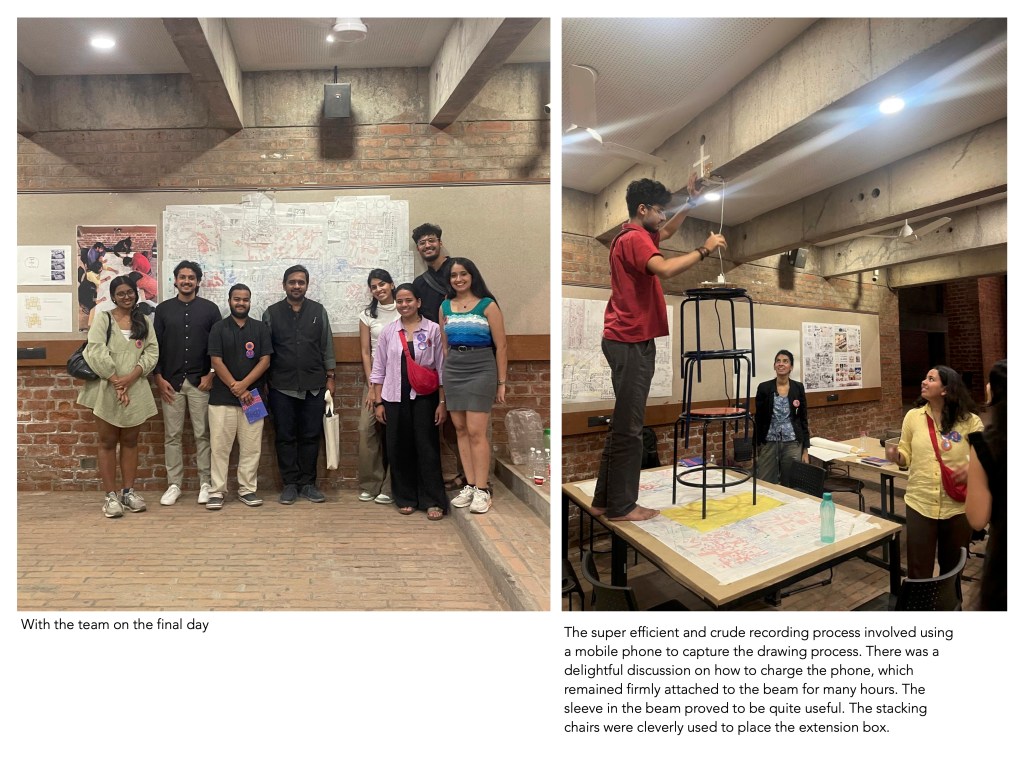
On Day 1, the four theses were collapsed into a single digital drawing and printed as a 6’×3’ sheet on cartridge paper. We spent time discussing the idea of collage—assigning each thesis a colour, negotiating scale, and determining the size so that all seven participants could sit around intimately around the drawing and work on it simultaneously.
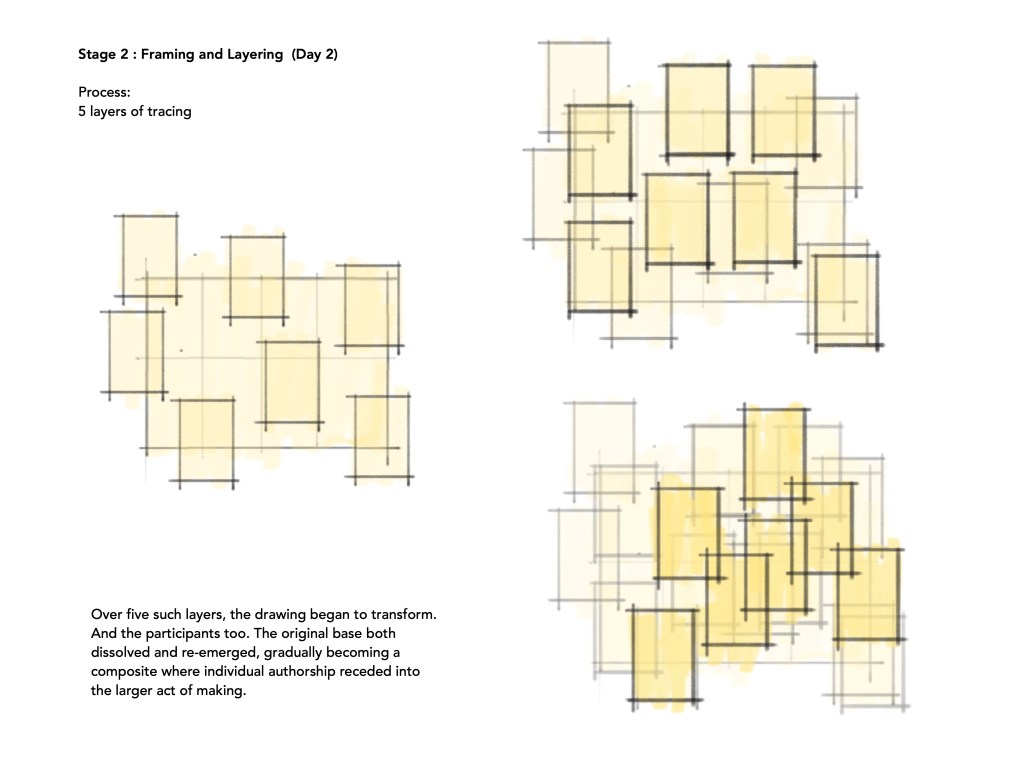
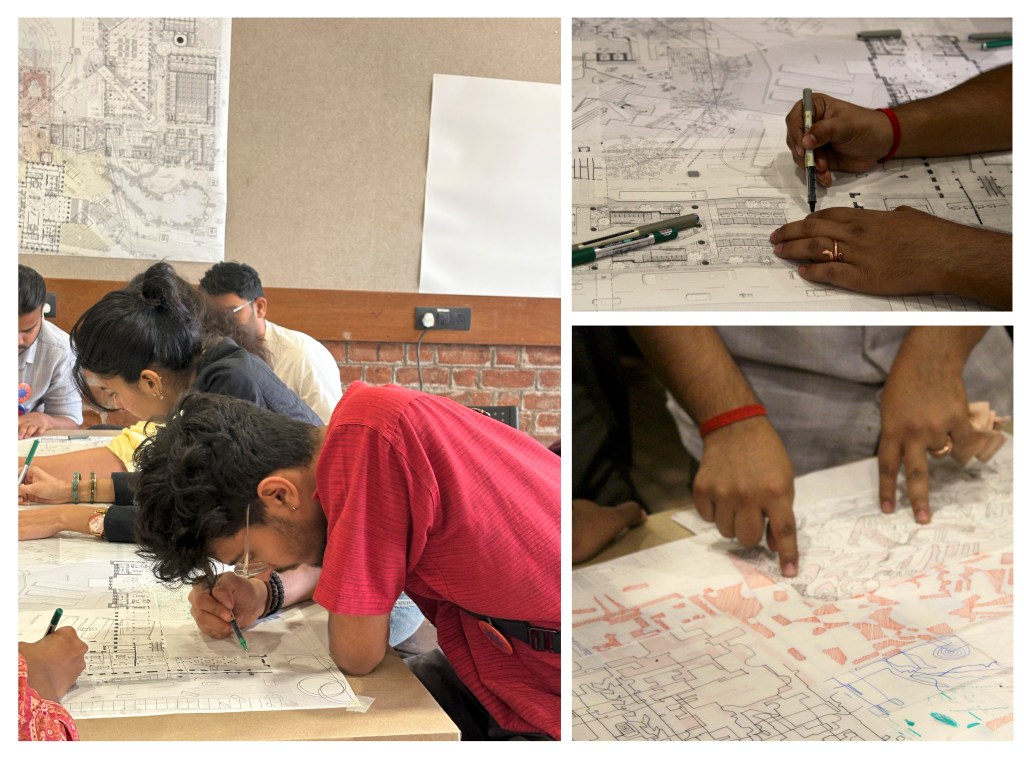
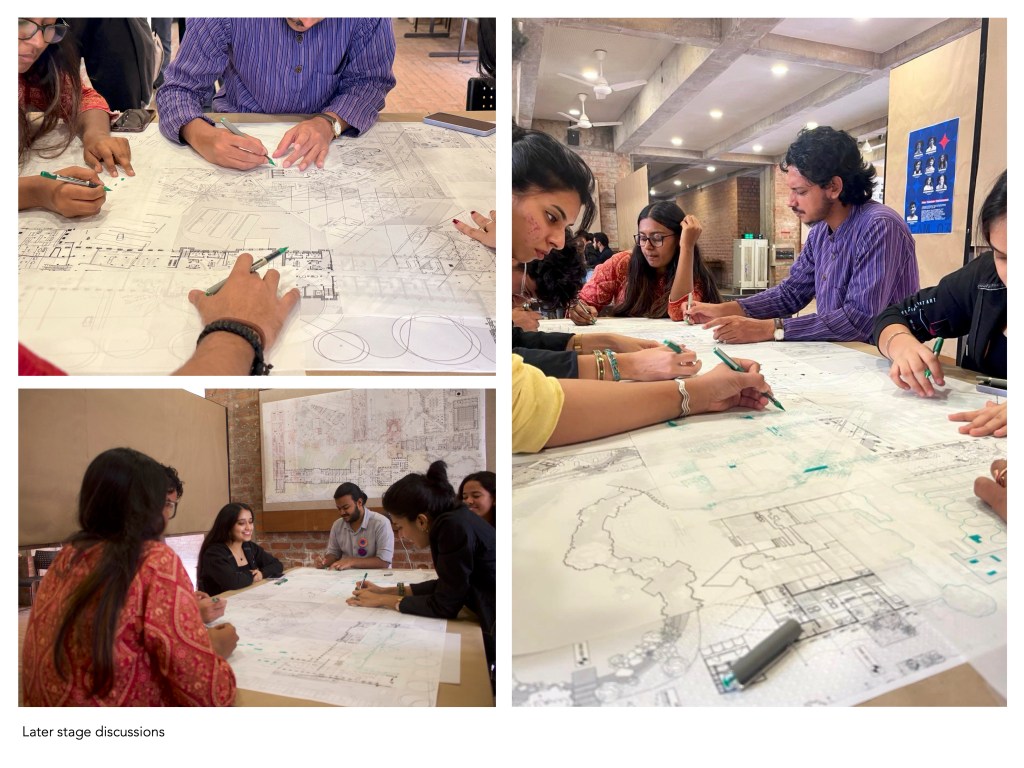
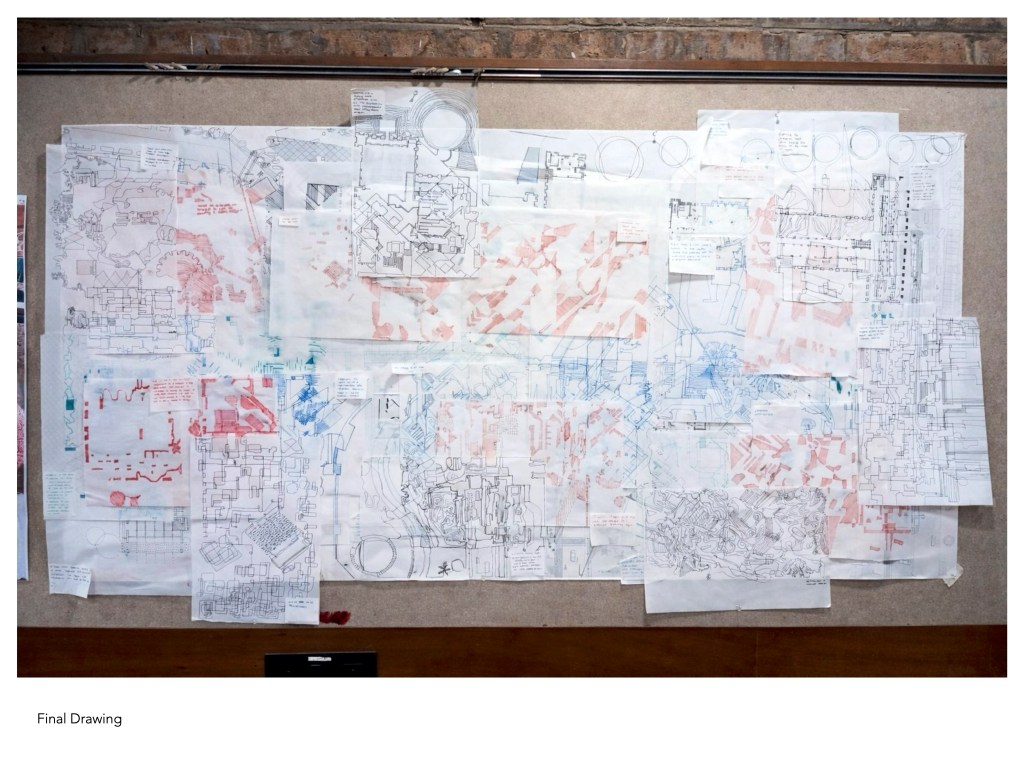
Day 2 was devoted entirely to tracing. Each student worked on an A3 tracing sheet. A session of tracing lasted about 40 minutes, followed by an equally long break. In each session, students traced using a single colour. For the next session, they shifted positions and began again. After every round, we paused to discuss what each layer would engage with—colour, pattern, method, or emphasis. Over five such layers, the drawing began to transform. And the participants too. The original base both dissolved and re-emerged, gradually becoming a composite where individual authorship receded into the larger act of making.
[ Sachith, a team member, upon reading this blog, shared a much sharper perspective on how the 5 layers and stages of drawing advanced. His note :
“The layers had different approaches. The first layer was about drawing intuitively on others’ drawings, though by the end some of us felt we needed some kind of guidance. So for the second layer, we worked with the term ‘movement.’ We felt the first layer was better at collapsing the drawing, but we still needed some motive through which we could work together. In the third layer, we introduced a physical constraint: drawing a continuous line over the drawing, while still keeping the freedom to start and end at any point we liked. This layer was transformative. We felt that all of us really started to collaborate, and the base drawing truly collapsed and became ‘one.’
The fourth layer was about adding shapes and hatches. After that, we felt we had to add another layer similar to the third, so we ended the tracing process with the fifth layer—not as a point of end, but as a base to begin another process” ] Note added to original post on May 3, 2026
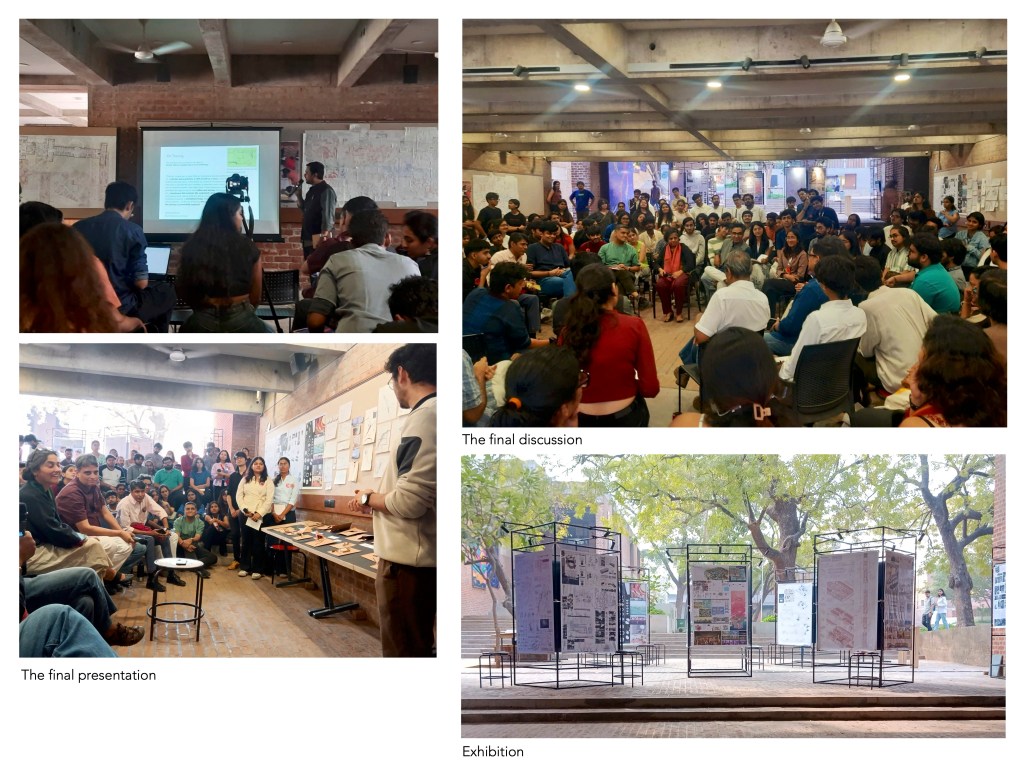
On Day 3, the students independently presented the outcome as a video with a voiceover, reflecting on both the process and their learnings.
Through this process, four distinct theses became one shared drawing. The slow act of tracing created space—for conversation, for digression, for ease. Much of the learning happened within this act of drawing itself.
Below are the key slides from the final presentation I gave, which covered the intent, method and precedents for this approach. Also some photos from the event
Notes:
A note of thanks to Shreyas Baindur and Madhuri Rao for all the constructive feedback at the initial idea stage.
All photos and videos are credited to the KVDF organizing team, participants in my team, Shubhanshi, myself and other members of the event.


You must be logged in to post a comment.