Research and Design

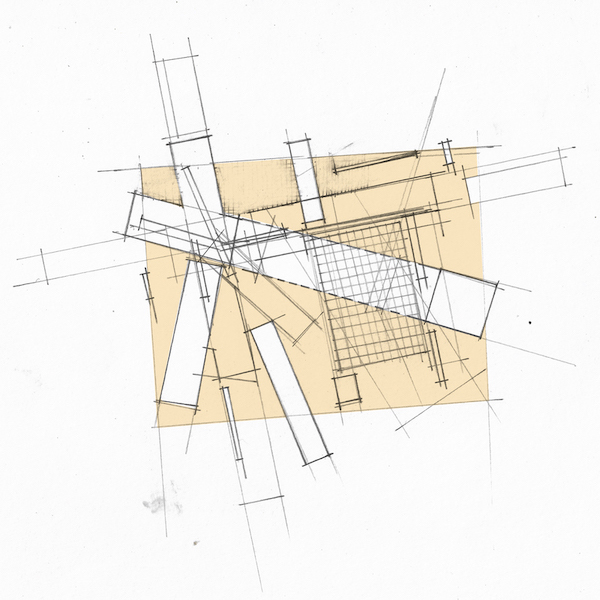
Just a quick diagram to articulate a question I’m thinking about. What is the relation between research and design? Particularly for an undergrad design thesis student. Will the research lead to a singular ‘profound’ statement or a diagram and then the design will just happen? Or a combination of research and design (with a lot of overlap) that will lead hopefully to think about architecture in a thoughtful manner?
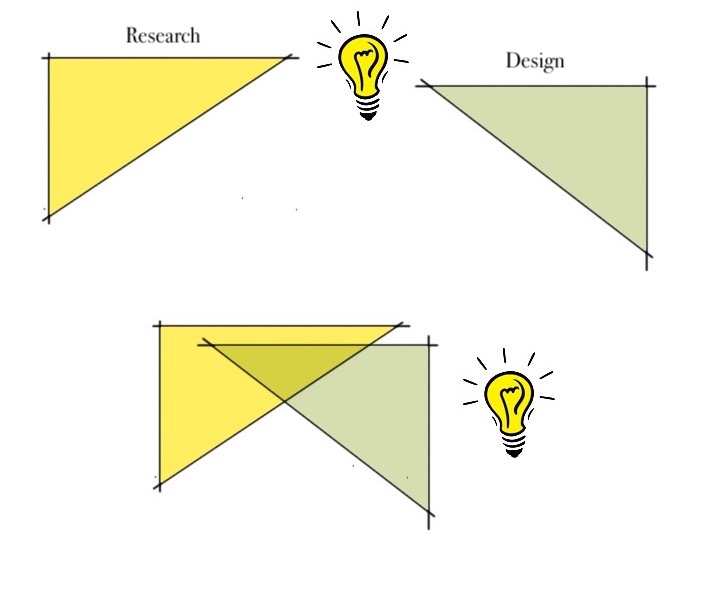
 

Class Drawing1

Seeing oneself in paper

I am quoting a brilliant paragraph from Anne Lamott (Bird by Bird : Some Instructions on Writing and Life) on writing here. I feel this emotion is similar to the act of drawing too.
.
Talking about a poem which got published when she was in second grade, Anne Lamott writes “I understood immediately the thrill of seeing oneself in print. It provides some sort of of primal verification: you are in print; therefore you exist. Who knows what this urge is all about, to appear somewhere outside yourself, instead of feeling stuck inside your muddled but stroboscopic mind, peering out like a little undersea animal – a spiny blend, for instance – from inside your tiny cave? Seeing yourself in print is such an amazing concept: you can get so much attention without having to actually show up somewhere. While others who have something to say or who want to be effectual, like musicians of baseball players or politicians, have to get out there in front of people, writer who tend to be shy, get to stay at home and still be public. There are many advantages to this. You don’t have to dress up, for instance, and you can’t hear them boo you right away.”
.
I feel the same with drawing.
drawing as ’seeing oneself in paper’

10 reasons : Why Corbusier is still relevant

The trigger for this piece is the I talk I watched by Ramachandra Guha in the The Hindu Literature Festival on “Ten reasons why Gandhi is still relevant”. On similar lines I was thinking why Corbusier is still relevant today. This is no way a comparison between Corbusier and Gandhi. It would be silly. The only thing common i believe is their ubiquitous presence. Their names are so familiar that we often we often miss the value of their contribution. In my personal practice, i rarely look up on Corbusier’s projects for reference. But in teaching he can become a great academic tool. Previously I wrote a piece titled ‘Shades of ramps’ which traces the idea of the ‘ramp’ thematically. Scholarship around Corbusier and likes, allows this type of exploration of ideas. Kenneth Frampton writes incisively about Corbusier in his monograph :
“To publish another book on Le Corbusier after so much has been written by himself and by others is to run the risk of redundancy; yet it will be along time before we shall free ourselves from the fertility of his vision and the range of his influence. In fact, as the new century unfolds and as our knowledge of his overall achievement continues to grow, by virtue of even more meticulous scholarship, we have all the more reason to feel that we will never quite finish with the labyrinth scope  of his production : Architect, urbanist, painter, graphic designer and writer, polemicist and mystic. Le Corbusier was a figure of many guises, to such a degree that it is hard to know where one role ends and the other begins. At the same time, we are aware that a reconciliation of opposites was an irreducible aspect of this method”
.
I tried to put down ten points, reasoning why Corbusier is still relevant today.
.
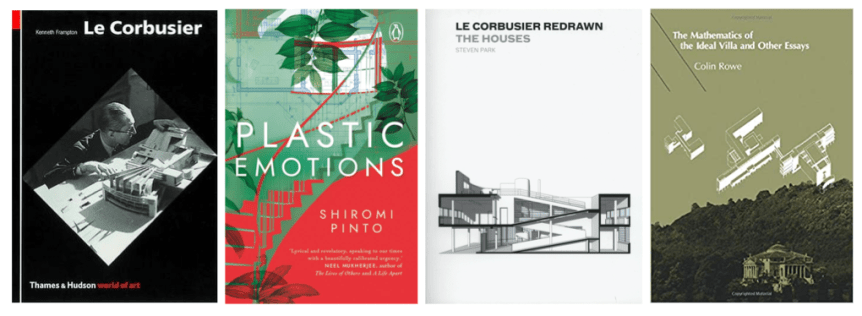
  1. Books written on him. Starting from Kenneth Frampton’s monograph to Colin Rowe’s essay ‘The Mathematics of Ideal Villa’, there are brilliant and engaging lenses to investigate his incredible body of work. My recent favourite is ‘Le Corbusier Redrawn’ by Steven Park, in which 26 of his houses are redrawn impeccably to 1:200 scale. The recent novel ‘Plastic Emotions’ by Shiromi Pinto delicately weaves him into the story of Minnette De Silva and rise of modern architecture in South Asia.
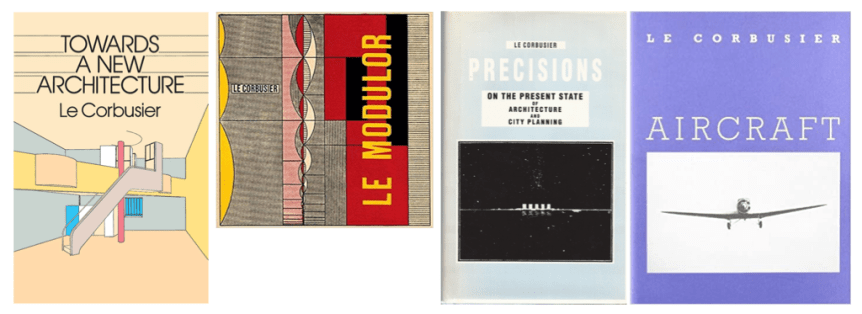
  2. Books written by him : His writings preceded his radical work. He has written close to 40 books. He has been writing continuously alongside his practice, which shows his struggle with ideas. He has continued the line of Vitruvius, Alberti, Palladio to precede theory before practice. His topics are so varied, that one of the books is on ‘Aircrafts’.
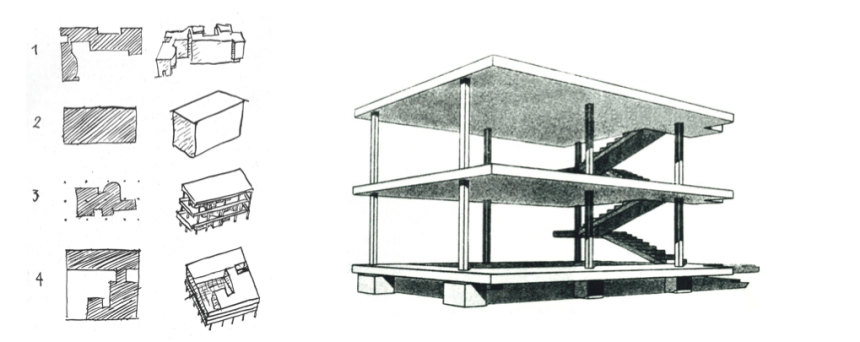
  3. Four Compositions,1929 and Domino House,1914-15. These two diagrams codify and communicate architectural methodology in a precise way.
  4. Villa Savoy. I had the privilege to see this house as a student. It is after this project, I discovered Corbusier. My thesis guide Prof. Rajan used the word plastic to describe a key concept of modern architecture. Space was plastic in this house. It was wound around the ramp and held between different degrees of enclosure. It was an orchestrated release from the ground to the sky.
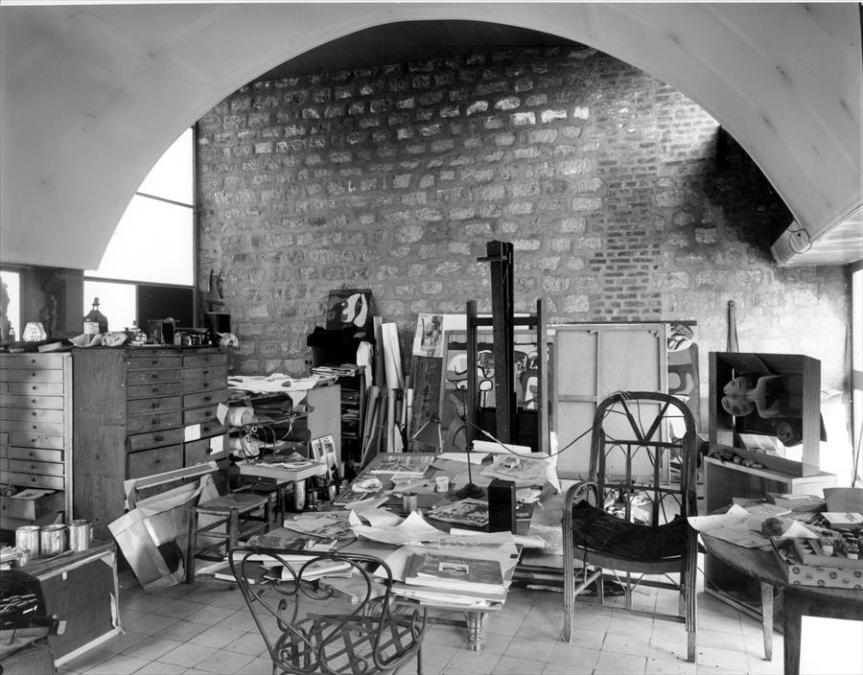
  5. He painted. In his house in Paris the most eloborate space is dedicated to the art studio. The drafting table sits in a quite little corner next to this painting studio.
  6. His built in India. He built in India during the end of his career. It is interesting to see the modifications he had to make for his ideas. Sarabhai House is so brilliant and particular.
  7. He changed his mind : It is ok to change one’s mind. He broke all the rules he set for himself. He built Ronchamp. What an incredible interpretation of a religious space by an atheist!
  8. Scale of the projects. The scale varies from a city to a cabin design done with the same rigor.
  9. He traveled. ‘Journey to the East’ is a book which capture his learnings from his travels. His famous sketchbooks are an great sample of his learnings.
  10. He drew. Wherever he went. On travels or on his study table.
Untitled.001
Some books written on him
Untitled.002
Some books written by him
Untitled.003
Left : Four Compositions, Right : Domino House
Studio
His painting studio in Paris

‘Preparing’ for a lecture

IMG_20200303_103635
.
This is how I ideally would like to prepare for a lecture. The average assumption is that is the normal scene of teaching process. No. It is not. One has to earn this moment/s between other things – discussing, meeting, attending, lecturing, getting lectured, guiding, correcting, formulating, etc.  I feel that this is the most important threshold of teaching for teachers, preparing for a class (could be for a theory subject or design studio). This moment is rarely discussed or acknowledged because it is not visible normally. I feel this is the crux. To make and articulate connections. As an academic, one is not making buildings or also involved in pure research. The making and pure research are at the extreme end of the spectrum of architectural thinking. Both are tangible in their own ways – buildings and books/papers. It is the general assumption that academics are closer to pure research. Slowly I am realising this distance is also far. We play in the middle ground. Also I am realising that the middle ground has a lot to offer. It is a fertile zone to make connections, which can allow some fundamental insights to inform the ends of the spectrum. Then what makes our work tangible?  We make connections and articulate conditions between ideas, buildings and ideas of buildings. So this photo is of a moment where I am preparing for a lecture for second semester design studio. The topic I am going to discuss in class is the architecture of pavilion and the room. My co-faculty Kavana will be starting the lecture with the plinth and the wall.
So here are the components of the preparation (Starting from right)
  1. The book ‘Thematic Spaces in Indian Architecture’ by Kulbhushan Jain is an object of pure research. A book which I have from long time but recognised only recently. I am partly aware of the processes/struggles he goes through to publish these book. Dedicating years to each of them. I had the wonderful opportunity to study under him. Hence this book is really important for me. Not only for what is says and but also what it means, to be teaching.
  2. A A5 hardbound sketchbook is the core of the thinking process. An anti-dote to the virtual. I try to carry it always. It is a collections of readings, observations, scraps of thought, drawings.
  3. A A5 spiral portrait cartridge sketchbook – is what I call the ‘college notebook’ has ideas particular ideas for my classes.
  4. A laptop – limitless-overwhelming connection to information. I like to ground/check this virtual platform this with the sketchbook.  The mostly minimised PPT file (or the Keynote file for Apple users) in the parallel window.
  5. A hard disk – unorganised messy pdf’s of books, old presentations, previous semester works, lesson plans, notes, etc.
  6. Coffee – I added it to the scene deliberately to make the mood creative-like ( not to feel left out from the “real” world of  “practicing” architects)
  7. Soft board – A collage of references, lists, academic notices, schedules, time table.

Nolan’s Drawings

inception-flowchart-by-nolan

I use this Christopher Nolan’s diagram in my lectures a lot. I end up asking every new batch, if they have seen the movie. Always surprised only few have watched. This is the outline of Inception movie. Whoever has watched the movie will agree with me that it is even difficult to narrate the movie to anyone who has not seen it. There are lot of interesting fan made posters on the web to unravel this complex narrative. Then imagine the trouble Nolan might have had to explain this narrative to his collaborators. I find this diagram (if you can call it one) brilliant. If Nolan make a drawing like this to explain Inception, I don’t think there are any excuses on what a drawing or diagram can  not represent ( this tone of exaggeration come the rhetoric nature of teaching). It shows time and space together. A layer underused in architecture, as we deal with static objects most of the time. This another sketch below is from the story board his team made for  Inception, which shows movement in a single frame. I found this Youtube video (clip below) where he is discussing and constructing the story of ‘ Momento’. The interviewer prompts him to draw. Even though Nolan says “It’s confusing because I don’t think pictorial/diagramatically” makes this brilliant diagram of ‘hairpin bend’ which is stroke of genius and this gesture cracks the whole narrative of the movie. And looking at the video, Nolan here is ‘extrapolating’ the time-space nature of the screenplay into a single diagram here.

In an interview he gave to the Wired magazine he talks about the importance of
“distinct undercurrent about the importance of architecture” in his movies. Nolan answers :

“The only job that was ever of interest to me other than filmmaking is architecture. And I’m very interested in the similarities or analogies between the way in which we experience a three–dimensional space that an architect has created and the way in which an audience experiences a cinematic narrative that constructs a three–dimensional -reality from a two-dimensional medium—assembled shot by shot. I think there’s a narrative component to architecture that’s kind of fascinating.”

Nol
A clip from the Youtube Video
Storyboard
From the story board of ‘Inception’