First year exploration in drawing. Development of complex surface from simple 2D patterns. This diagram below is the starting point, followed by different outcomes
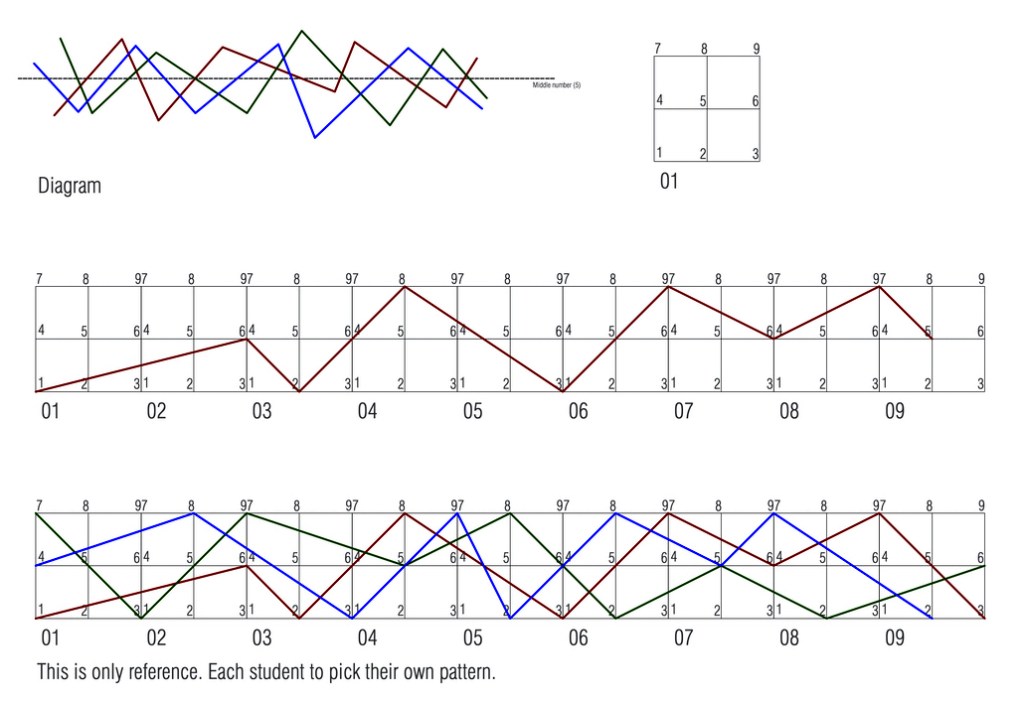


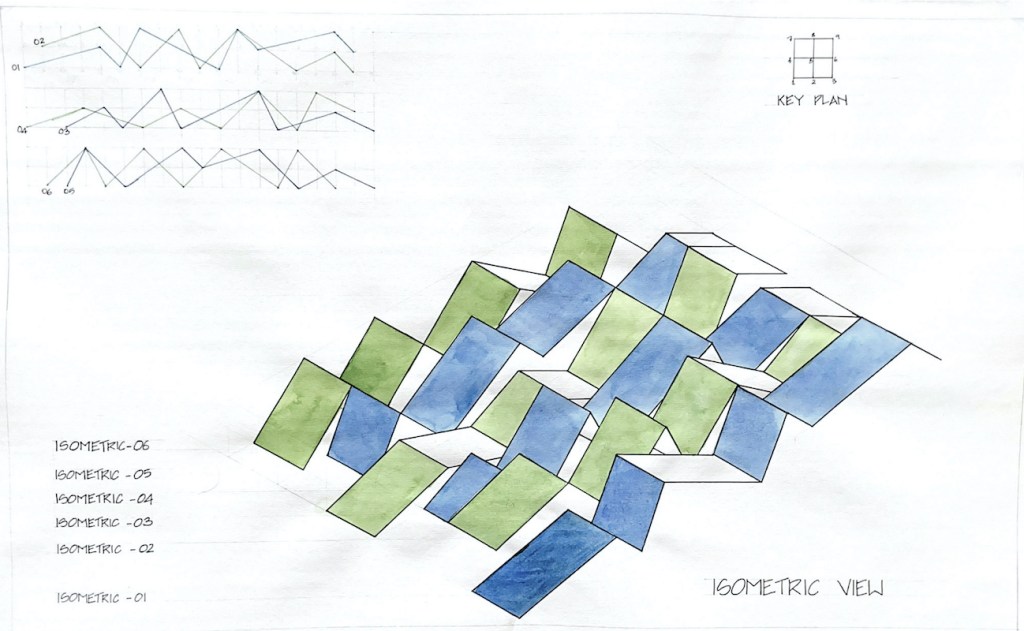

First year exploration in drawing. Development of complex surface from simple 2D patterns. This diagram below is the starting point, followed by different outcomes
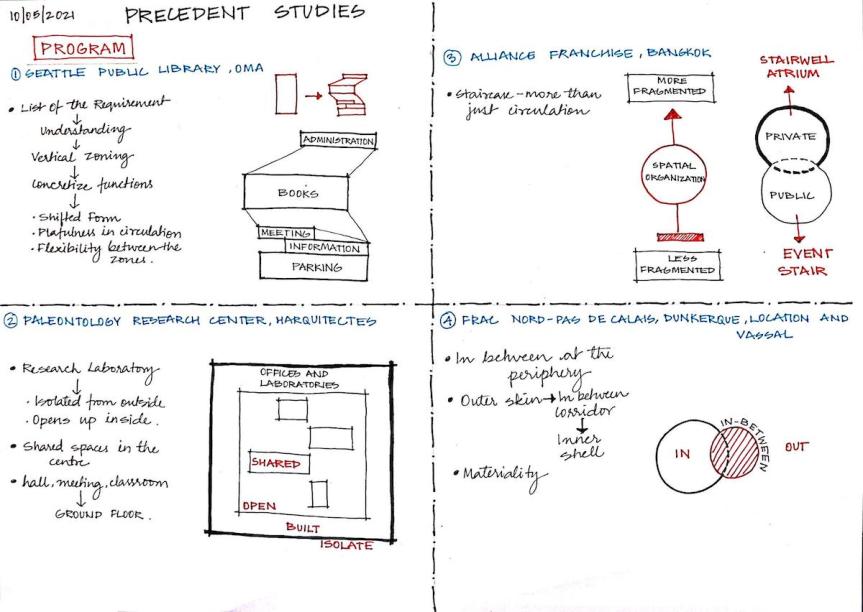
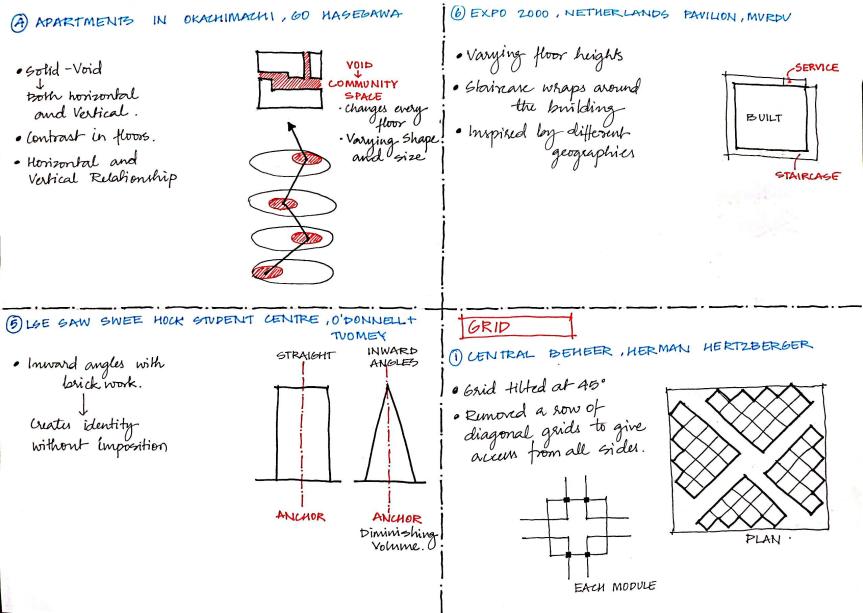
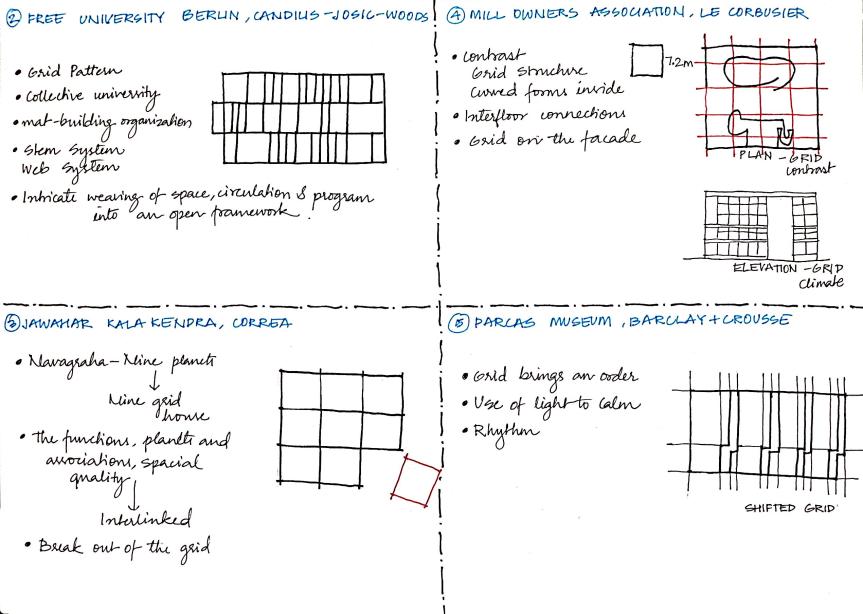
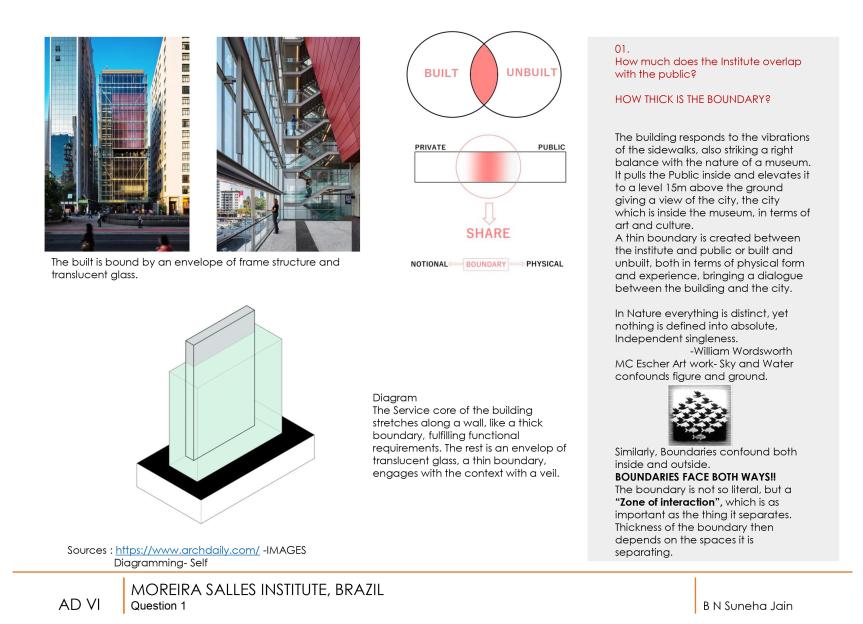
For semester 6 design studio, we are attempting precedent studies to get a grasp at the institutional typology. Instead of studying only the history of this particular type, we looked at a larger landscape of projects to study various conditions – form, tall buildings, program, grid. Suneha’s diagrams here very sharply record each example and elegantly uses the design brief as a lens to look at these eclectic examples. The specificity of this study comes from its focus which is revealed in these crisp diagrams and the questions posed to the project.
Credits : Suneha Jain, WCFA, Batch 2018

Complete Study – Click on the below images to view larger






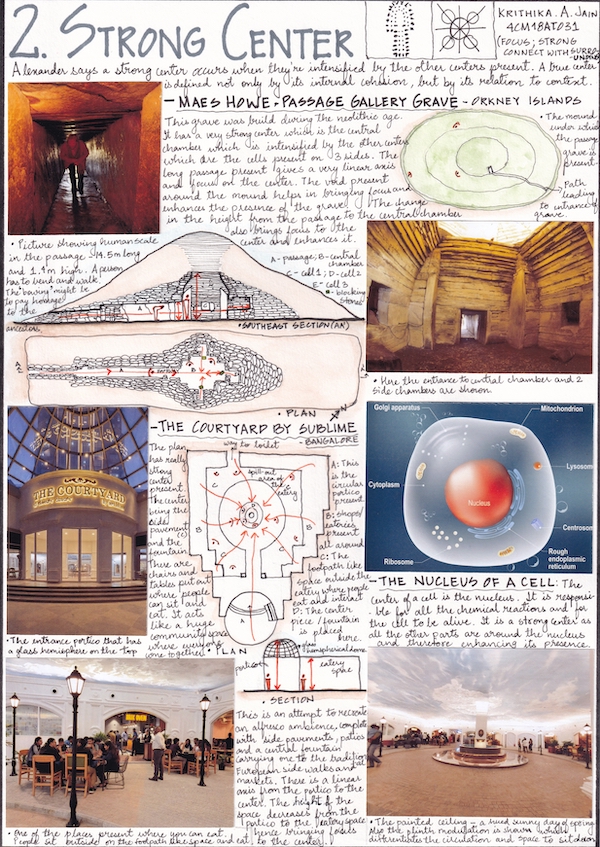
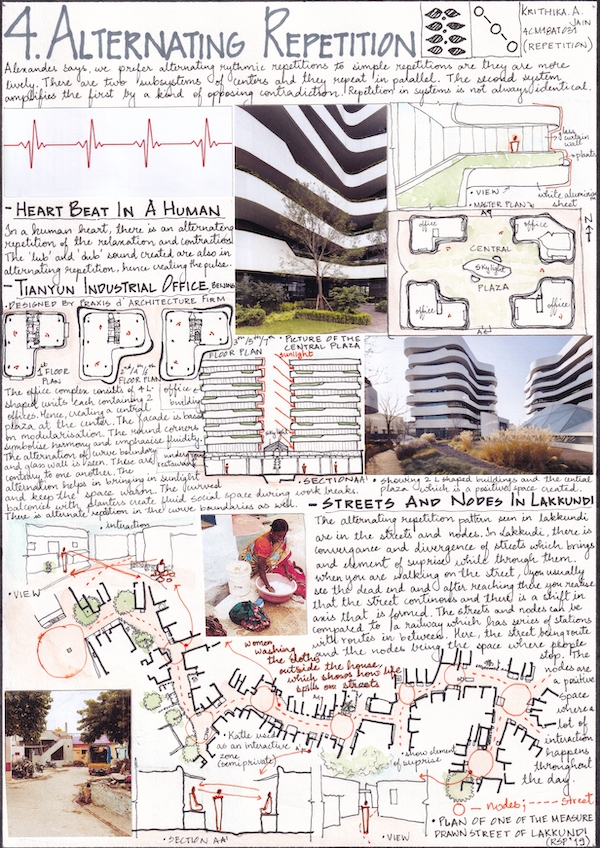
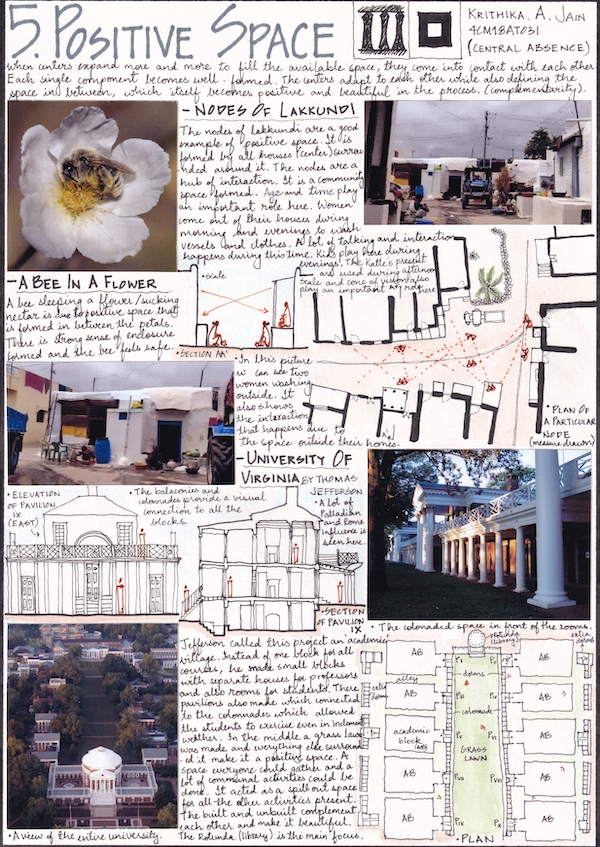
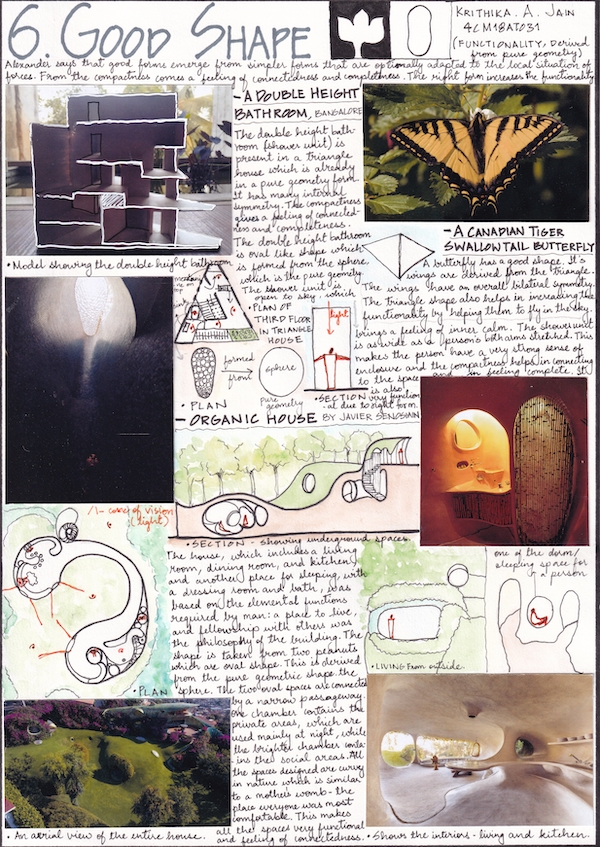
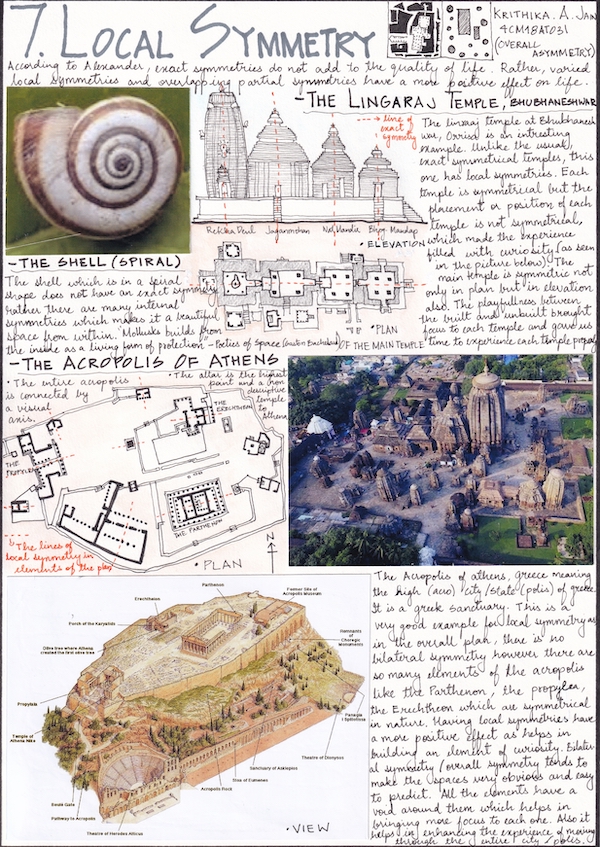
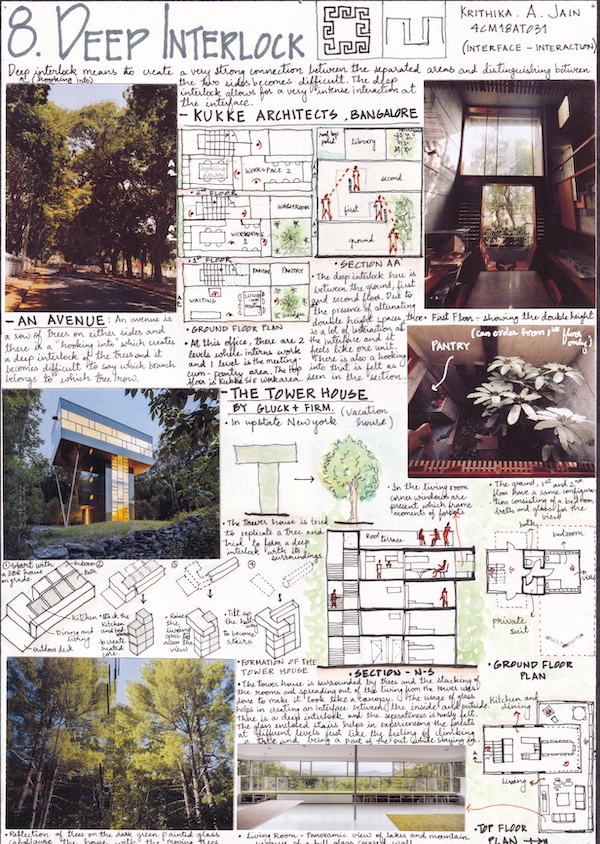
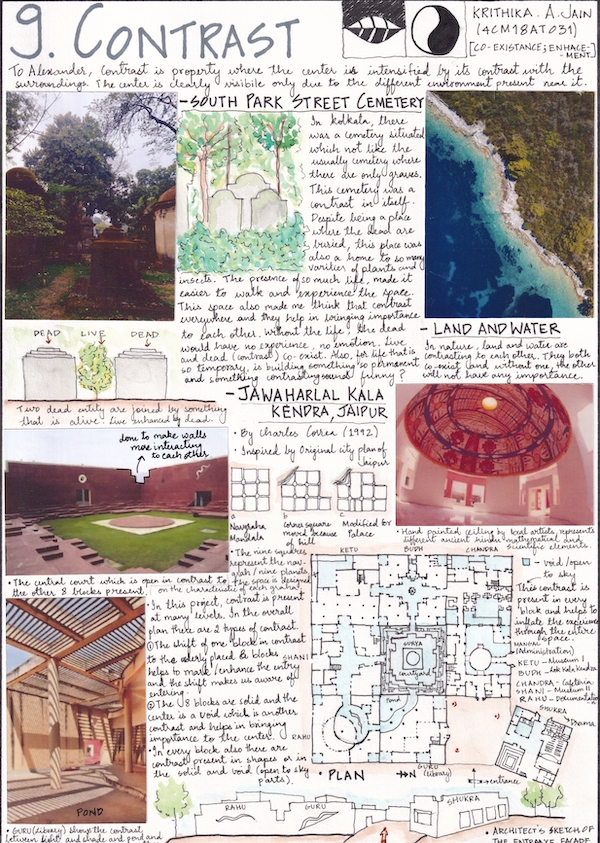
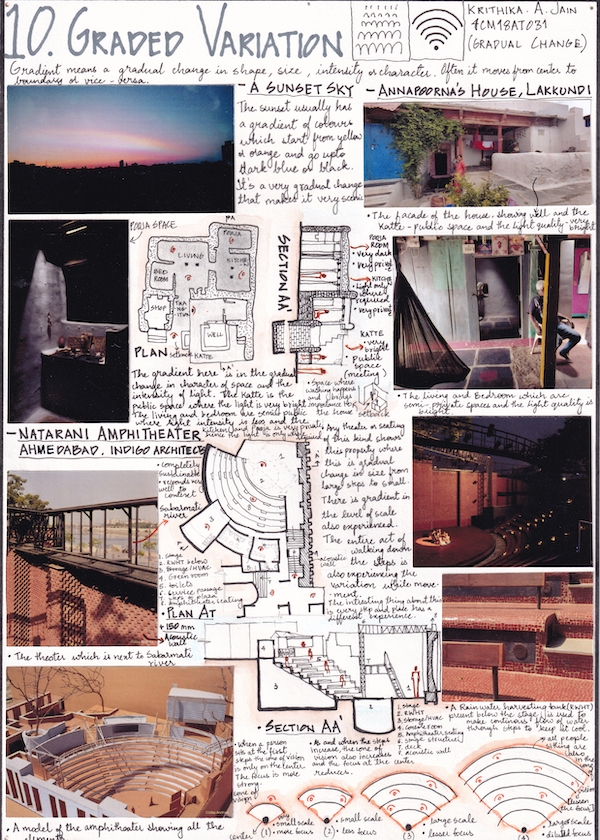
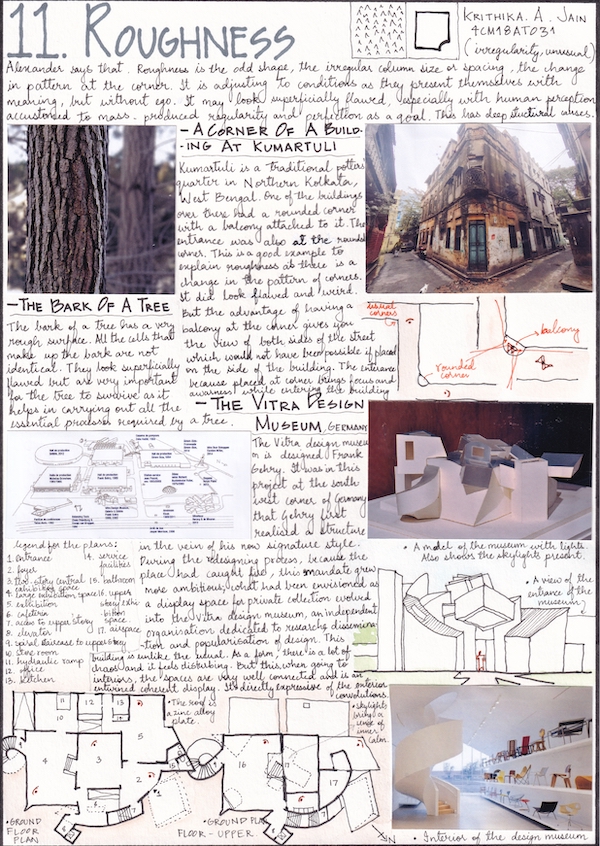
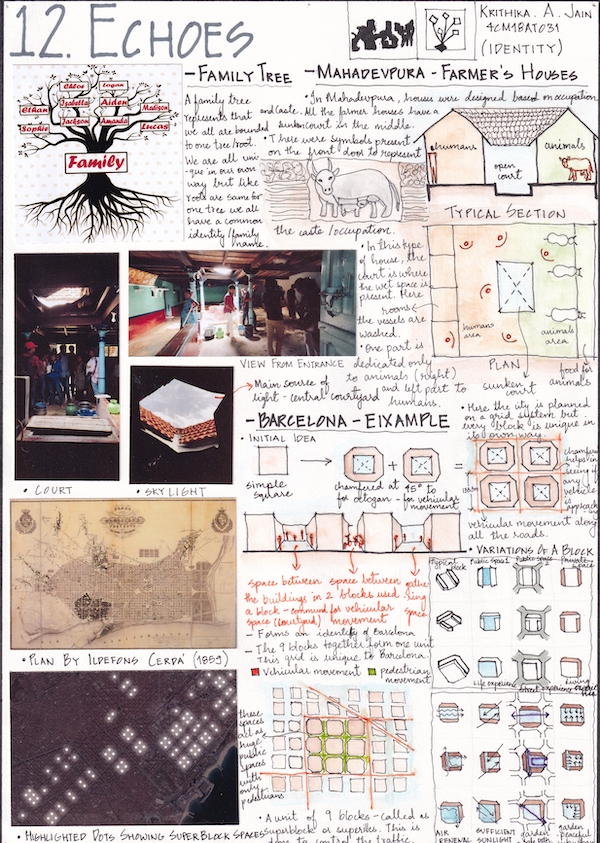
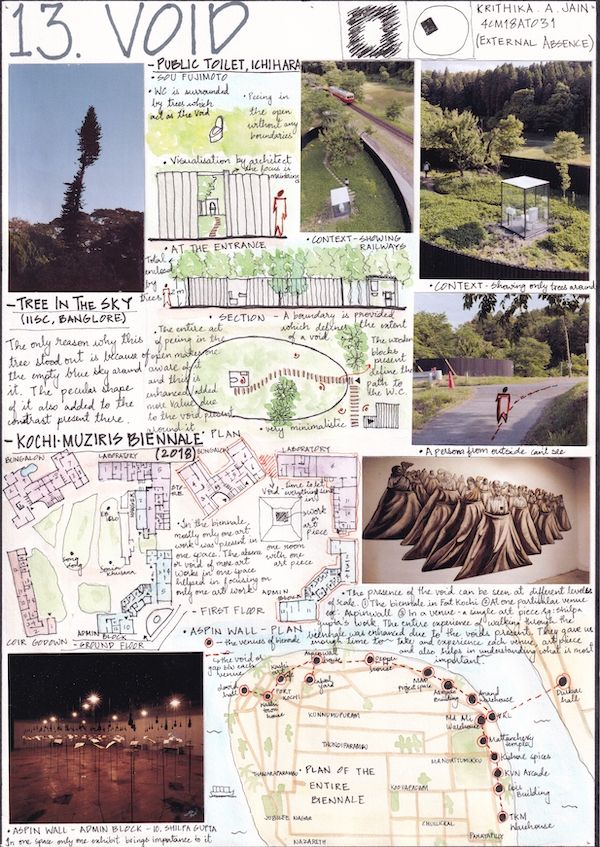
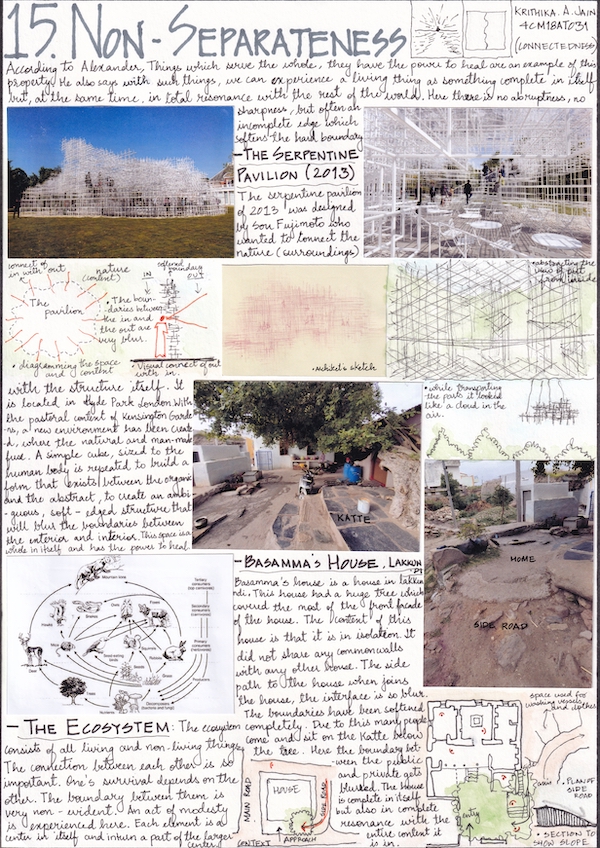
Student’s assignment from my theory class to illustrate Christopher Alexanders 15 principles in a more elaborate way. I have discussed this earlier too here. I feel it is a brilliant and useful structure with a potential to interpret in many ways. In this case the assignment was to relate each principle with 3 illustrations : a natural/scientific phenomena, a place/project visited, a palace/project studied. Krithika reinterpreted Christopher Alexander’s principles in a very comprehensive way. She uses this theory assignment as an ‘organising tool’ to structure her own experiences and ideas. She brings back her experiences from various study trips and measure drawing trips and weaves them to make her specific set of ideas which she can revisit. The tool of collage format (sticking photos + hand drawings) also enhances the value to this exercise of organising ideas.
Malcom Gladwell in an interview the phrase ‘theory as organising tool’, which completely aligns with this ordering of ideas in this assignment here.
“Interviewer : That’s why reviewers say you bring “intellectual sparkle to everyday subjects”. Is this a deliberate approach?
Gladwell : Yeah, it’s deliberate. I’ve often observed that people are experience-rich and theory-poor. All of us have an enormous wealth of stories and experiences. But what we lack is the means to make sense of all that, to organise it, to understand it and to comprehend it. My books are addressing that. I’m not telling you facts you didn’t know before. You’ve all been in situations I’m describing. What I’m doing is saying, here’s a way of organising your thoughts.” (emphasis mine)
(Interview with Jinoy Jose P, The Hindu, Magazine, Dated Feb 23, 2020)
Credits : Krithika A Jain, Batch 2018, WCFA
Click on the images to enlarge.



Shubhanshi’s drawing explores the relationship between the vertical and the horizontal in Frank Lloyd Wright’s projects. The assignment was to pick an ‘attribute’ and represent diagrammatically for the theory course for semester 3.
Drawing by Shubhanshi Anand, Sem 3, Batch 2019, WCFA

Theory Assignment, Semester 3, Batch 2016, WCFA : To reinterpret and redraw fifteen fundamental principles formulated by Christopher Alexander. Drawing by student : Vismaya N
Alexander formulates these principle in the book “The Nature of Order, Book One : The Phenomenon of Life” This has guided me immensely in my teaching process, especially for design studios. The drawing below is interpretive drawing from the architecture office TWKA, which they have used as guiding principles for their practice. They also have summarized and written here. I feel Alexander’s texts are grossly under-read.
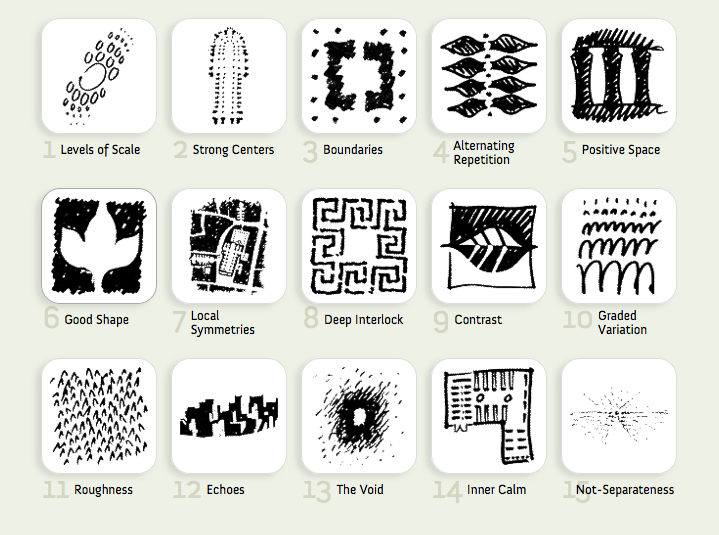
In the class we discussed these diagrams and the students were asked to redraw the diagram. Vismaya’s drawing below inventively reinterprets these ideas. My favorite one is ‘inner calm’ which is left undrawn and for ‘void’ literaly a hole is made in the sheet.

 mofussillab
You must be logged in to post a comment.