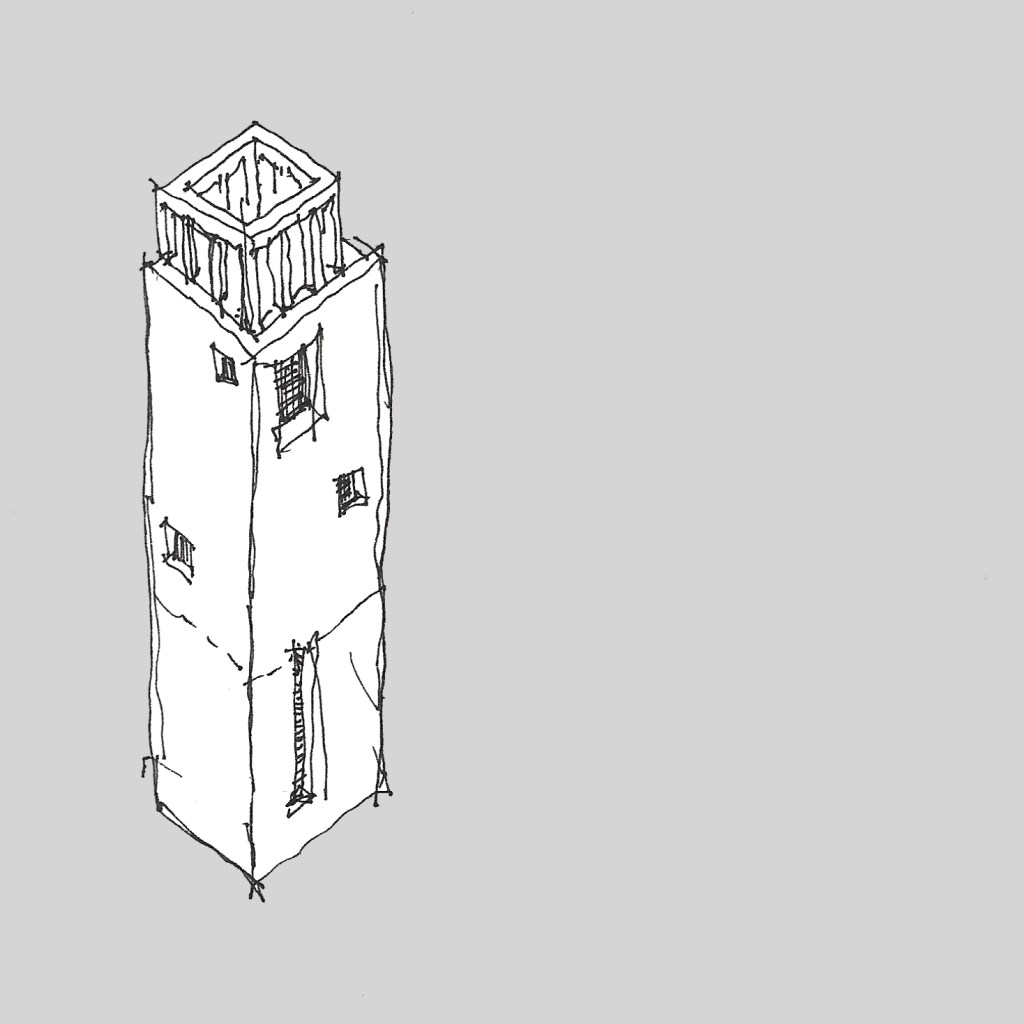
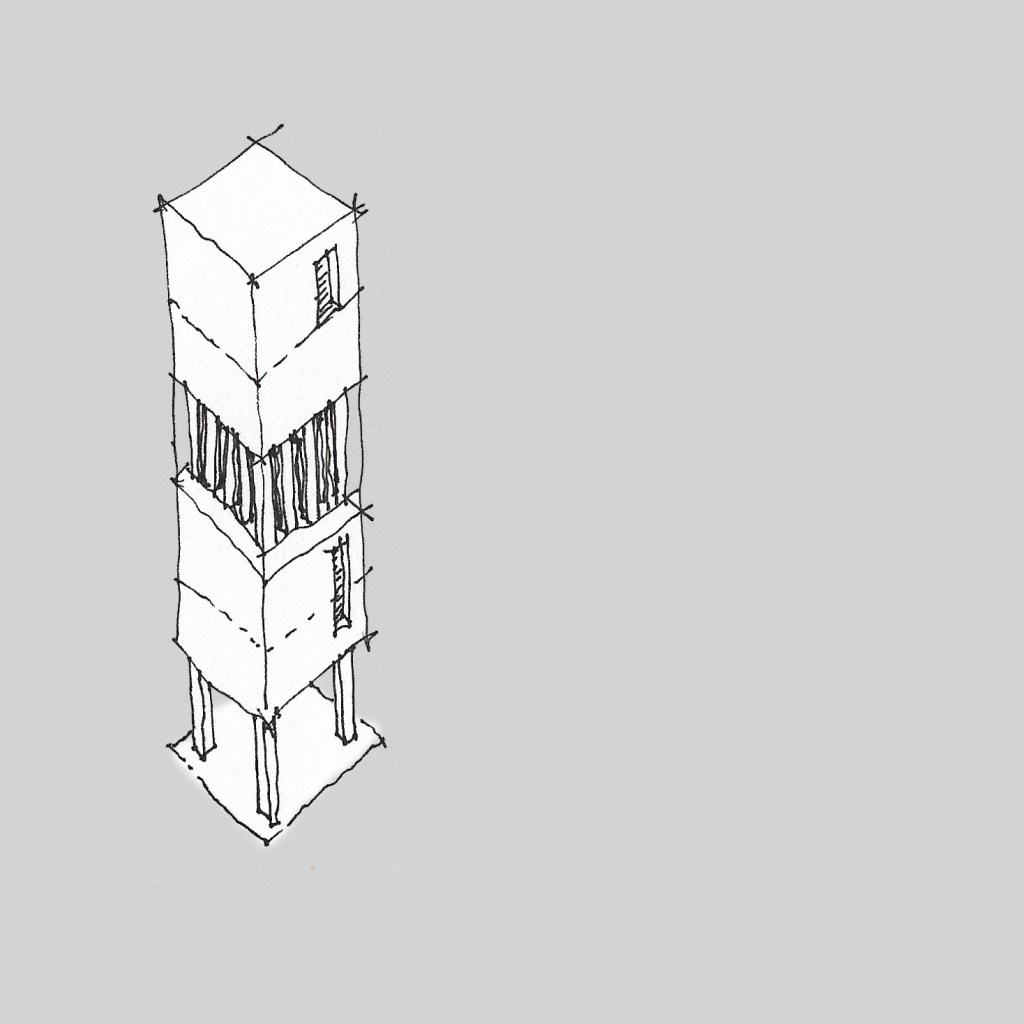
Extending the enquiry from Part 01, these are some of the drawings i tried to make the readings on the ‘cave’ and the ‘pavilion’ a bit more palpable. Different configurations on the similar theme.
The terms ‘stereotomic’ and ‘tectonic’ came much later into my vocabulary and helped to make the notions of the cave and the pavilion more precise. In a series of posts I am planning to share this enquiry, which led me to sharper readings of space and thus perception of it.
“These virtues of shelter are simple, so deeply rooted in our unconscious that they may be recaptured through mere mention, rather than through minute description. Here the nuance bespeaks the color. A poet’s word, because it strikes true, moves the very depths of our being”
Gaston Bachelard, The Poetics of Space
In the process of teaching second semester design studio, i have had the opportunity to revisit some of the fundamental ideas in architecture. In a table discussion with a student, once i casually used the analogy to imagine a ‘cave’ like space to talk about a room which looked inwards . And this word led me to the term ‘pavilion’ to mark the other end of the spectrum in the ‘degree of enclosure’. The remembering and recognizing of these two terms ‘cave’ and the ‘pavilion’ marked an important transition in articulation about space for me. It was a small moment of clarity. In teaching process one is constantly in search of such didactic devices to illuminate ideas about architectural space. In speech, we use the phrase going into ‘cave’ mode, when we want to focus intensely on some given activity. To look inwards. These two ‘phrases’ led to interesting directions in the second semester studio. The students had to choose particular professions for their user groups (say like writers or painters). So in the design discussions, we had the opportunity to speak through these analogies better. Would the painter or the writer would like to work from a ‘cave’ or a ‘pavilion’ like space. Would this preference of enclosure say something about the character? Or add value to his working environment?Talking about a ‘cave’ like space leads to discuss further conditions of openings, views and light. The ’pavilion’ idea leads to the conditions of privacy, translucency and boundaries Enquiring the dialectics of the ‘cave’ and the ‘pavilion’ allows one to investigate the conditions of the interior – exterior relationships in a palpable manner .
In later extension to Kamala House, Doshi adds a ‘cave’ like bedroom which extends itself into the garden in the back. And he adds a ‘pavilion’ on the top of the bedroom. These two situations of the enclosure demonstrate well the extreme conditions in the spectrum of degrees of enclosure. From the maximum enclosure of the ‘cave’ – the phenomena of light, view and weather can be precisely framed. This condition is emphasized by the load bearing brick walls punctured by the doors and windows allowing precise connections to the garden. Wherein in the case of the ‘pavilion’ the singular concrete ‘frame’ marks the boundaries of implied ’space’. Sitting on an elevated level, the ‘pavilion’ pronounces the vantage angle of viewing the garden from the terrace.
Image Source : From Iwan Baan’s portfolio on Doshi
The terms ‘stereotomic’ and ‘tectonic’ came much later into my vocabulary and helped to make the notions of the cave and the pavilion more precise. In a series of posts I am planning to share this enquiry, which led me to sharper readings of space and thus perception of it.
Notes from ‘The Thinking Hand’ by Juhani Pallasmaa
“In addition to operative and instrumental knowledge and skills, the designer and the artist need existential knowledge moulded by their experiences of life. Existential knowledge arises from the way the person experiences and expresses his/her existence, and this knowledge provides the most important context for ethical judgement. In design work these two categories of knowledge merge, and as a consequence, the building is a rational object of utility and an artistic/existential metaphor of the same time
All professions and disciplines contain both categories of knowledge in varying degree and configurations. The instrumental dimensions of a craft can be theorised, researched, taught and incorporated in the practice rationally, whereas existential dimensions are integrated within one’s own self identity, life experience and ethical sense as well as one’s personal sense of mission. The category of existential wisdom is also much more difficult to teach, if not outright impossible.” (119)
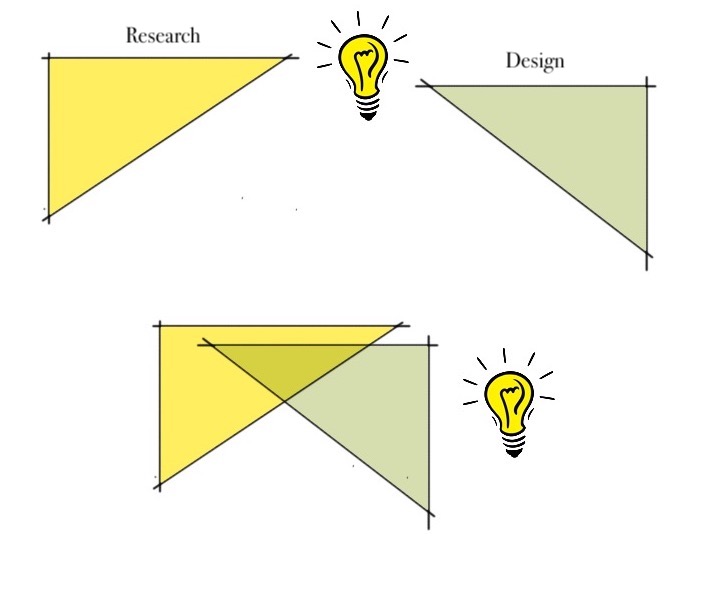
Just a quick diagram to articulate a question I’m thinking about. What is the relation between research and design? Particularly for an undergrad design thesis student. Will the research lead to a singular ‘profound’ statement or a diagram and then the design will just happen? Or a combination of research and design (with a lot of overlap) that will lead hopefully to think about architecture in a thoughtful manner?
I am quoting a brilliant paragraph from Anne Lamott (Bird by Bird : Some Instructions on Writing and Life) on writing here. I feel this emotion is similar to the act of drawing too.
.
Talking about a poem which got published when she was in second grade, Anne Lamott writes “I understood immediately the thrill of seeing oneself in print. It provides some sort of of primal verification: you are in print; therefore you exist. Who knows what this urge is all about, to appear somewhere outside yourself, instead of feeling stuck inside your muddled but stroboscopic mind, peering out like a little undersea animal – a spiny blend, for instance – from inside your tiny cave? Seeing yourself in print is such an amazing concept: you can get so much attention without having to actually show up somewhere. While others who have something to say or who want to be effectual, like musicians of baseball players or politicians, have to get out there in front of people, writer who tend to be shy, get to stay at home and still be public. There are many advantages to this. You don’t have to dress up, for instance, and you can’t hear them boo you right away.”



 mofussillab
You must be logged in to post a comment.