Scalar Comparison

Understanding and modulating scale is one of the fundamental acts in design. Particularly while teaching in design studios, i am looking for tools and methods which can help modulate scale. This simple method of drawing different projects in the same scale has immense potential. I feel this tool is underused. Putting them together digitally has made it much easier. Just imagine pre-computer days, where one had to draw them to scale again or take scaled photocopies (and struggling with the copier to assign different percentages). I usually have the habit of drawing the room (say like 12′ x 18′ room) in which I am making the drawing in the same scale as the drawing I am working (say 1:100) to get better sense of space i am designing. I feel the responsibility of any conceptual idea is to modulate scale first. Chipperfield brilliantly notes in Theoretical Practice that scale and time are the biggest challenges of our profession. Here i have selected some drawings which uses this method effectively.
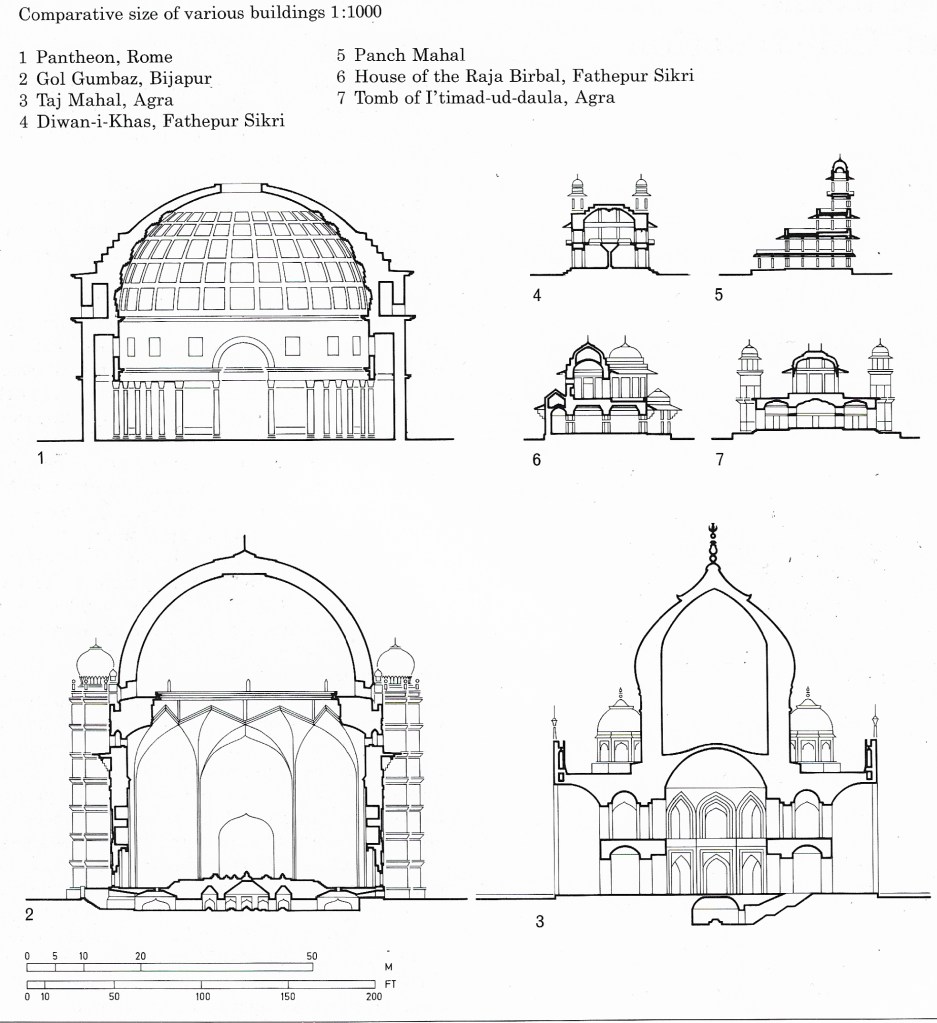
This brilliant drawing is from Henri Stielin’s book Architecture of the World: India. This drawing was a revelation – i have never been to Gol Gumbaz, but looks like Pantheon (with some diet) can fit inside Gol Gumbaz. I can sense the scale of the buiding i have not visited (Gumbaz here) through a building i have visited (Pantheon). Taj Mahal’s has an exaggerated exterior form (by the means of the double dome) compared to relatively smaller interior volume, but its presence is as monumental as the Pantheon or the Gumbaz.
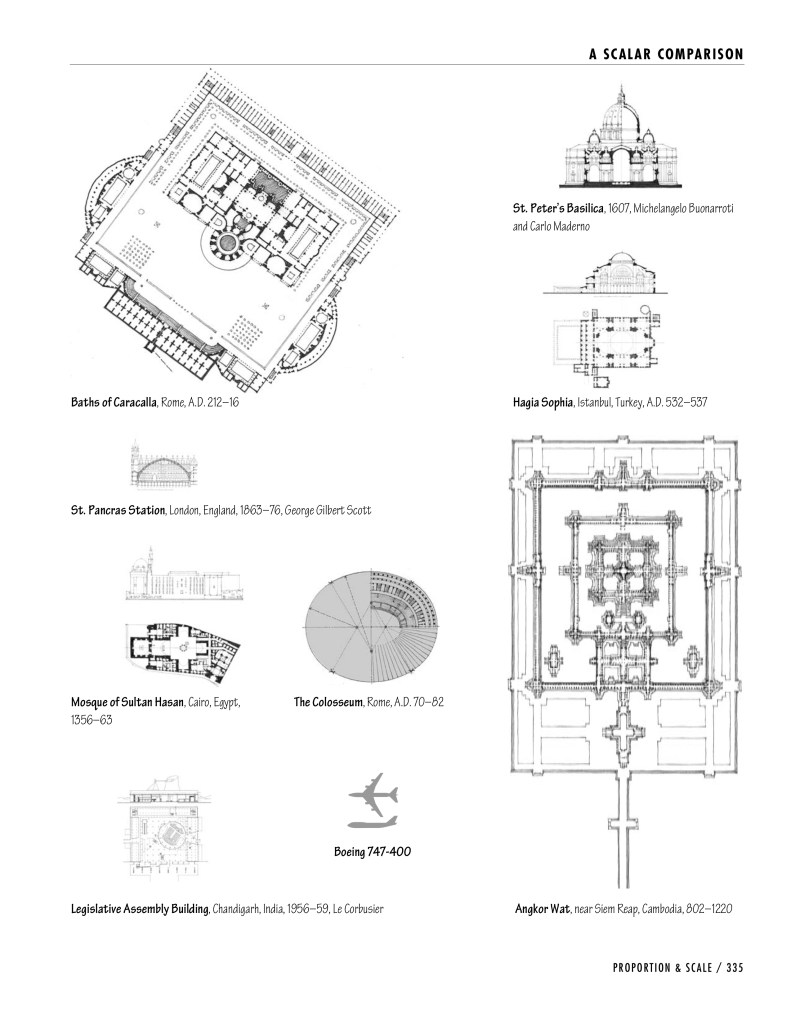
Form, Space and Order : D K Ching
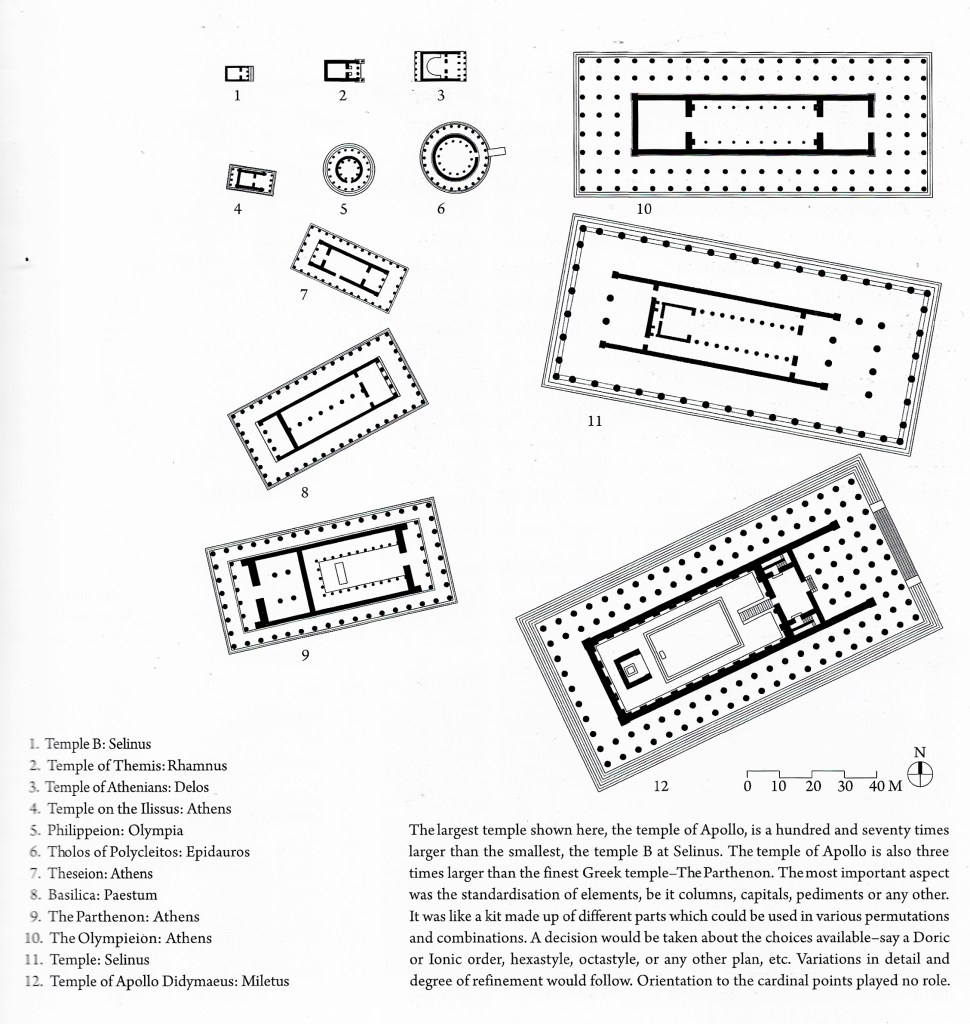
Prof. Kulbhushan Jain uses this method consistently in almost all his books. This drawing is from Architecture Conceptual to the Manifest. In this case when both the scale and the orientation are consistent, the reading of the project gets more sharper.
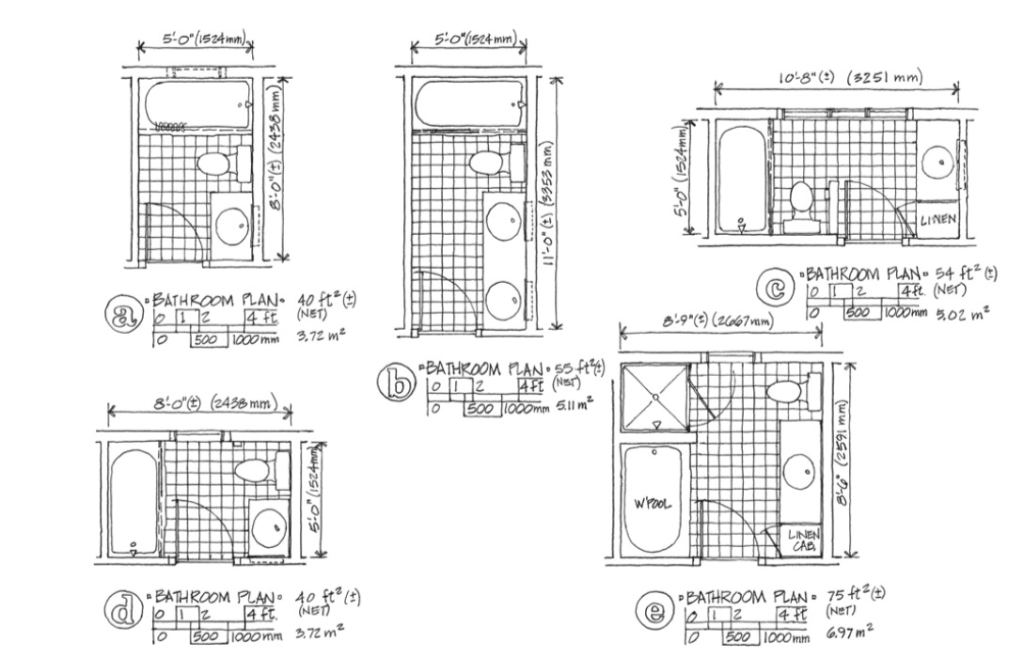
Residential Design : Maureen Mitton and Courtney Nystuen. This method is also effective at much smaller scale. When I refer this book for toilet design, I notice even a 6″ difference can make significant impact on design of such tight programs.
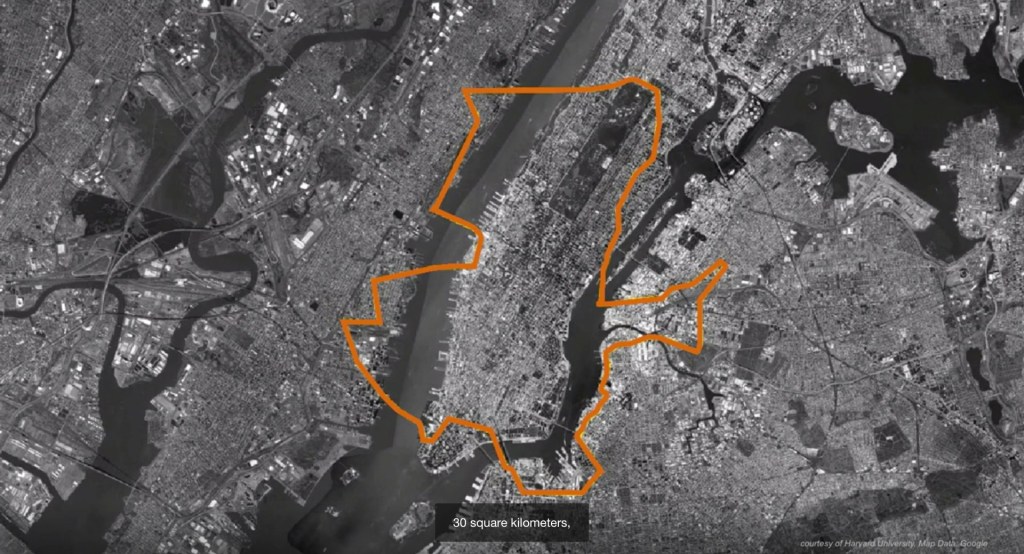
Rahul Mehrotra used this comparative diagram (In a TED Talk) by overlapping a 30 sq.km area of Kumbh Mela over the map of Manhattan to make the point of the largeness of the temporary city of Kumbh Mela.
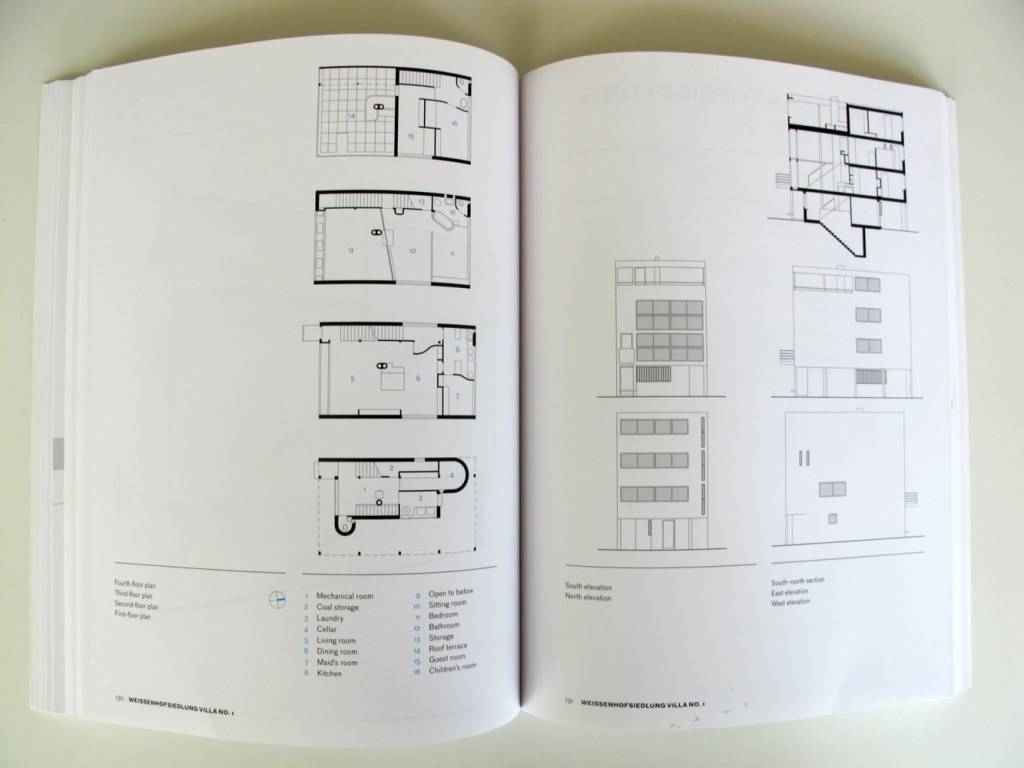
Le Corbusier Redrawn : The Houses by Steven Park. This book has drawings (plans, sections, elevations) with brilliant cut views of all the houses designed and built by Corbusier. All of them at 1:200! – and it is deep diving experience reading this book. Villa Sarabhai is one of the few project which covers both the spreads : )
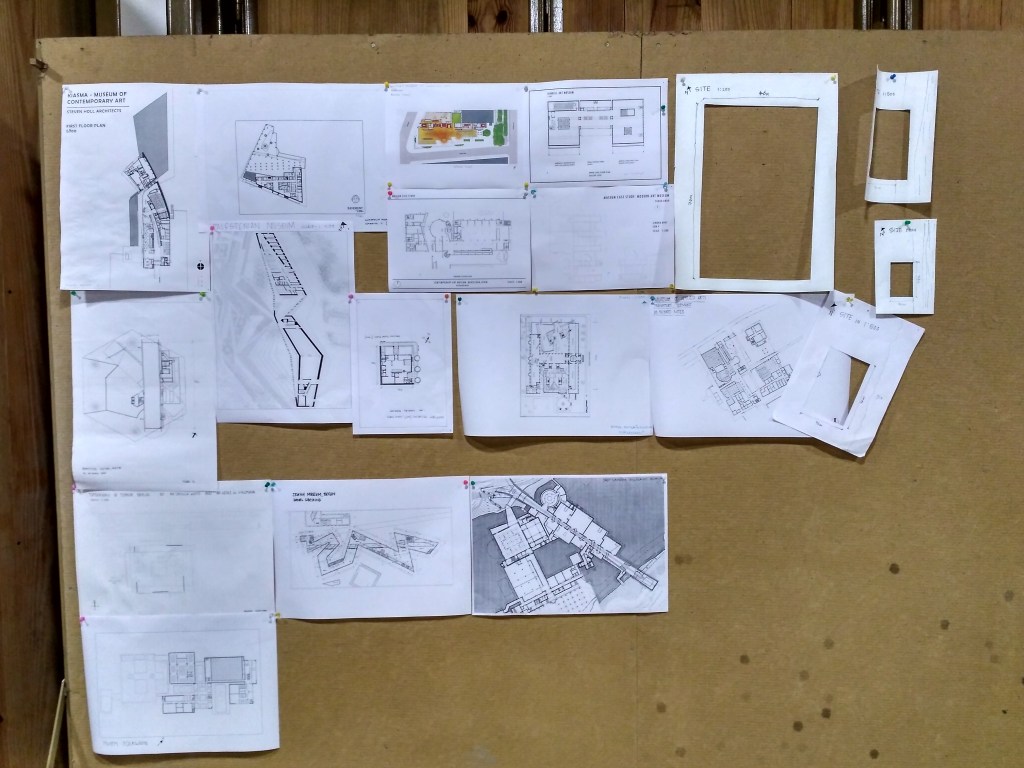
At one the of studios we tried to print all the case studies in the same scale (I think it was 1:500). It was very revealing. And we made a site plan with a hole in it at 1:500 scale to overlap against these drawings to get a sense of the scale.
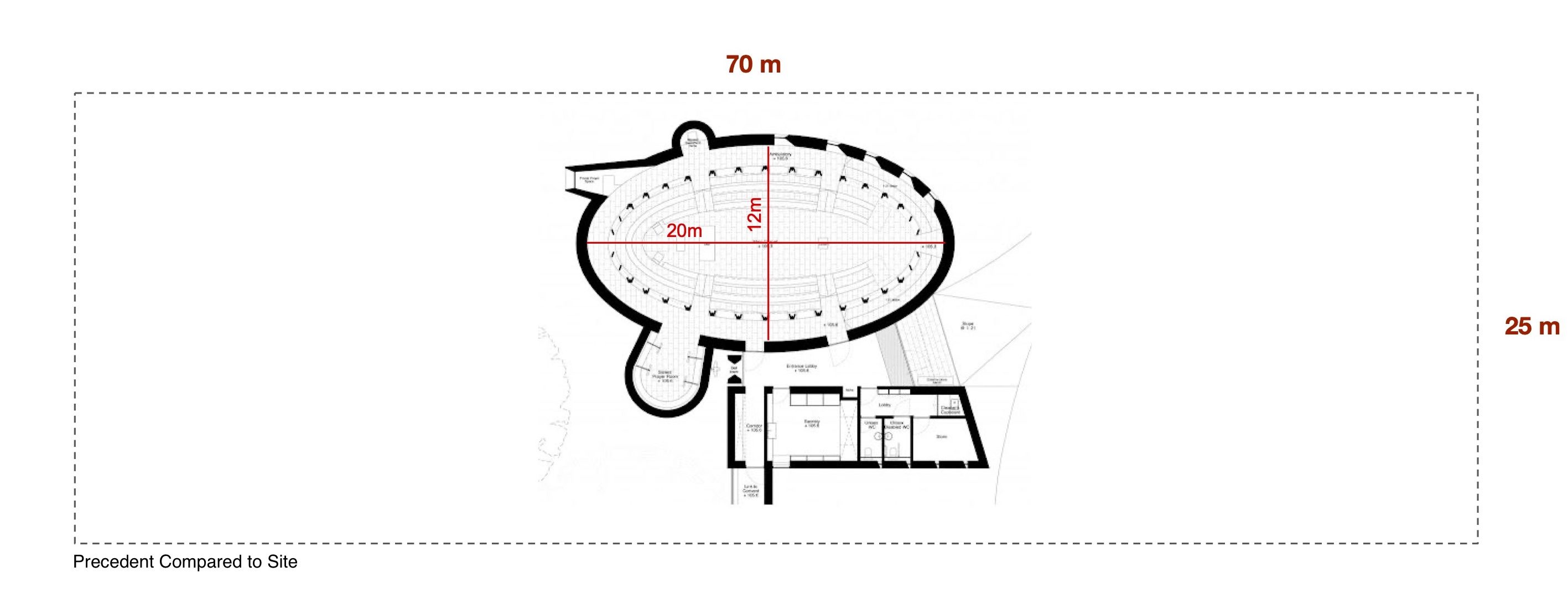
(Drawing Credit : Bhamini Mehra)

Again in one of the studios we tried to overlap the precedent we were studying (Niall McLaughlin’s Bishop Edward King Chapel) on the site at Srirangapatna. We didn’t realise the scale of the precedent till then, the project (at least the main chapel) will fit in any ubiquitous 60’x40′ site in India. There are no small projects in architecture.
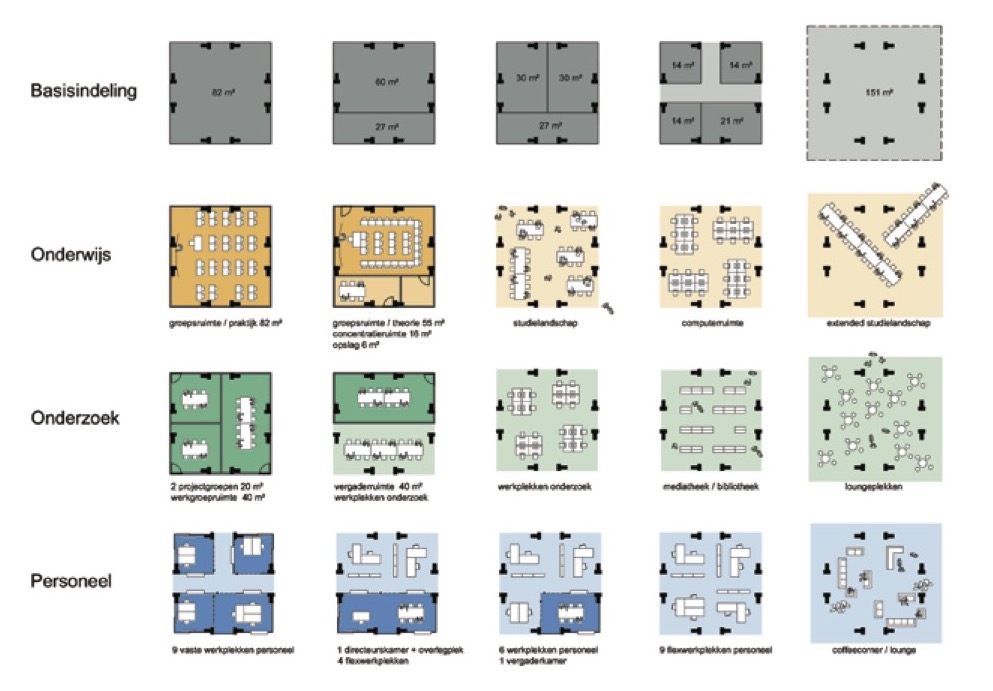
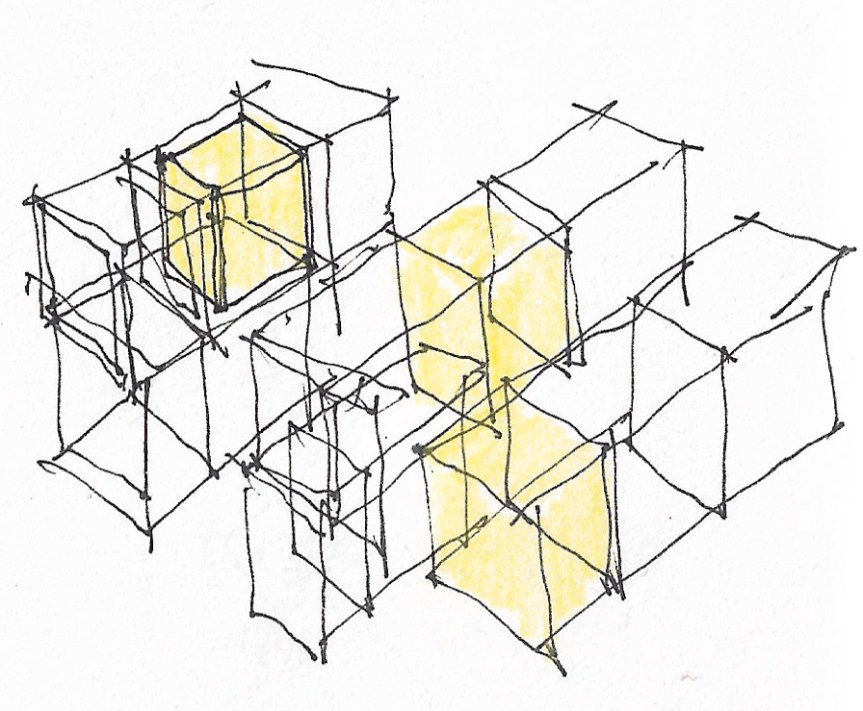
In this study for adaptive reuse of the iconic Central Beheer, Herman Hertberger’s office is trying to understand the different program possibilities and configurations for the 9m x 9m grid. It can also become an independent study of how a certain fixed area (50 sqm here) or a grid pattern (9m x 9m) can cater to different programs. We can test different possibilities to suit the site and program requirements at hand in design.
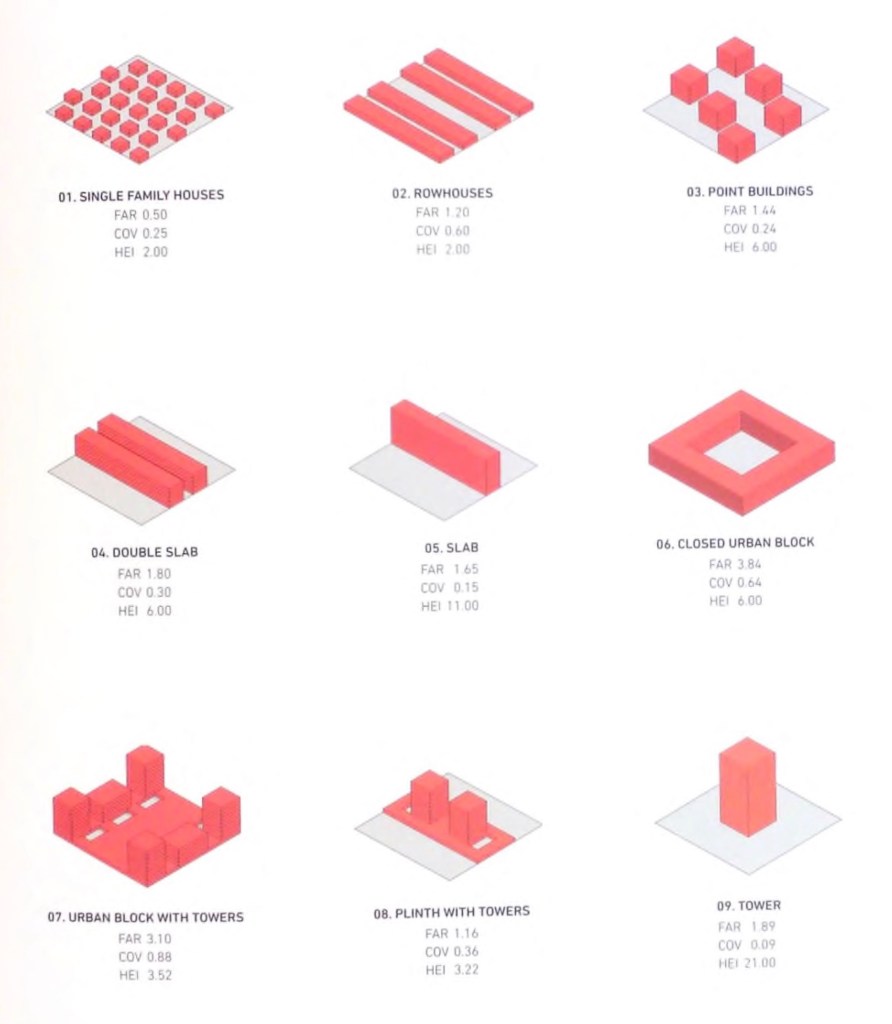
Why Density? – Debunking the Myth of the Cubic Watermelon. Here the same method is used for exploring the different massing strategies. A three dimensional comparative method.
Point of entry / departure

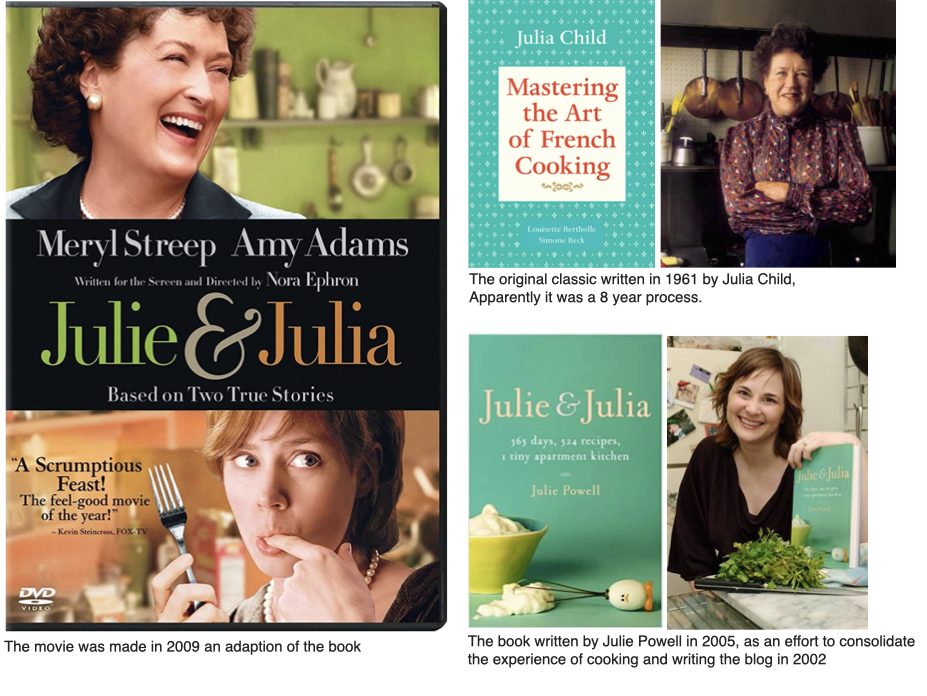
In the recent online COA Social talk on pedagogy, Sarah Whiting (Dean of Harvard School of Design) spoke about the movie Julie and Julia through an interesting perspective. If one is not familiar with the premise of the movie, here is a short note about it. In the movie, Julie, who is a struggling writer grappling with her identity, decides to cook all the 524 dishes within a years time from the legendary book “Mastering the Art of French Cooking” published in 1961 by Julia Child. As she cooks, she also blogs about it. So the movie is inspired by the book Julie Powell wrote about this experience. What the screenplay of the movie does is very interesting. In the movie there is a parallel story from another time of how the actual book came into place. How Julia struggles with her identity in a different culture, age and time. The viewer of the movie engages in both the process of creativity simultaneously and that is a wonderful premise to dwell in. To see both the struggles of formed and yet to form.

In this talk, Sarah spoke about using this movie as a premise to talk about learning to her students. Sarah said that she asks the students to be more like Julia, who took liberty with the medium of French cooking and explored and adapted it further. It was a wonderful point Sarah made here. I am paraphrasing a lot from memory here. This notion stayed with me. Just to probe this notion a little further, my impression is that this surrendering to the recipes gave a Julie a purpose and a tangible direction to do something which led to the book she wrote. In the movie, she is portrayed a struggling writer. And this act of surrender, even though arbitrary, helped Julie find some ground. Inspite of not being as exploratory as Julia Child did with French Cooking, I think these both ways of creativity are equally sound. For a beginner like Julia, the aligning to an idea /school of thought helped to move ahead, whereas for Julia it was taking liberty to depart from French cooking and what it meant to American middle class.

For Julie, this way of cooking and aligning to a school of thought became the point of entry whereas the same premise of cooking became a point of departure for Julia. I feel this notion extends across all the creative fields. We can start from a point which resonates with us. 

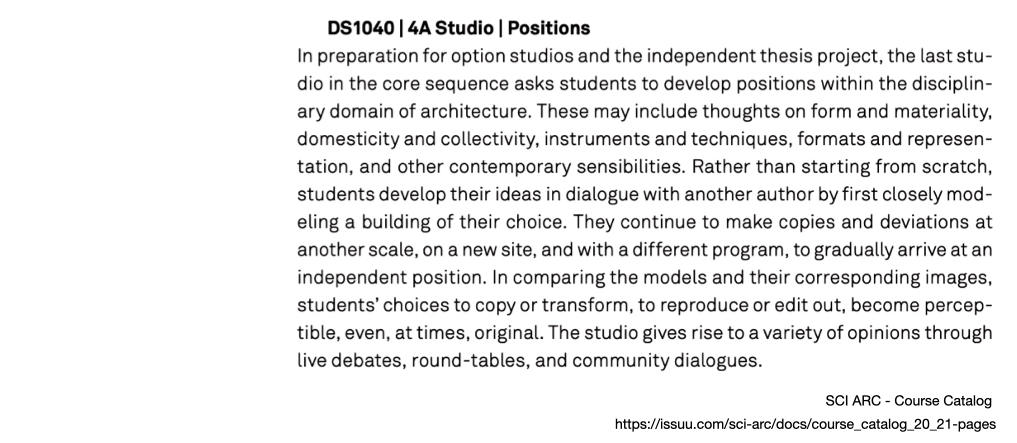
So in preparing for new design studio for 5th semester students at WCFA, i am planning to engage in a similar playing field. where we ‘reinterpret a canonical project’ to act as a point of entry into the semester. This way of learning from the masters has been a familiar trope in design studios. It is just here i am looking at the project rather than the architect . A perspective i learnt from Prof K B Jain at CEPT. He always talked about the project, rather that the architect. I think this is a more accommodating way to look at ideas, as every architectural project is a result of a collaboration. Below is a note from SCI ARC, on a possible method of enquiry in this direction.

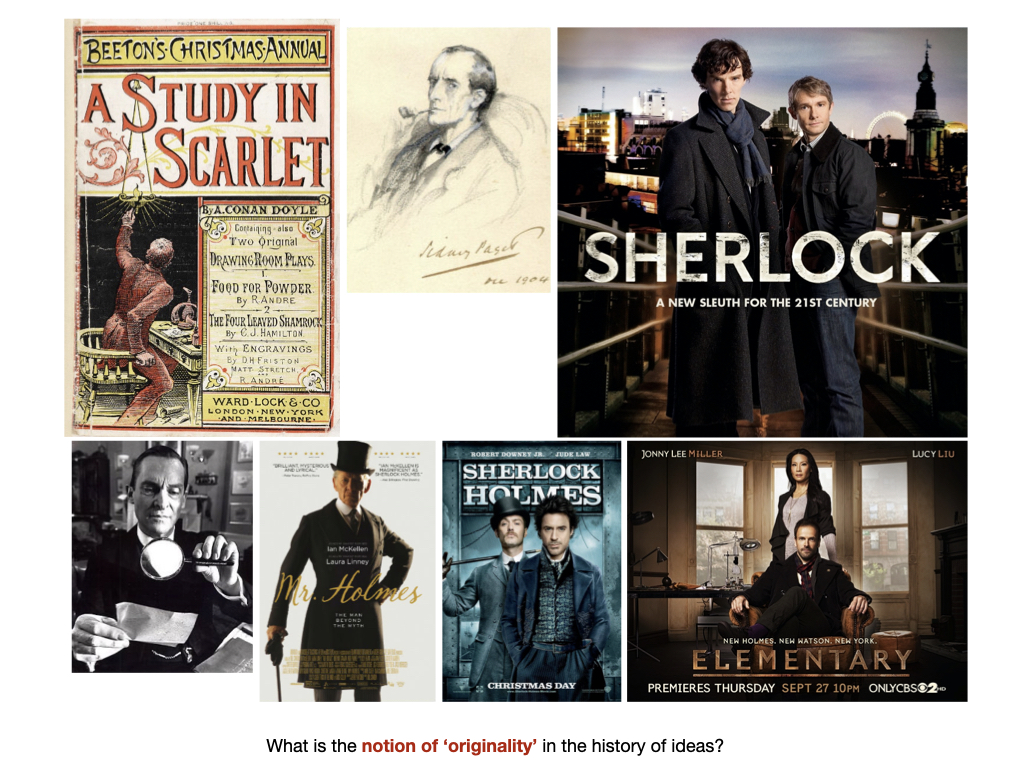
Here is a slide i use recurring-ly in my theory classes, which became base on which i am folding these questions discussed above – What is notion of originality in the history of ideas? – Take the instance of the British version of the Sherlock. They made a brilliant adaption, just by changing the context of time. We would have been devoid of this project, if they had brushed this as a naive, or not an idea original enough to be pursued. This is a very fragile stage in every creative process, and one has to deal with it delicately.

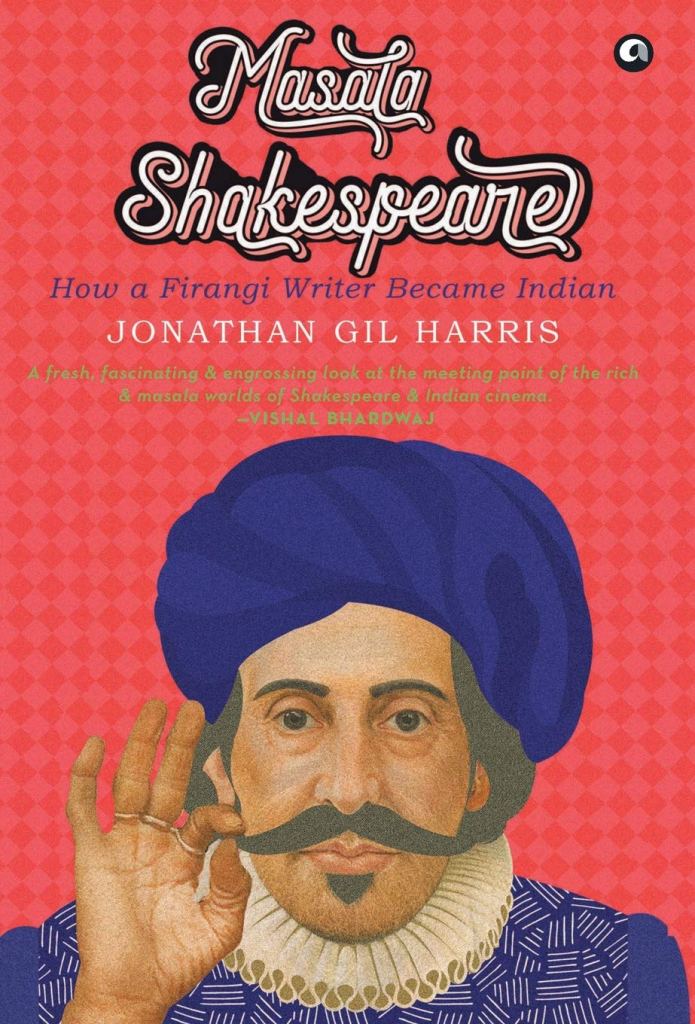
Reading : Masala Shakespeare

As an quick introduction to the book, here is a short extract from the cover: 
“Masala is a word that conjures up many associations. The word derives, through Urdu and Persian, from the Arabic ‘masalih’—ingredients. To a westerner, it immediately suggests exotic eastern spices. In its most widespread metaphorical use in India, it means embellishment or exaggeration. It also means a mixture—originally a mixture of ground spices, but more metaphorically any kind of mixture, especially one of cultural influences. While Shakespeare today is considered ‘literature’ and is taught as a ‘pure’, ‘high’ form of art, in his own day it was the quintessential ‘masala’ entertainment he provided that attracted both the common people and the nobility. In Masala Shakespeare, Jonathan Gil Harris explores the profound resonances between Shakespeare’s craft and Indian cultural forms as well as their pervasive and enduring relationship in theatre and film. Indeed, the book is a love letter to popular cinema and other Indian storytelling forms. It is also a love letter to an idea of India. One of the arguments of this book is that masala—and, in particular, the masala movie—is not just a formal style or genre. More accurately, it embodies a certain version of India, one that celebrates the plural, the polyglot, the all-over-the-place. The book is also ultimately a portrait of contemporary India with all its pluralities and contradictions.”

I arrived at this book through from many entry points : It is published by Aleph whose books are always interesting, it about cinema and that too popular Indian cinema,  Baradwaj Rangan (film critic i follow) recommended this book, and the push to buy and read the book came from knowing that the author is an academic too. And also a recent nudge by a profile of Jonathan’s personal library photos by the Delhiwala. I am curious about books on cinema and that too popular Indian cinema, which has been my main connection to arts (if you may call it) all through my childhood. Even though my main entry point was cinema, the unexpected dive into masalaness was the engaging and enjoyed part of the book. I was reluctant to pick this book, as it was about Shakespeare (whose work i have not read much) . It was so interesting to know his direct influence on Indian Theatre and how his writings has been a bed of inspiration for so many creative practices. The lens of masala is what intrigued me a lot throughout the book and also the main takeaway from the book.  “It is, in short, a tale of masala genealogy. The genealogy of Masala. But also genealogy as masala” 

The book begins with the authors experience of watching Lagaan in 2001 in Chanakya Theatre in Delhi  “Lagaan impressed on me how the venue in which a film is screened is a crucial part of its story. The Chanakya Theatre may have been located in the well-off South Delhi. But its size and ticket prices were designed to accommodate a mixed audience, one consisting  of people from many classes and communities. Lagaan was made to be screened in venues just like Chanakya Theatre. Aamir Khan’s victorious cricket team – made up of Hindu,Muslim, Sikh and Dalit, supported by men and women, young and old, maharajahs and commoners alike – symbolically mirrored its diverse audience.” This reading rekindled my experience of watching the movie in 2001 , as a young teenager, watching in a similar environment of Mothi Theater in Bellary. 

Extending the reading on Lagaan : “This reflection is the essence of what is called the masala movie – a film that, like Lagaan, is grounded in a mixture of genres and languages that caters to an equally mixed audience. A masala is a concoction that is tasty and spicy, but it is also literally a mixture. The masala movie’s stories mix tragedy with comedy as well as scenes of dialogue with song-and-dance routines. Its lovers, too, are mixtures, often coming from different communities. And its sources are equally mixed : there is no ‘original’ story in a masala movie, as its narrative is khichdi of other, earlier stories or formulas. Lagaan, for example, combined elements of the spaghetti western and the underdog sports-team film with the tried-and-tested Bollywood love triangle. All these mixtures were a reflection of an India that is itself a mixture of many cultural ingredients” 

Similar to this reading of Lagaan, the book covers a lot of themes like more than oneness, plurality, all-over-the-place, stories-within-stories. It’s been a very engaging read, even though the point of entry was cinema, but main delight in reading this book was is the lens of the masala.

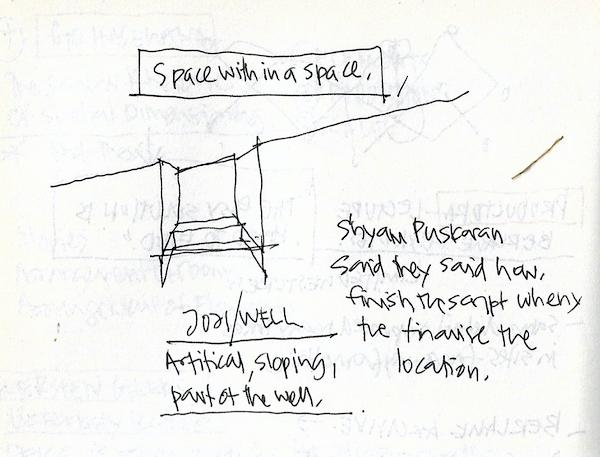
Space within a Space : Well in Joji

Space with a space : A theme I am currently exploring where one can perceive two spaces simultaneously. Even though the smaller space is embedded inside the larger one, both have distinct sense of enclosure independent of each other. The original trigger was the reading of the Orinda House designed by Charles Moore, in which the two rooms (the bathroom and living) are embedded  as pavilions with in the larger perimeter of the house. The thematic idea is to explore of the condition of ‘simultaneity’ in crafting of space.


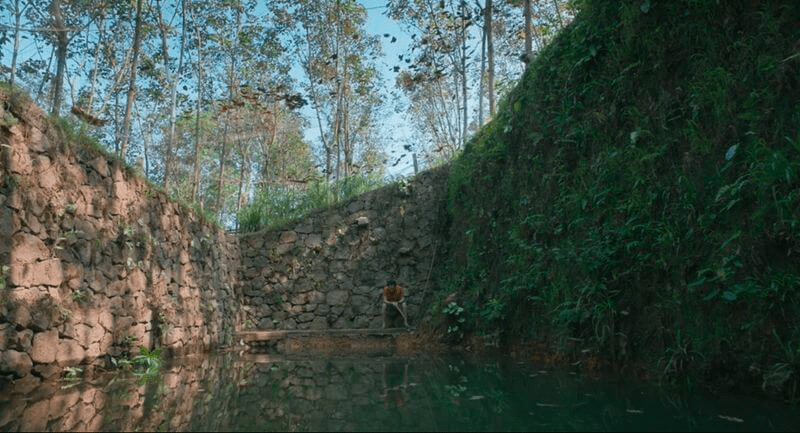
A still from Joji

While watching this brilliant Malayalam movie Joji, i had made a quick note on the well (or pond) in my notebook. I was intrigued by the stone retaining wall registering the slope of the landscape.The net tied on the top to hold the falling leaves adds to the degree of enclosure. In the movie, it is in this well Joji plots up the evil ideas to kill his own father. A place where he is himself, devoid of the mask of innocence he is wearing in the house otherwise. The writer of the movie Shyam Pushkaran says “The idea was that Joji, as a child, had a fort at this pond, Whenever he felt abandoned by his father as a child, he would go there and cry. The pond was a comfort to him. He returns there after the murder to seek comfort.” (1) In contrast  to his own closed bedroom inside the house, the open well, slightly far away from the house, helps him grow his intentions is private. Two facts, which i figured out later about making of the movie, made me more curious. The well was added to the existing plantation to shoot these important scenes. And another fact is that Shyam completed the script after the location is chosen(2)( A classic move which Frampton would have loved to indicate in his ideas of critical regionalism). The need for the well is a great reminder on what has architecture to offer. A sense of enclosure in the form of a refuge, a frame to articulate darkness and most importantly an interior space. Architecture in India has always had affinity towards the subterranean and the cave. Like the stepped wells. And this well is a classic illustration of that primal urge to move into the ground.

Unlike I have discussed earlier on the same theme in Melkote (link), here it is strategy of the landscape. A space within a space at the scale of the landscape. 

Notes.
Link to the Film Companion piece where  (1) and (2) are discussed.  https://www.filmcompanion.in/features/malayalam-features/malayalam-movies-2021-how-houses-in-films-make-for-the-perfect-crime-scene-kala-aarkkariyam-joji-irul/

List 01 : Steven Holl

All words are pegs to hang ideas on.” Henry Ward Beecher

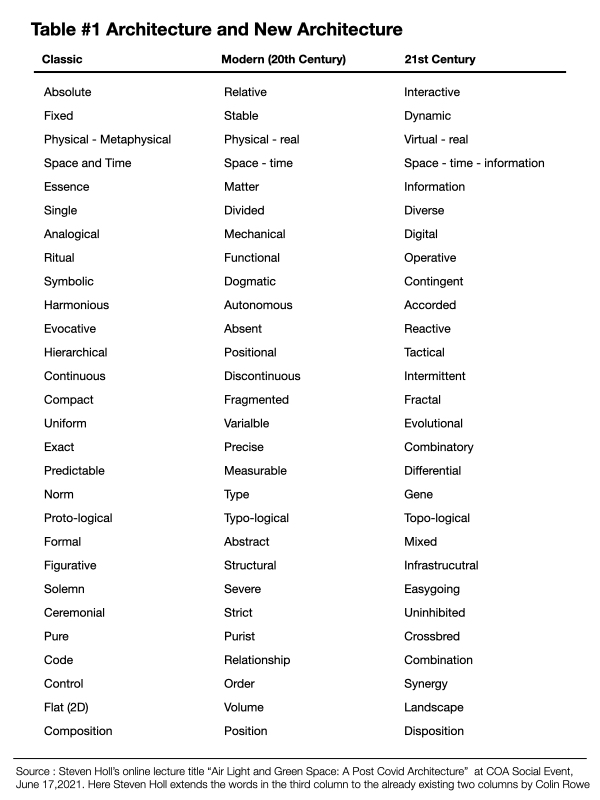
I love lists (tables included). They are sharp, focussed, definite yet open ended and elemental. In an online lecture Steven Holl gave recently, he presented this list below (reproduced for clarity here). It covers a wide range of thoughts. He builds upon first two columns from a pre existing Colin Rowe’s list (not to able to place the original source). I was delighted to read the subtle differences between the terms Exact-Precise, Predictable-Mesaurable-Differential, Ritual-Functional-Operative.