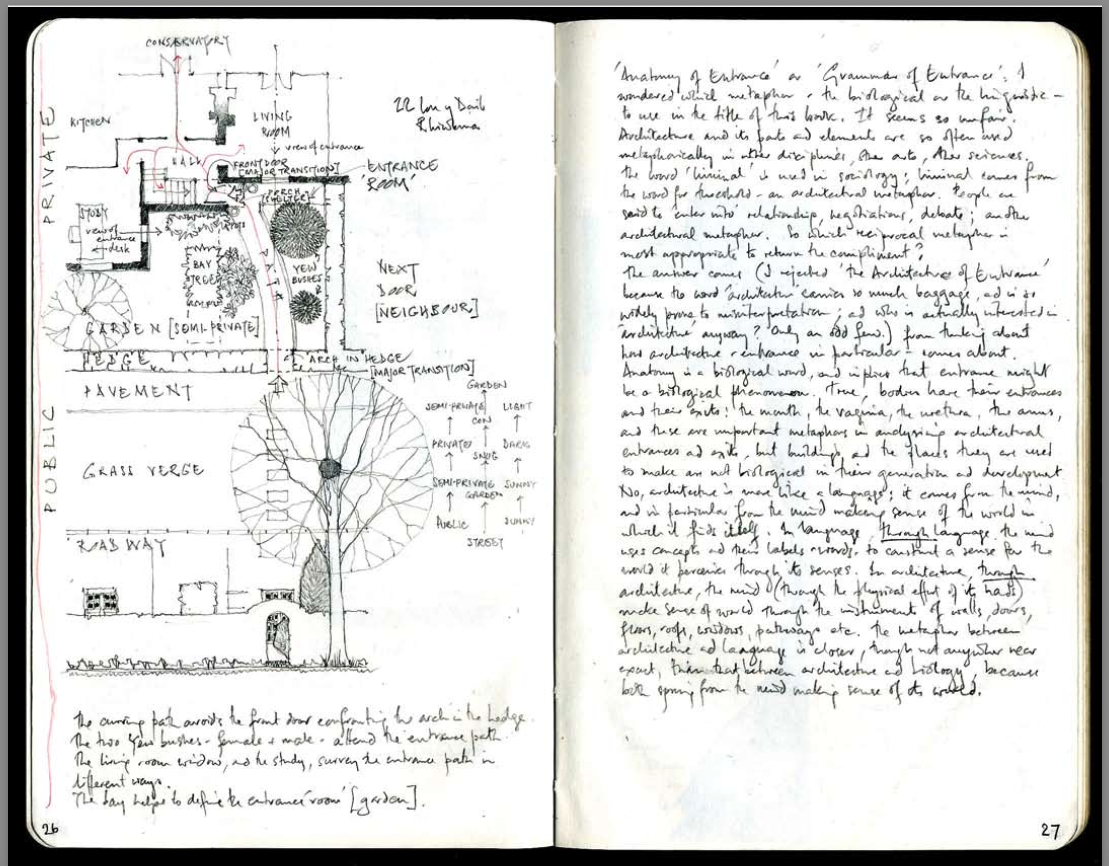
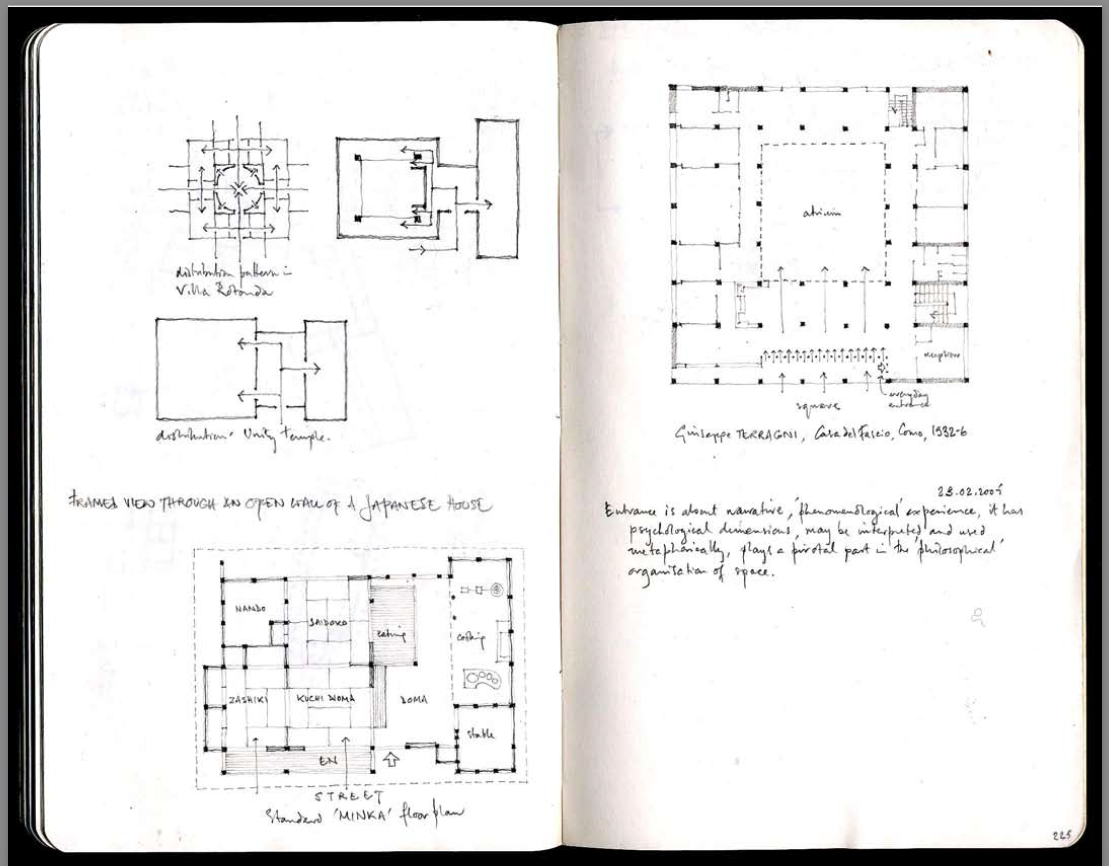
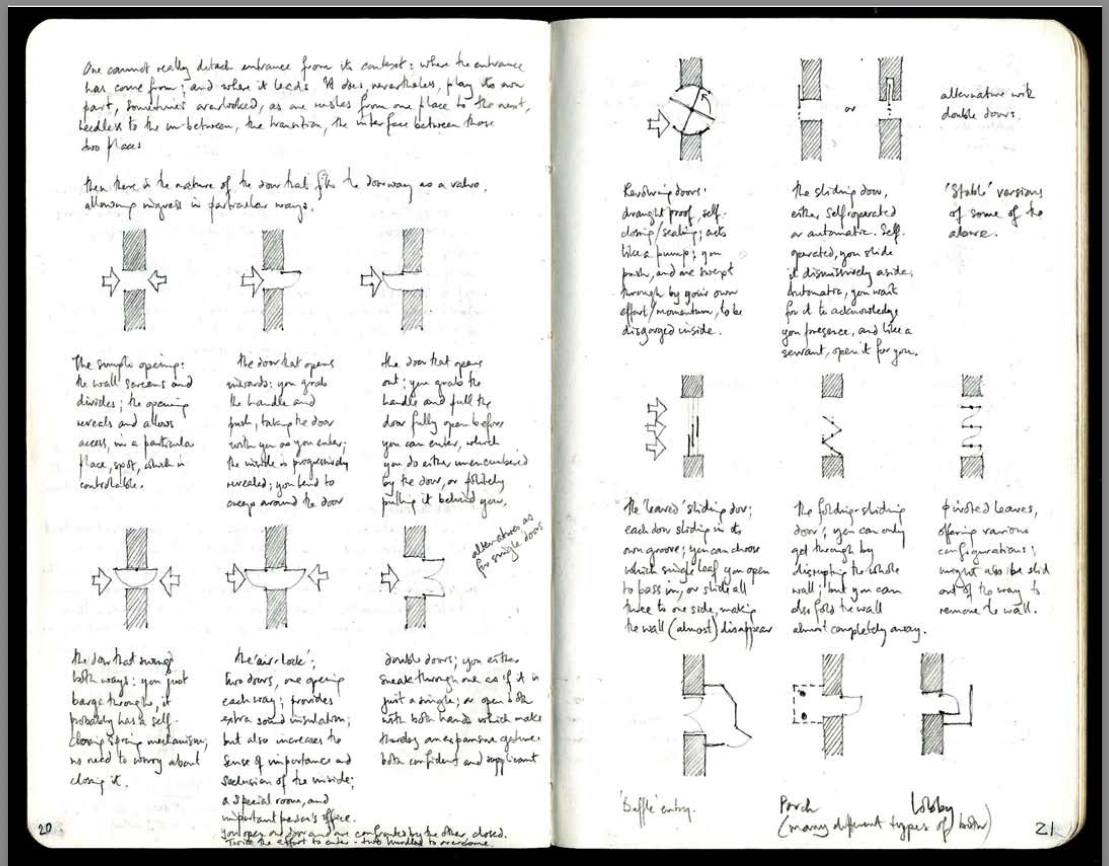
A spread from Simon Unwin’s notebook on “Entrances”
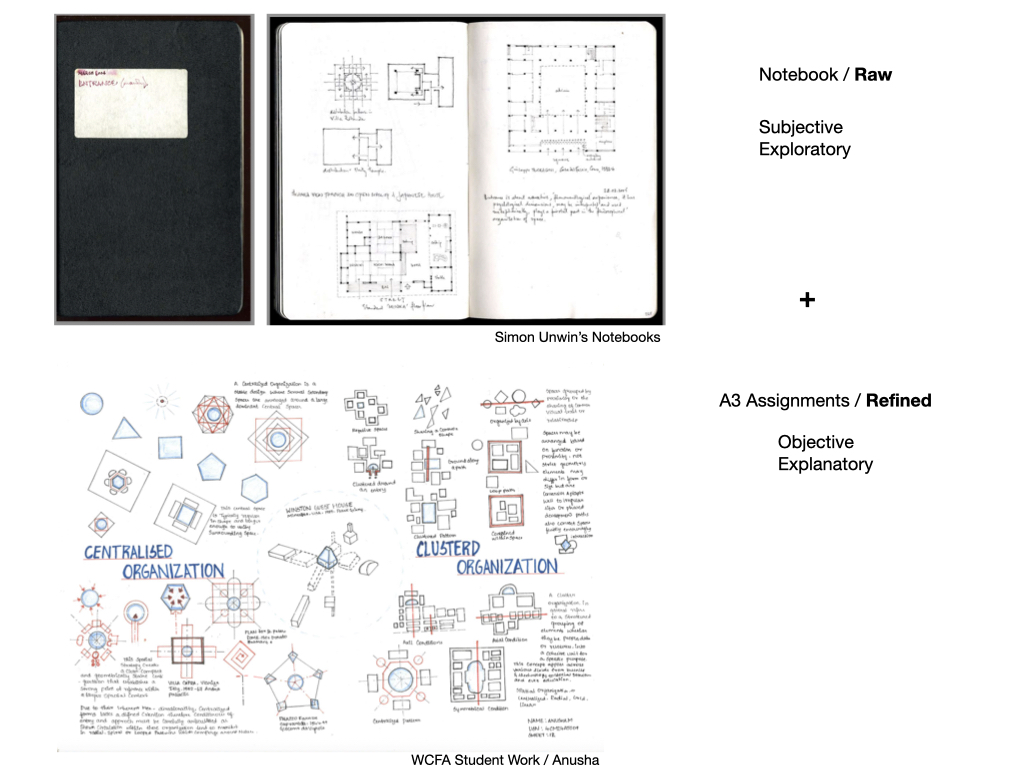
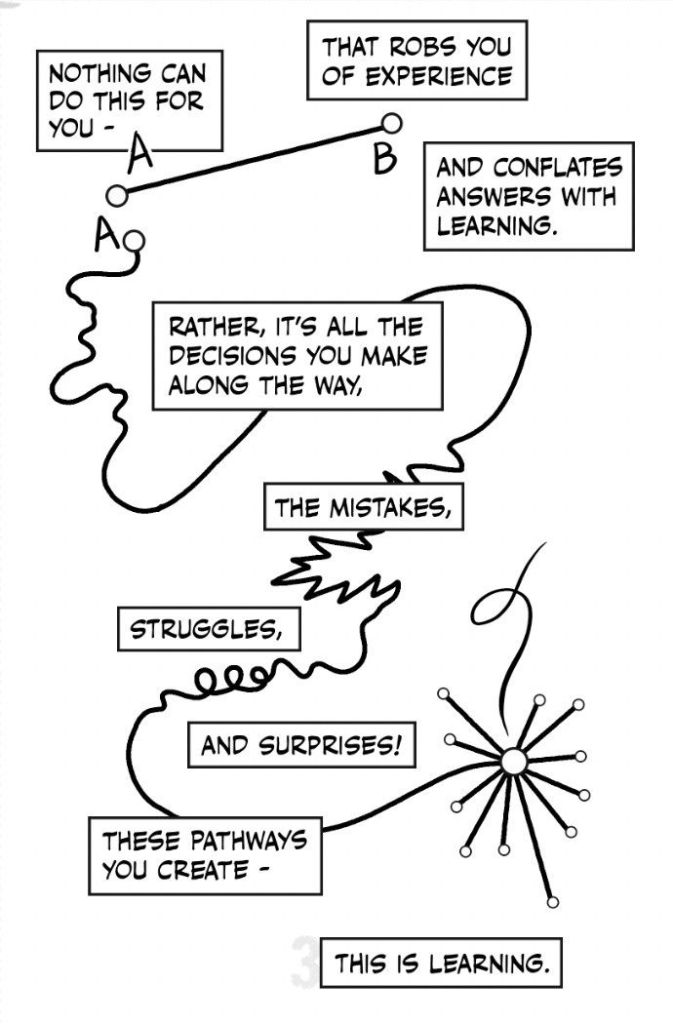
For my second semester here, I am testing notebooks as the primary recorder of the semester’s learning. I am not sure if this is a teachable habit. I came to keeping a notebook rather late. It was at CEPT that I first noticed everyone carrying one, almost as an extension of themselves. It felt like a fertile ground—to note ideas, to hold fragments, to plant seeds for later. A recent sketch by Nick Sousanis (bottom of the this blog post) , on how AI is affecting learning, brought this back to me. In a time when so much is quick, searchable, and already available, there is value in recording ideas by hand, in one’s own way. There is nothing radical about it. Perhaps that is exactly why it feels more important now. I have hesitantly brought this into the lesson plan for the Theory course I teach. I have tried it before and failed, as it takes constant followup and editing. I may be failing at it again. But I still think it matters. I have been introducing the notebook, or the journal, as a base for collecting ideas and finding patterns. It is beginning to seem like a necessary place to hold the rawness of analog teaching—its slowness, its immediacy, and its small surprises.
A page from Lesson Plan
This is a note I shared with students:
In a time when so much is quick, searchable, and already available, there is value in recording ideas by hand, in one’s own way. There is nothing radical about it. Perhaps that is exactly why it feels more important now. Simon Unwin’s books have been a steady source of hope in this regard. Analyzing Architecture and 25 Buildings Every Architect Should Know come out of reading, and those readings are captured in notebooks—a collection of ideas, thoughts, and observations. It is a simple act, but a powerful one. I also came across two videos on keeping a notebook, and they were quietly encouraging. There was a glimpse into one of his sketchbooks, which he generously shared. It felt like a rare peek into the working mind of an author.
At WCFA, we are entering a new cycle of thesis. As part of this moment, the library marked the beginning by allowing students to borrow three books instead of the usual two—a small but meaningful additional privilege, I feel. I know this is a very optimistic position to take. Snehal Shah, my teacher at CEPT and one of the key figures behind the Theory of Design program, used to constantly remind us that if we didn’t redeem all the seven books we were allowed to borrow as Master’s students, it was almost a crime. That advice has stayed with me, and I keep passing it on to my students. Even though I am usually softly pessimistic about how much students actually pick up and read, something changes when they enter the thesis phase. Their search seems more serious. A book suggestion often turns into an actual borrowing. And it is heartening to see the early phase of thesis research and enquiry being intertwined with books. I remain deeply grateful to Words and Buildings by Adrian Forty (perhaps a longer post on this someday), which became the backbone of my own thesis at CEPT.
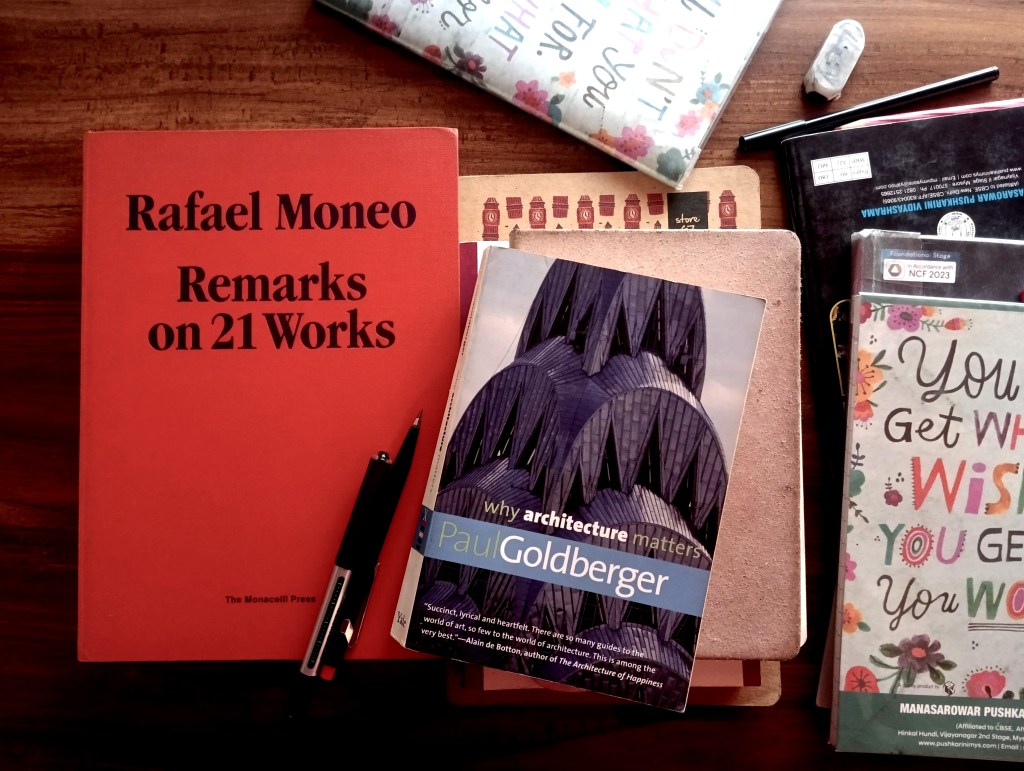
Last week, I recommended two books to my students.
Book One: Remarks on 21 Works by Rafael Moneo
The first book was recommended to me by my teacher, and I, in turn, have inherited it through years of reading and teaching. Bijoy often refers to Moneo and his writings, and this lineage of influence continues. This is a sharp book. One of the key things thesis students can take away from it is the idea that each project is embedded with a core architectural question, and each essay is an attempt to answer that question. The book is a unique combination of Moneo himself—a rare mixture of prolific architect, incisive teacher, and elegant writer—writing about his own projects. It carries both the familiarity of the designer and the sharp objectivity of a theorist. Chapter 13 is dedicated to the Kursaal Concert Hall and Convention Centre. The chapter opens with a question:
When singular geographic conditions demand an intuitive architectural response.
The first paragraph of the chapter, where Moneo speaks about the site, goes like this:
“Architecture comes into being and is nurtured in a given place, and the attributes of that place, its deepest condition, become intimately entwined with it. A work of architecture cannot be built just anywhere. It is crucial for the architect to discern those attributes of the site that should be maintained and emphasized, and those that should disappear in the new reality that emerges through the construction process. As a counterpoint, it is important to note that architecture discovers the site, reveals it and makes it evident. The site is where the specific object—the building—acquires its identity and finds its dimension, its unique, unrepeatable condition. The site is also where the specificity of the building becomes visible and can be understood as its most valuable asset.”
Book Two: Why Architecture Matters by Paul Goldberger
The second book is by Paul Goldberger—an incisive book that offers a certain distance while asking what architecture is about and what it means. The book is addressed to a general, non-architect audience, and that distance is precisely what makes it useful. Here is a quote from the chapter “Buildings and Time”, on the comfort of familiarity:
“Because we live with buildings, and see them all the time, our relationship to them is at once more intimate and more distant than our relationship to music or painting or literature or film, things that we experience episodically but intensely. When you are watching a film, your world consists almost entirely of what you see on the screen; when you are in a building, only occasionally do other perceptions and other thoughts disappear from your mind. I spoke in chapter 2 about the extent to which architecture, even good architecture, can encourage complacency; because we see it every day, as a backdrop to our lives, it is easy to stop seeing it with fresh eyes, however closely we interact with it. The complacency that time induces has a purpose: it lets us tolerate things that would be intolerable if we continued to feel them intensely. Thus you numb yourself to that awful shopping mall on the way to work, or you no longer grit your teeth when you see the ugly new storefront that replaced the beloved old soda fountain on Main Street. But such tolerance comes at a price—there is a high tariff to the comfort of familiarity, for it encourages us to stop seeing.”
For students standing at the threshold of thesis, these books offer two complementary positions: one from within architectural practice, grappling with site, form, and intention; the other from a reflective distance, reminding us how easily architecture fades into the background of everyday life. Both, in their own ways, are invitations to look again—and to look carefully.
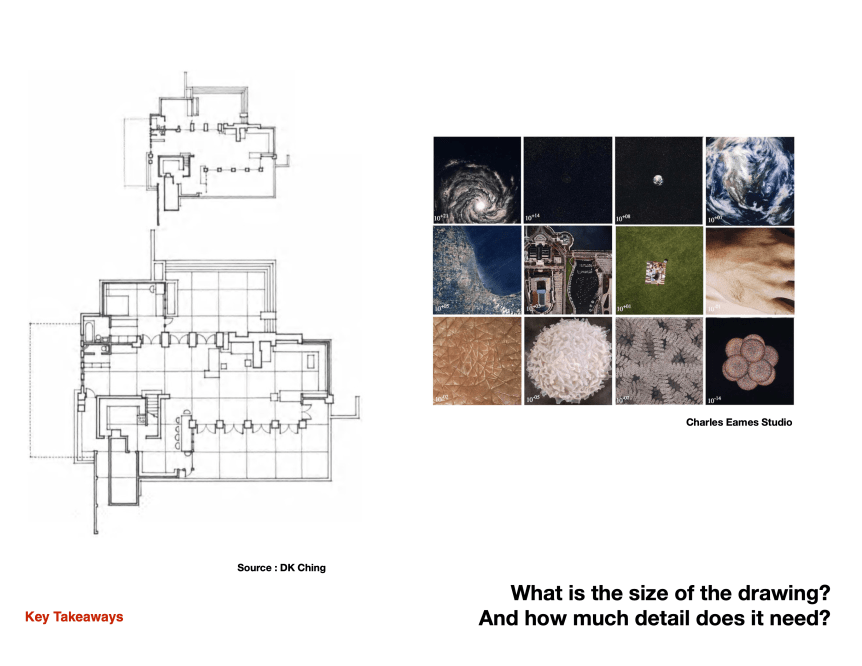
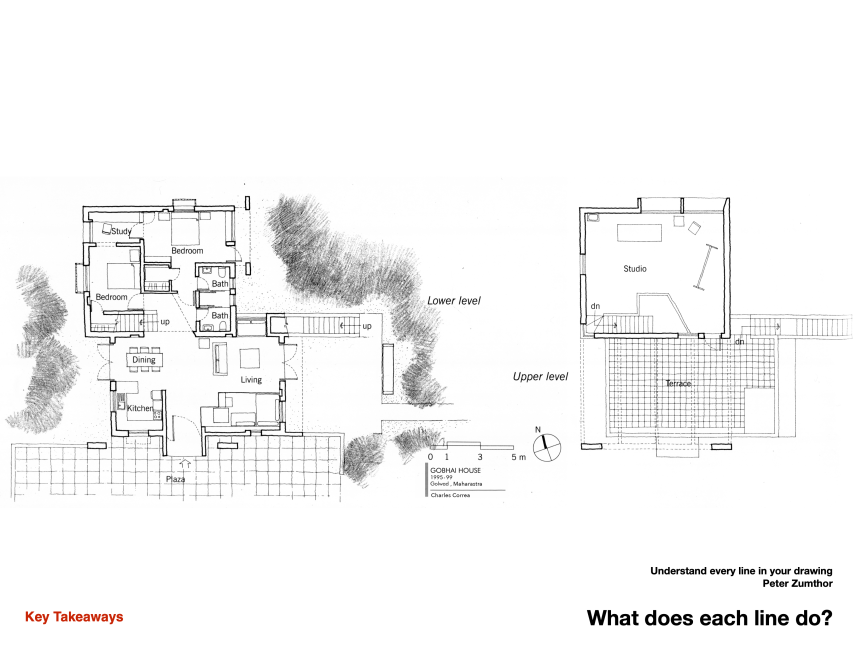
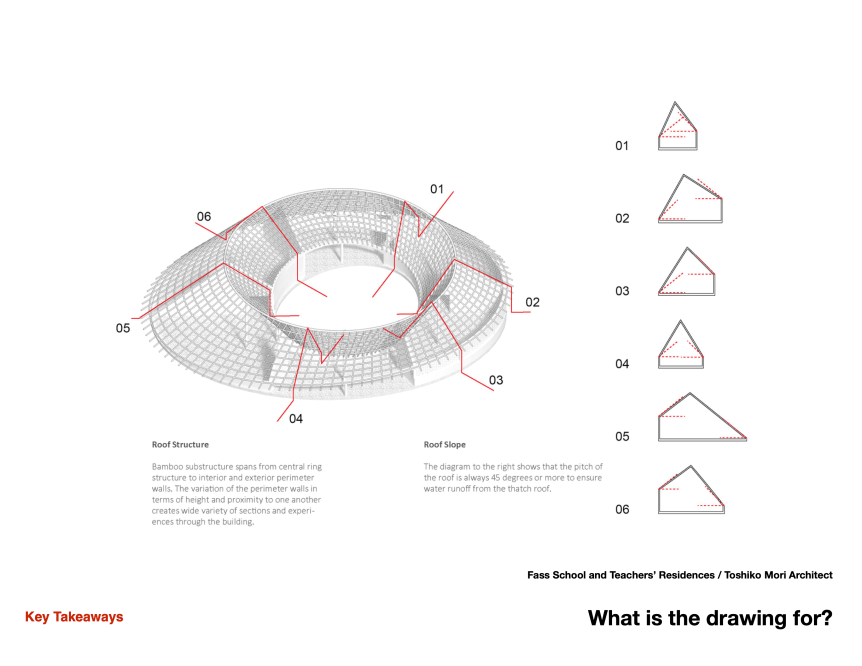
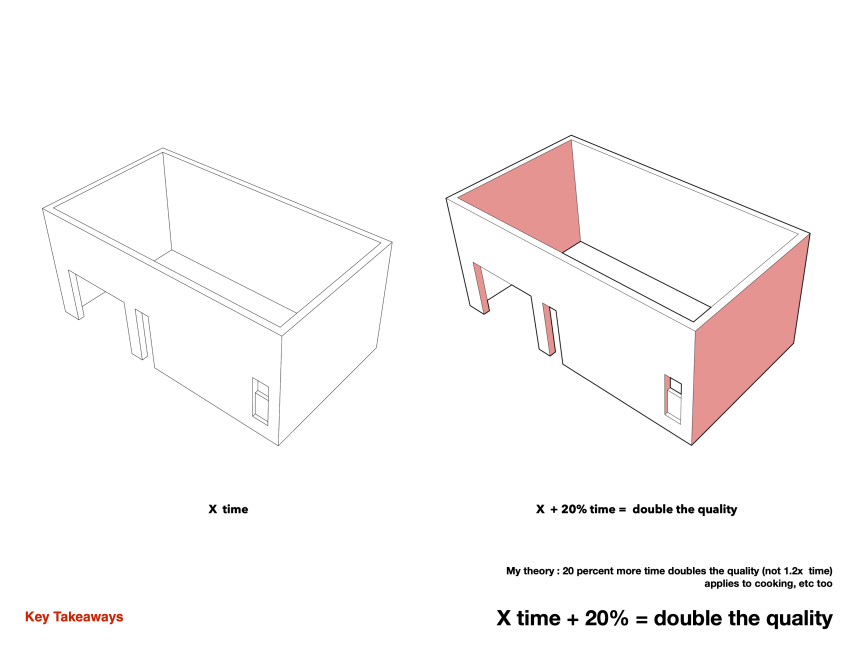
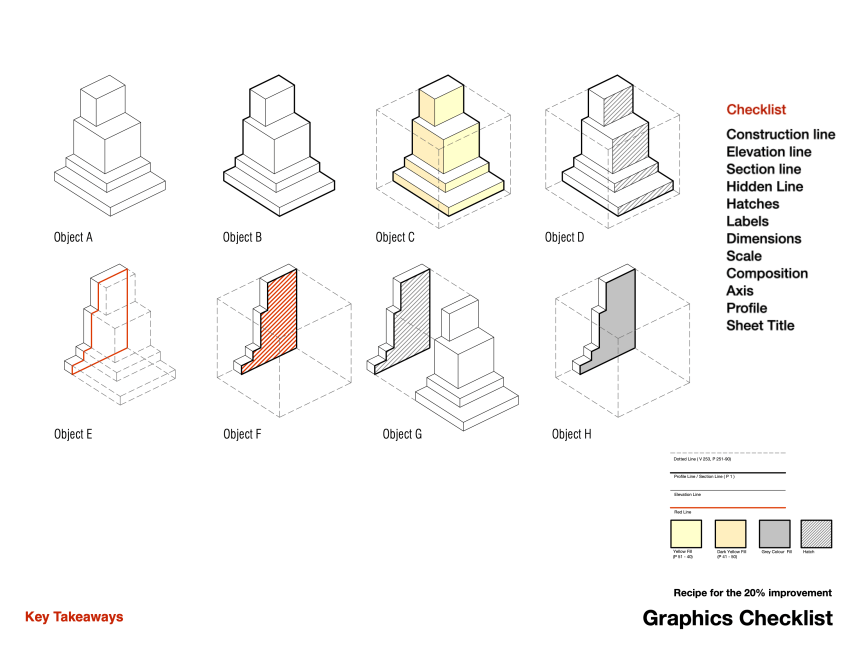
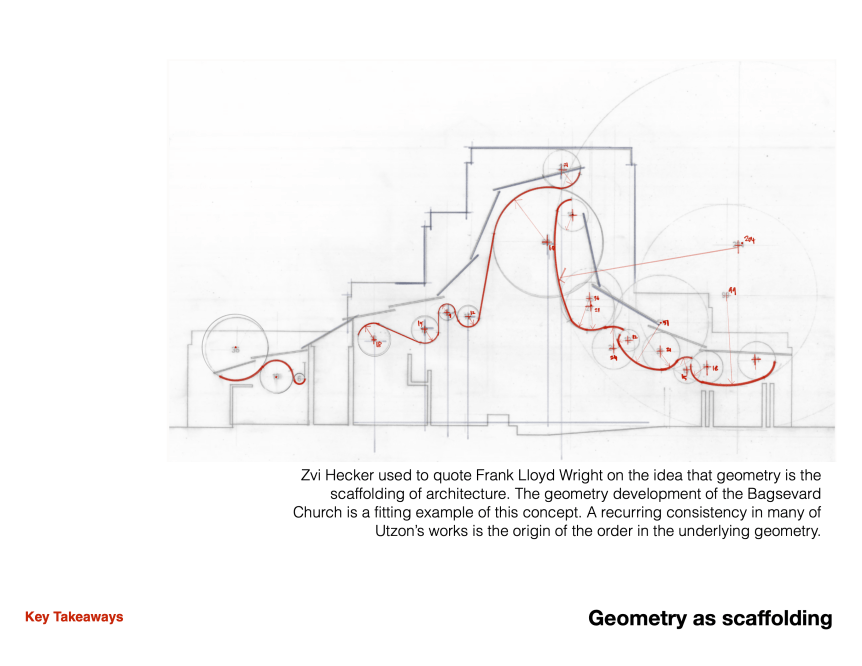
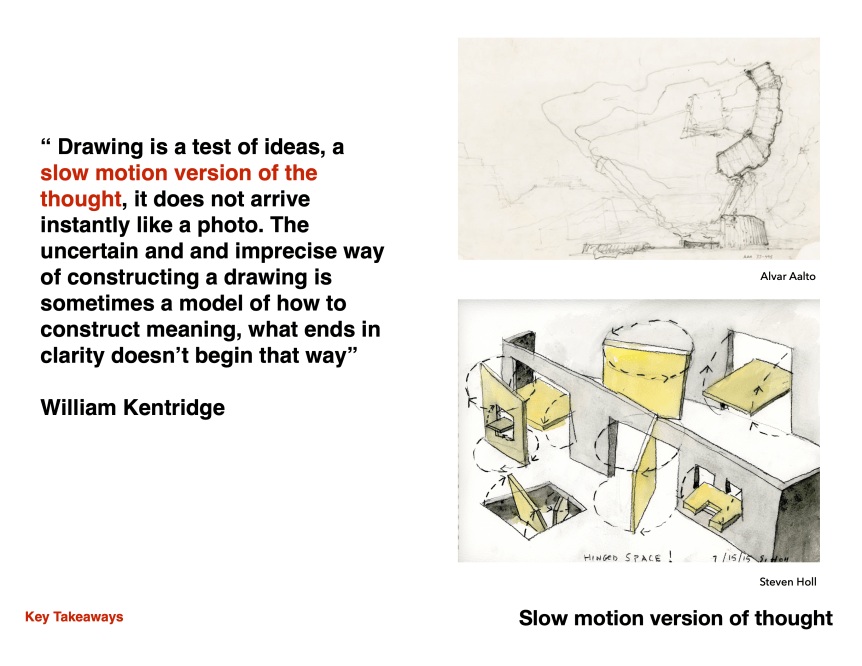
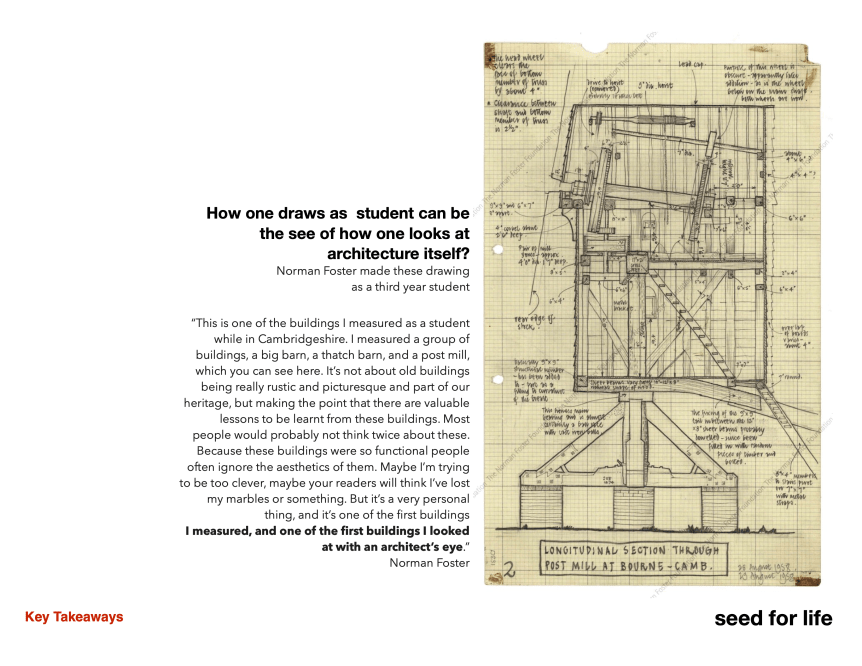
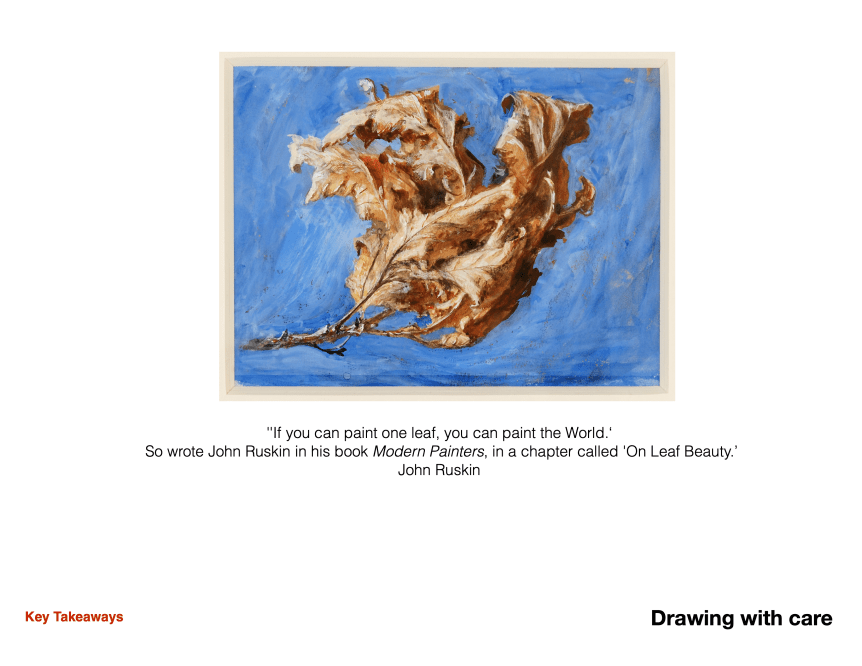
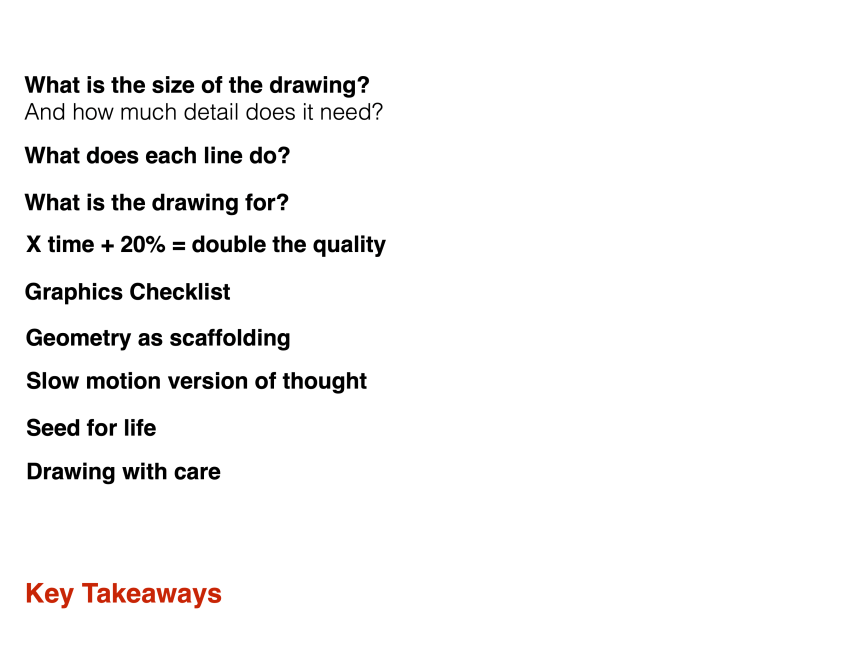
I was putting together some key takeaways and reminders to summarize the first semester drawing class. These are for the first year students. I am sharing them here.
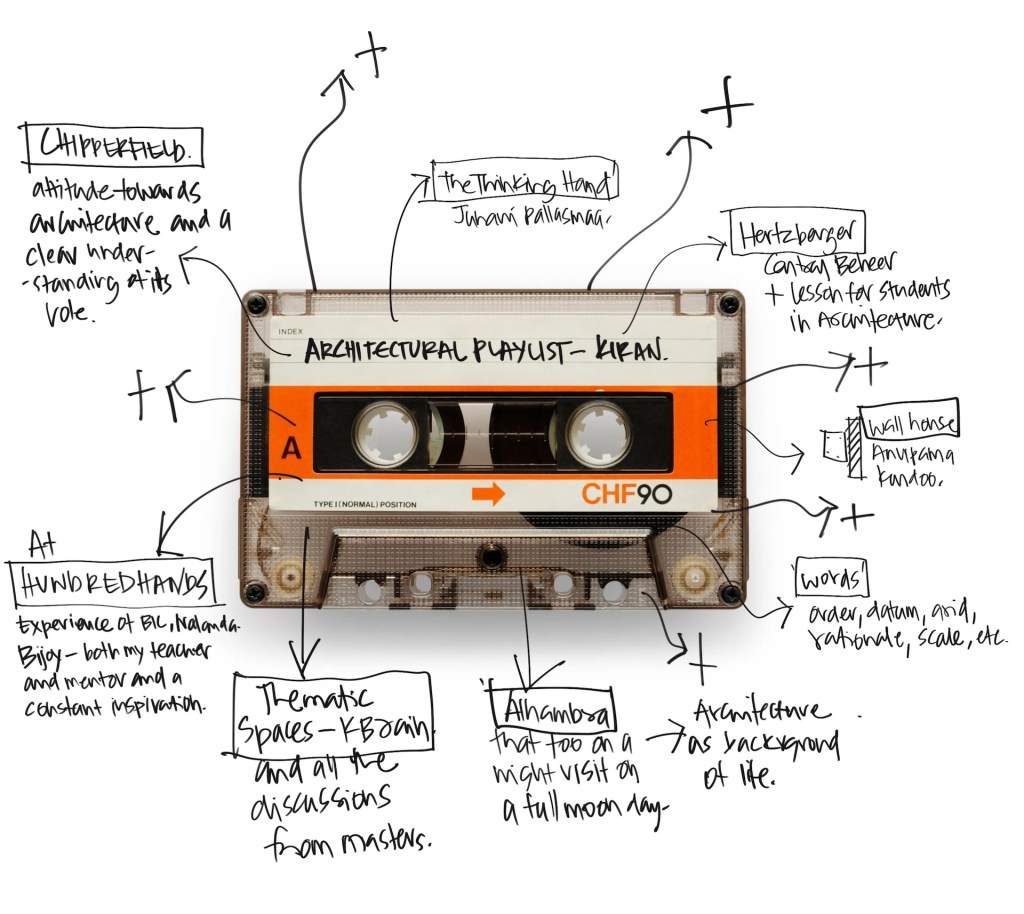
I recently bought a car, and one of the pet peeves I discovered was listening to music in a closed space (unlike with headphones). I started making a playlist for my car, and after almost 2 years and 24 songs later, I have a slow-cooked personal playlist that can make and change my mood.
During my school and early college days, I had the delight of making playlists on cassettes. Because one couldn’t afford to buy all the albums, one had to carefully select songs and go to a cassette shop, either choosing a 60-minute or 90-minute cassette and filling it with favorite songs. The logistics, availability, and cost of making the playlist made it precious by default. The playlist was a collection—a place of refuge to spend time with things that were very dear to you.
One of the recent songs I added was ‘O Sanam’ by Lucky Ali. I serendipitously stumbled upon that song recently and had forgotten the calmness it brought me when I listened to it a decade and a half ago. Listening to the song now brings back those feelings. I am enjoying my 24-ish songs so warmly. When I am distracted, I play the list in the order I have decided; if I want to have some fun, I just shuffle—a delight when you don’t know which is your next song.
Why write about playlists now, and that too when they are easy to make? Just right-click and add it to a playlist. Yes, that’s the point: it’s easy, and it is too easy. You can add a thousand songs to a list and make a hundred lists on ten devices with just a few clicks. You don’t have to find a cassette shop that has stocked all A R Rahman albums in Tamil version, and if you found one, it would become a sanctuary.
Now, the playlist has to become a filter to resist the overloaded world. If I am not wrong, it is philosopher Søren Kierkegaard who said we are tranquillized by the trivial.
Why is this important? It is important because I can get overwhelmed even if I have six tabs open in my browser. (One of my students had 24 tabs open, and I think she had another window with more tabs open, which she didn’t show me.) This is a true reflection of our time.
Playlists can become tools of resistance. Now I will make this relevant by placing it in the context of this blog, where topics are generally related to architecture (though I hope to deviate when needed). The playlist should be very personal—so personal that you should not share it either. I will follow that here and not share my full playlist, not because it is a secret, but because it is personal and not relevant to anyone without the meaning I have attached to it over time. Make a list of references and build a fort around it. Don’t let in or let go of ideas or thoughts without strict scrutiny. When one’s position is attacked, take refuge in the playlist and see if the attack is constructive and borrow something from it.
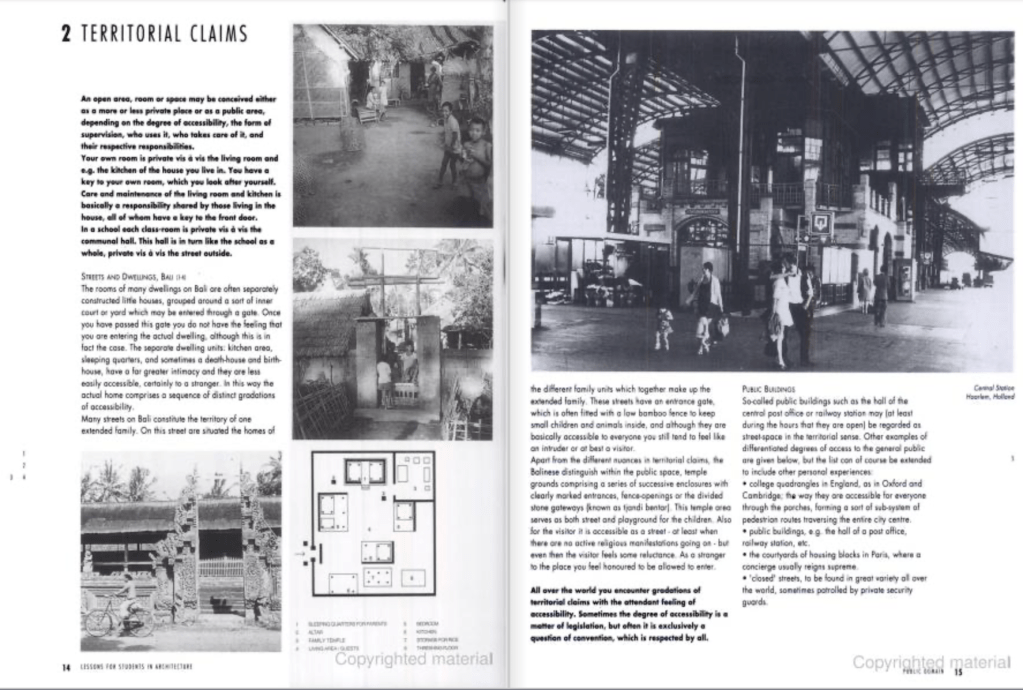
My playlist will contain projects I visited and relished (like Alhambra in Spain—a night visit on a full moon day), projects I adore analyzing (such as Wall House by Anupama Kundoo), words that thrilled me as a student (like order), books I wish I had known in my first year—not in my final year or master’s (Lessons for Students in Architecture by Herman Hertzberger), books I wish I could rediscover and want to read freshly every time (The Thinking Hand by Juhani Pallasmaa), definitions or quotes on theory, drawings, and design; memories of being in architecture and being moved calmly by it, memories and generosity of my teachers and mentors, specific dialogues with friends and students, a little detail I admire, a material finish I enjoy, the unique smell of my grandfather’s grocery store at my native place, etc.
My playlist consists of things I resonate deeply with, not just a shallow list of things I like (that is easy). One needs to dig deep. I am not talking about bookmarks in ArchDaily, saved items on Pinterest and Instagram. I am talking about things that hold significant value in one’s own journey. This playlist needs to be visible or accessible on an everyday basis.
Being a teacher, what I teach becomes a sort of playlist in itself. I have found other uses for the list as a teacher. I decide the precedent studies in class, so I can be sharp about my argument and it can become a common ground for discussions in class. I think young architects can also benefit from this, as their Instagram (like mine) constantly bombards them with interesting and useful information at an unfathomable rate. Social media has the nature to make us feel inadequate. It is never enough. Anne Lamott beautifully says, “Try not to compare your insides to other people’s outsides. It will only make you worse than you already are.” Social media gives this feeling on a platter. I try to use the playlist as a piece of resistance to that.
I casually made a note on the differences between case studies and precedents in a lecture. Case studies are made out of need—to tackle a problem or situation. Precedents, I think, are perennial, long-term. That list can bring a moment of calmness and joy when one engages with it. When one is lost, it can become a guidepost to not lose hope and affirm one’s pursuit in architecture.
Note : Used AI help only to check grammar (which seems like a very useful tool – when used carefully)
I teach Architectural Theory to both first and second-year undergraduate students at the college. When delving into this particular subject, I am acutely aware that I belong to a small tribe of history and theory educators in the country. I find it crucial to articulate to my students the significance of this subject. Regardless of the topic, I always carve out a space to underscore why a subject holds importance, as it substantially enhances the learning experience. In the case of theory, this practice propels discussions to a higher intellectual plane.
Reflecting on my postgraduate course at CEPT, which was centered around theory, I can’t distinctly recall if we explicitly delved into the definition and essence of theory. However, through years of imparting this subject, I have developed a repertoire of tropes that I employ in class, elucidating the reasons for studying theory. One of the most compelling perspectives, in my opinion, is “theory as an organising tool.” This realization has been a guiding principle, shaping the way I approach and teach architectural theory. This principle not only guides in teaching, but also in dealing with the infomation overload and find a way to navigate in between them.
I completely resonated and borrowed this phrase from an Malcolm Gladwell’s interview:
Interviewer: “That’s why reviewers say you bring “intellectual sparkle to everyday subjects”. Is this a deliberate approach? Yeah, it’s deliberate. I’ve often observed that people are experience-rich and theory-poor. All of us have an enormous wealth of stories and experiences. But what we lack is the means to make sense of all that, to organise it, to understand it and to comprehend it. My books are addressing that. I’m not telling you facts you didn’t know before. You’ve all been in situations I’m describing. What I’m doing is saying, here’s a way of organising your thoughts.” (bold emphasis mine)
In this post, I will share some examples which indicate the possibilities of this trope “theory as an organising tool”
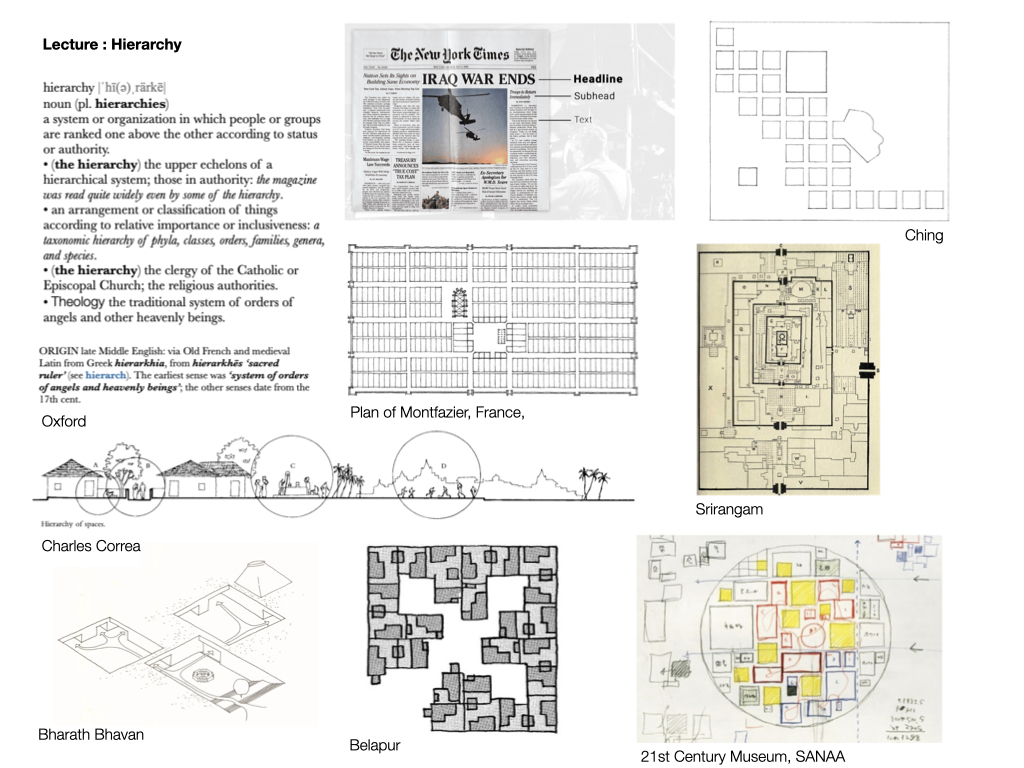
01.
Lectures serve as vessels for ideas. For instance, in preparing a lecture on hierarchy, I have the opportunity to seamlessly organise diverse examples—from dictionaries, graphics design principles to instances in Indian history, contemporary scenarios in Japan, and insights from figures like Charles Correa—all under the same conceptual umbrella. This unique condition allows me to curate examples and weave a steady narrative to explain and unpack the meaning of the term ‘hierarchy’. In contrast to history lectures, which are constrained by specific styles, periods, or movements, theory lectures open up a broad spectrum of possibilities and interpretations.
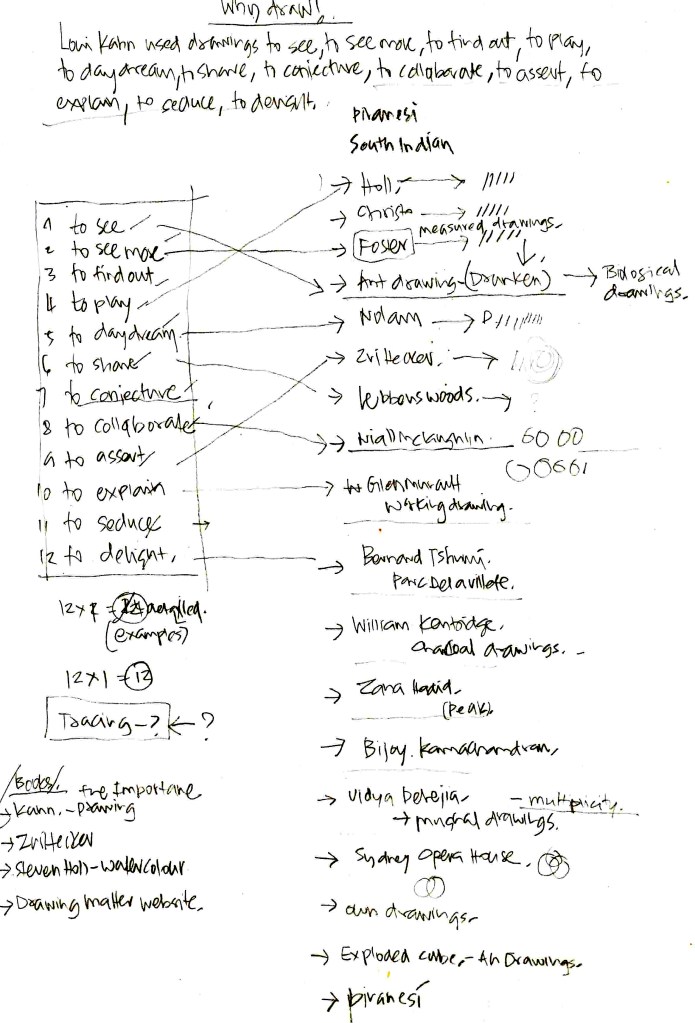
02.
The research was conducted for a lecture titled ‘Why Draw’ presented to first-year students. The lecture was inspired by a quote from Michael Merill’s book ‘The Importance of Drawing’, which served as the framework. I used this quote and my knowledge of various examples to craft an engaging narrative. Instead of starting from scratch, I utilized my existing drawing references and matched them with keywords from the quote. My primary focus was to recognise that this quote could form the backbone of the lecture, saving valuable time.
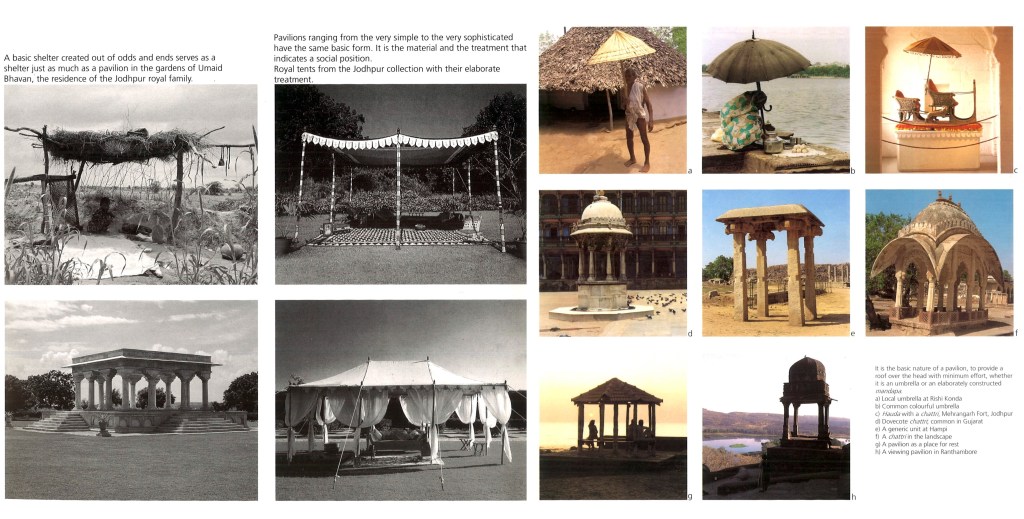
03.
This excerpt from ‘Thematic Spaces in Indian Architecture’ is crucial to me. Prof. Jain delves into the concept of a pavilion, navigating between its “nothingness” and “universal” significance. Although I was privileged to study under Prof. Jain, I only realized the full potential of this perspective later on. This way of looking at things had already seeped into my subconscious during my student days.
04.
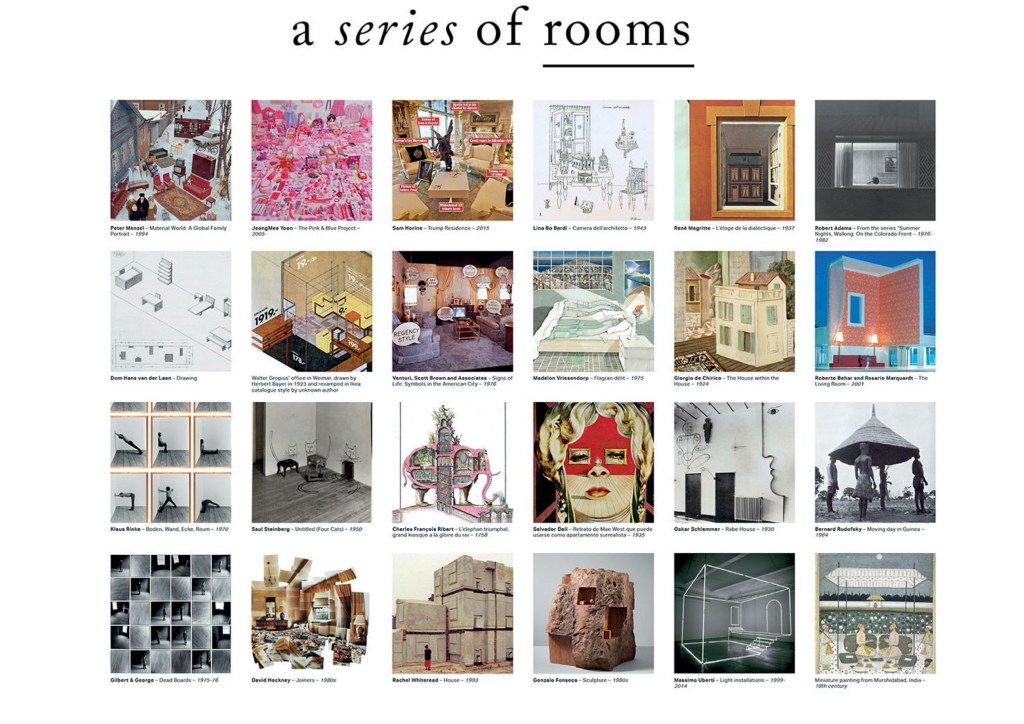
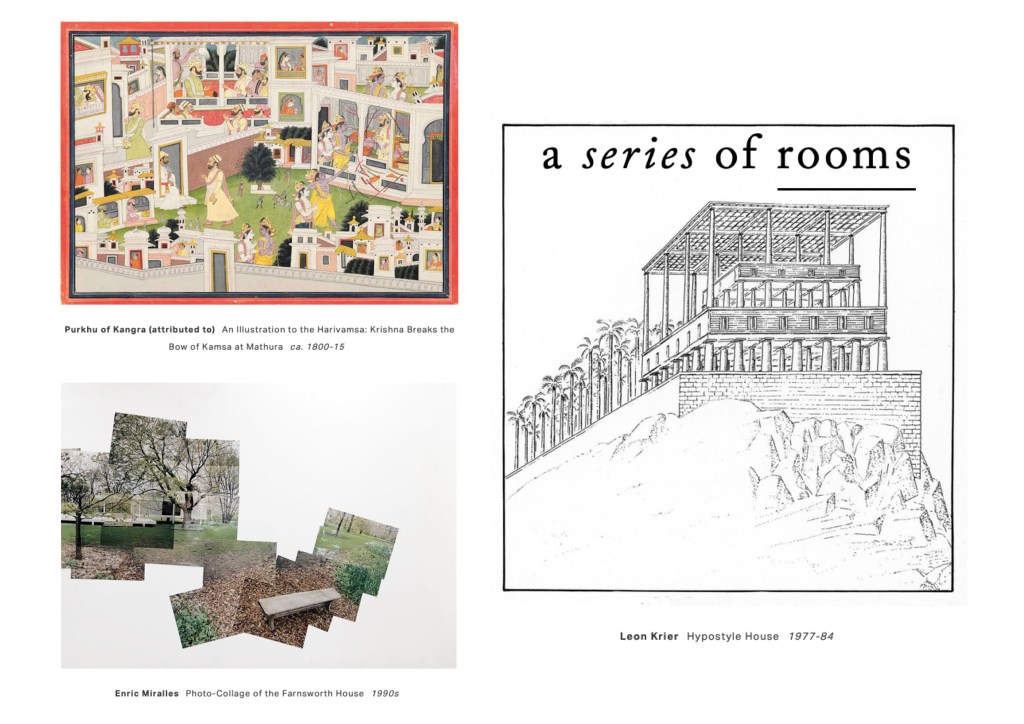
This collection ‘A Series of Rooms‘ is one of my favorite online collections. It is “a collection of domestic space – an exploration into the imagery of the housing archetype – as portrayed in art, media, and human studies.” Their Insta page surprises me with the type of instances they gather from various mediums. The curators (Bonell+Dòriga) mention that “In the oversaturated age of digital reproducibility, building one’s own archive – searching, selecting, organizing – becomes, beyond being an instrument in the design process, a creative act in itself.” I am in complete agreement with this idea. Otherwise, how can we speak on the same page about diverse examples like Enric Miralles’ collage of Farnsworth House, Krier’s experimentations, and Mughal miniature paintings.
05.
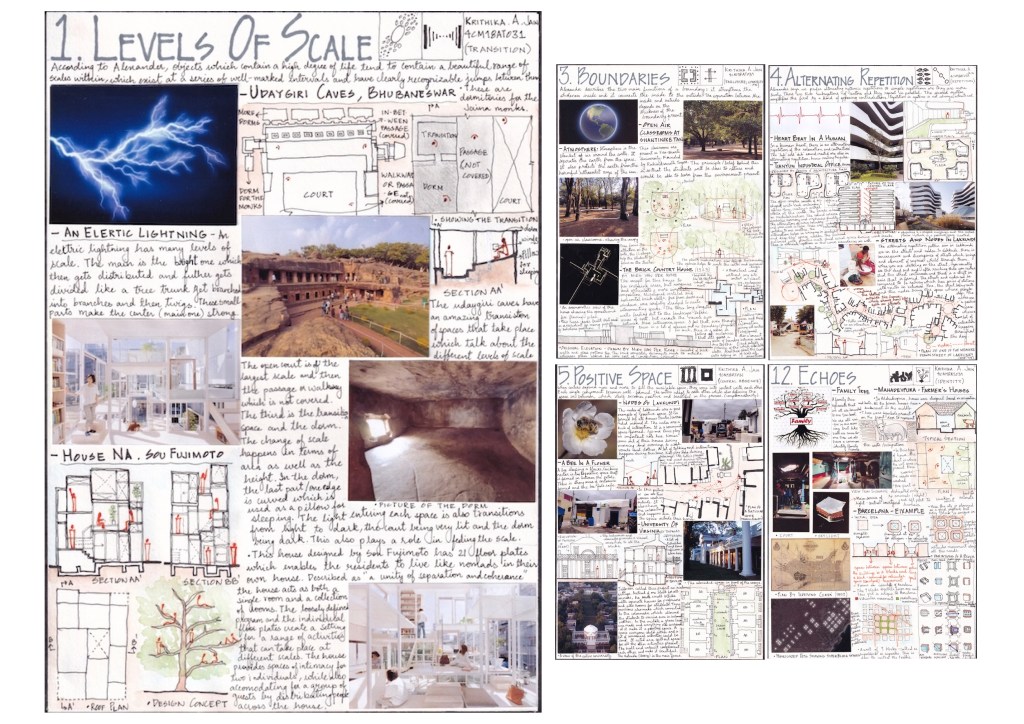
In this case, this is a student assignment. Here the exercise is to reinterpret Christopher Alexander’s fundamental principles and collect various examples – one from personal experience, one from examples studied, and other scientific phenomena. Krithika (WCFA Batch 2018) organized her experiences under this term and gave a discernible shape to her ideas.
06.
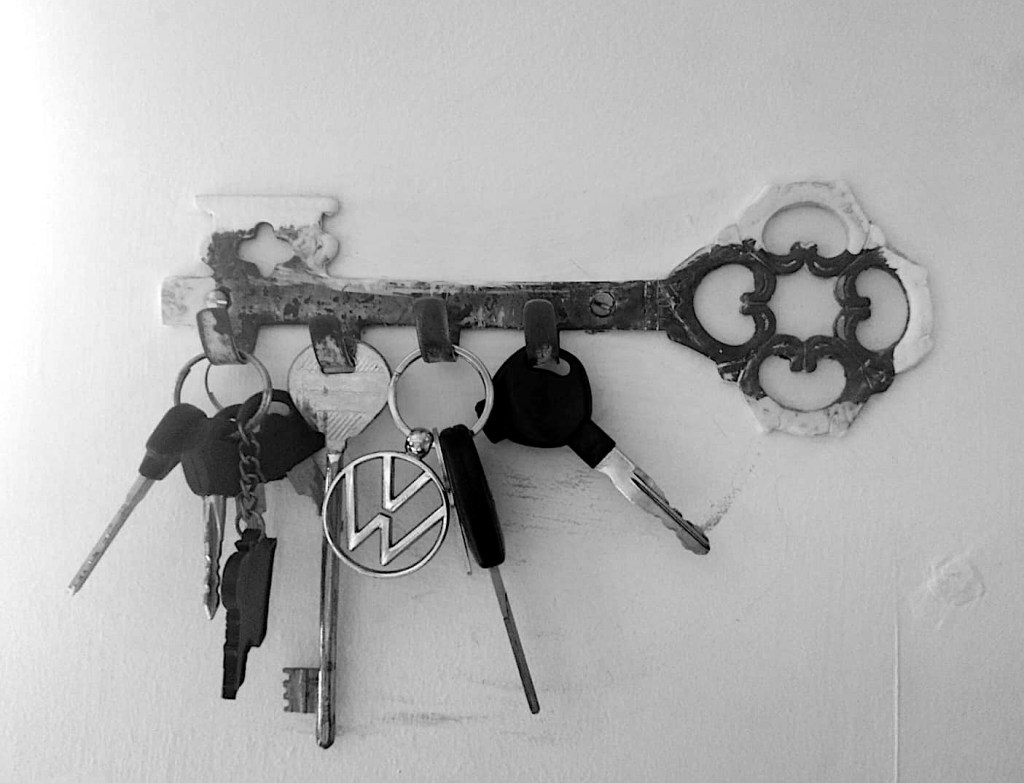
I want to share a personal experience. I used to constantly misplace my keys at home, causing me to waste time searching for them. When I moved to a new house, I found a key hanger in the shape of a key! This simple solution made it easy for me to develop a habit of always placing my keys there. Additionally, I made it a nightly routine to ensure all the keys were in their proper place. Since then, I rarely lose any keys and avoid frantic last-minute searches before leaving the house. The analogy I’m suggesting is similar: when you get an idea or find a reference, “hang” it in the right place so you can easily find it when needed.
07.
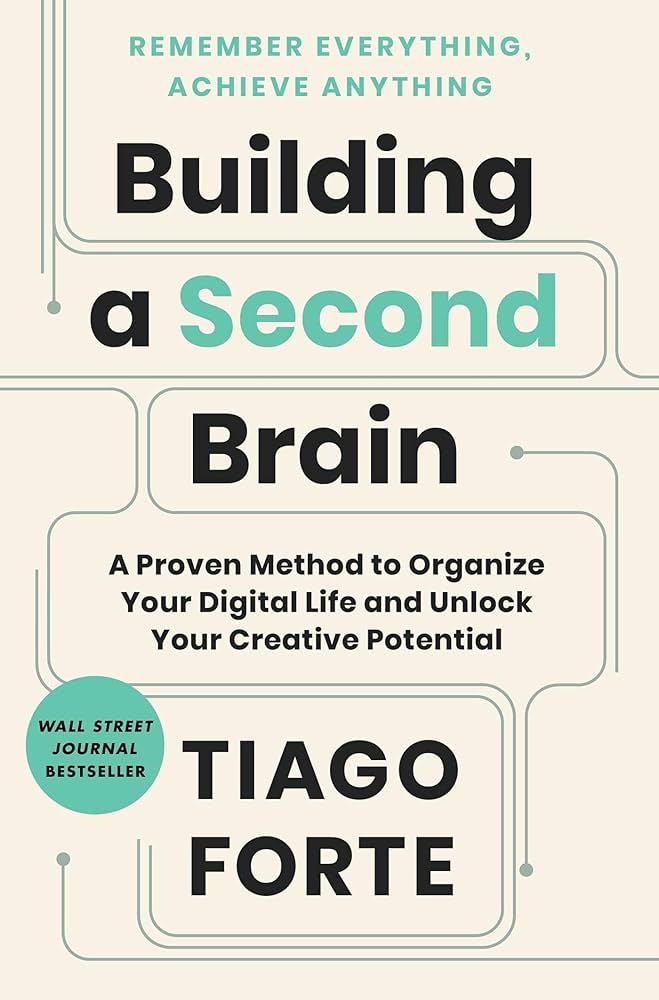
If you’ve reached this part of the post and found the trope interesting, I bet you’ll find this book intriguing. I’ve already read this book twice this year and gifted it to a few friends. Here is a quote from the book: “keep only what resonates…When something resonates, it moves you on an intuitive level. Often, the ideas that resonate are the ones that are most unusual, counterintuitive, interesting, or potentially useful. Don’t make it an analytical decision, and don’t worry about why exactly it resonates- just look inside for a feeling of pleasure, curiosity, wonder, or excitement, and let that be your signal for when it’s time to capture a passage, an image, a quote, or a fact. “
08.
As I wrapped up this post, I couldn’t resist mentioning the timeless classic ‘Lesson for Students in Architecture’ by Hertzberger! This wonderful book is a collection of precedents he has continuously taught, practiced, and referred to throughout his entire career. The book starts with the line “It is inevitable that the work you do as an architect should serve as the point of departure for your teaching, and obviously the best way to explain what you have to say is to do so on the basis of practical experience: that, indeed, is the common thread of this book. Instead of presenting each individual work separately and explaining all their distinctive features in turn, the different textual components have been organized in such a way that, as a whole, they offer something in the way of a theory; it is the way the elements are organized that transforms practice itself into theory.”

 mofussillab
You must be logged in to post a comment.