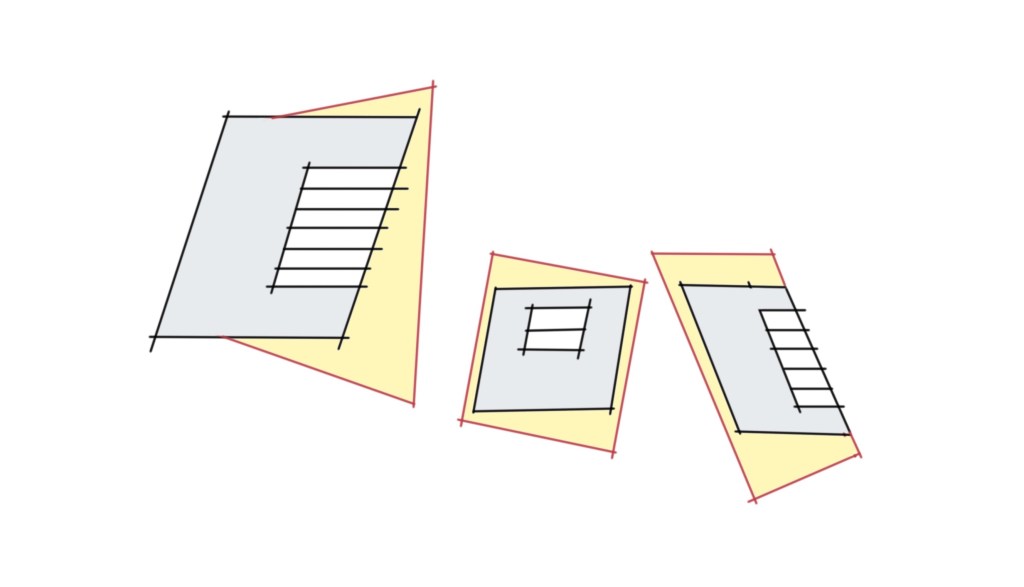
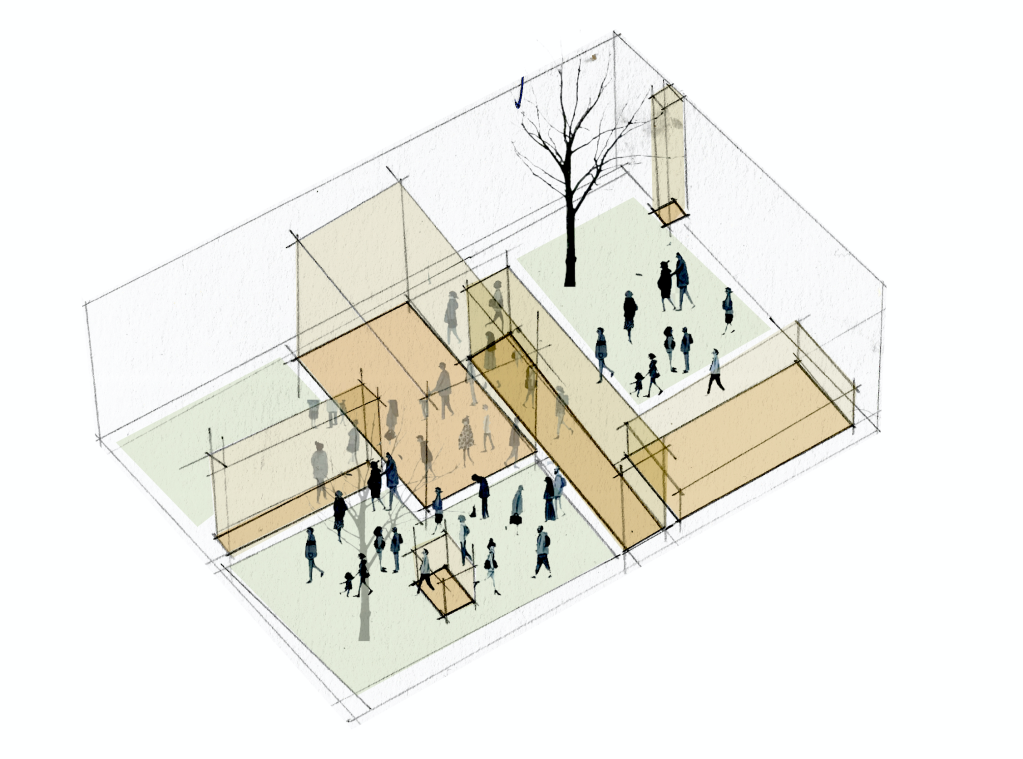
In this project there is an elegant play of geometry. The rational of the interior space meets the idiosyncrasy of the site and thus the city. The interplay creates rich and intricate experiences. I tried tracing the plan to reveal and highlight that idea.
Project : Bankside 123, London, Allies and Morrison
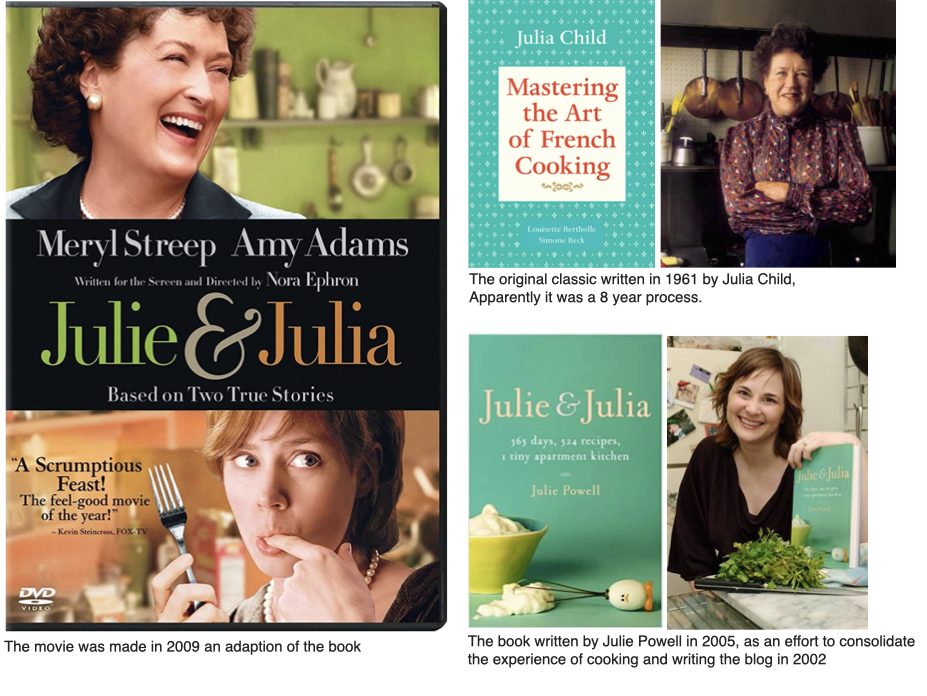
In the recent online COA Social talk on pedagogy, Sarah Whiting (Dean of Harvard School of Design) spoke about the movie Julie and Julia through an interesting perspective. If one is not familiar with the premise of the movie, here is a short note about it. In the movie, Julie, who is a struggling writer grappling with her identity, decides to cook all the 524 dishes within a years time from the legendary book “Mastering the Art of French Cooking” published in 1961 by Julia Child. As she cooks, she also blogs about it. So the movie is inspired by the book Julie Powell wrote about this experience. What the screenplay of the movie does is very interesting. In the movie there is a parallel story from another time of how the actual book came into place. How Julia struggles with her identity in a different culture, age and time. The viewer of the movie engages in both the process of creativity simultaneously and that is a wonderful premise to dwell in. To see both the struggles of formed and yet to form.
In this talk, Sarah spoke about using this movie as a premise to talk about learning to her students. Sarah said that she asks the students to be more like Julia, who took liberty with the medium of French cooking and explored and adapted it further. It was a wonderful point Sarah made here. I am paraphrasing a lot from memory here. This notion stayed with me. Just to probe this notion a little further, my impression is that this surrendering to the recipes gave a Julie a purpose and a tangible direction to do something which led to the book she wrote. In the movie, she is portrayed a struggling writer. And this act of surrender, even though arbitrary, helped Julie find some ground. Inspite of not being as exploratory as Julia Child did with French Cooking, I think these both ways of creativity are equally sound. For a beginner like Julia, the aligning to an idea /school of thought helped to move ahead, whereas for Julia it was taking liberty to depart from French cooking and what it meant to American middle class.
For Julie, this way of cooking and aligning to a school of thought became the point of entry whereas the same premise of cooking became a point of departure for Julia. I feel this notion extends across all the creative fields. We can start from a point which resonates with us.
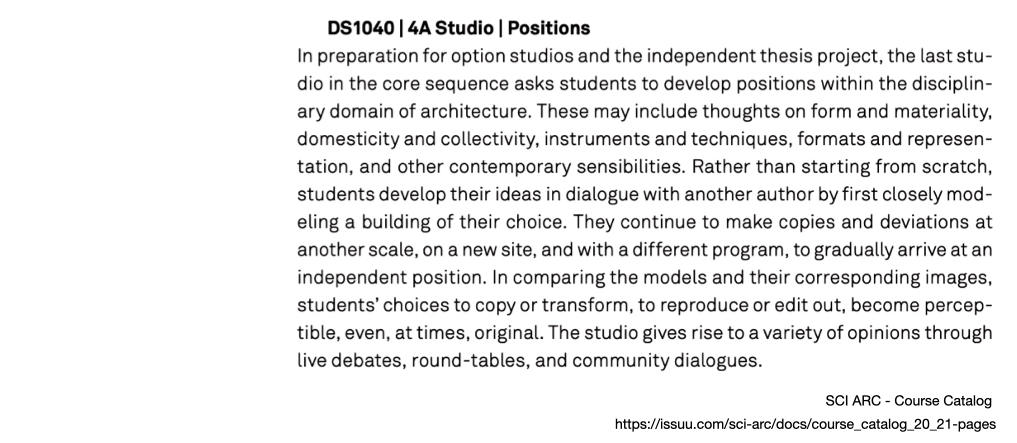
So in preparing for new design studio for 5th semester students at WCFA, i am planning to engage in a similar playing field. where we ‘reinterpret a canonical project’ to act as a point of entry into the semester. This way of learning from the masters has been a familiar trope in design studios. It is just here i am looking at the project rather than the architect . A perspective i learnt from Prof K B Jain at CEPT. He always talked about the project, rather that the architect. I think this is a more accommodating way to look at ideas, as every architectural project is a result of a collaboration. Below is a note from SCI ARC, on a possible method of enquiry in this direction.
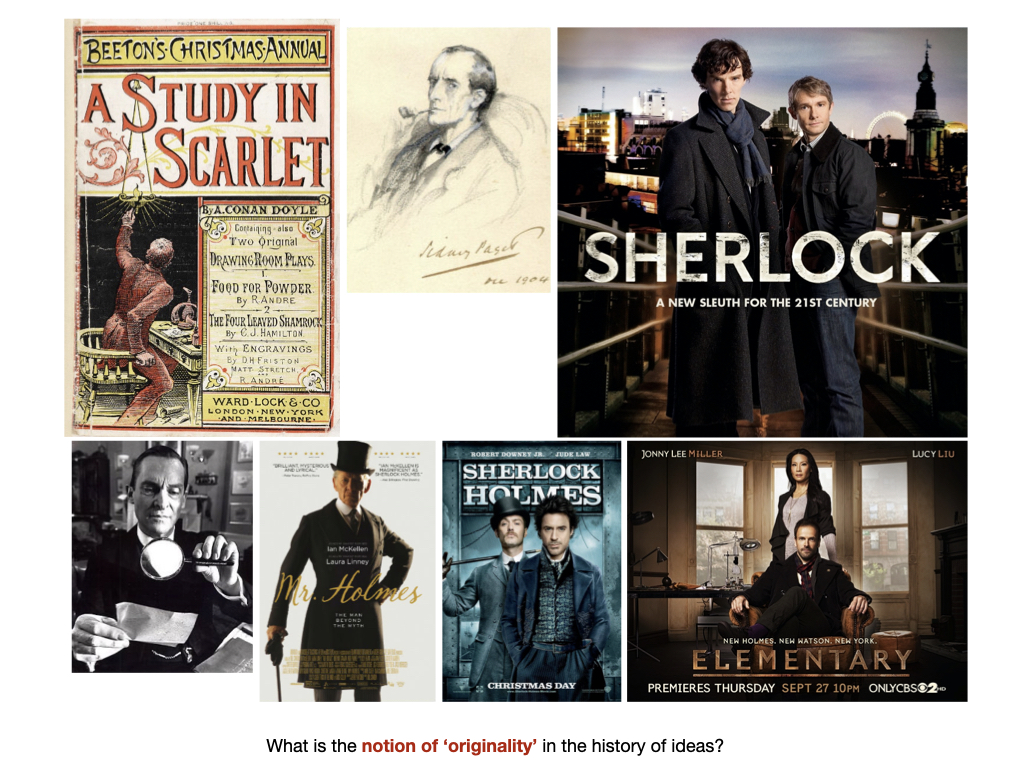
Here is a slide i use recurring-ly in my theory classes, which became base on which i am folding these questions discussed above – What is notion of originality in the history of ideas? – Take the instance of the British version of the Sherlock. They made a brilliant adaption, just by changing the context of time. We would have been devoid of this project, if they had brushed this as a naive, or not an idea original enough to be pursued. This is a very fragile stage in every creative process, and one has to deal with it delicately.
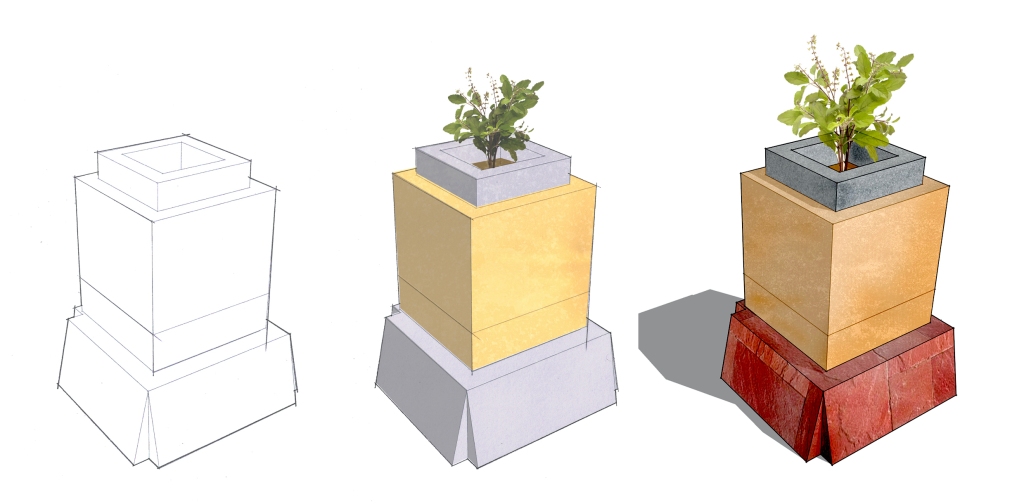
Three ways to draw a tulsi katte I always struggle with digital renders
Should i keep it monochrome or not? Do i express form or materials? Should i apply actual materials or suggest materiality? Should one imitate the imperfections of hand drawings in digital forms? Axonometric or perspective?
What do drawings express? The care taken to design, regardless of the design itself.


 mofussillab
You must be logged in to post a comment.