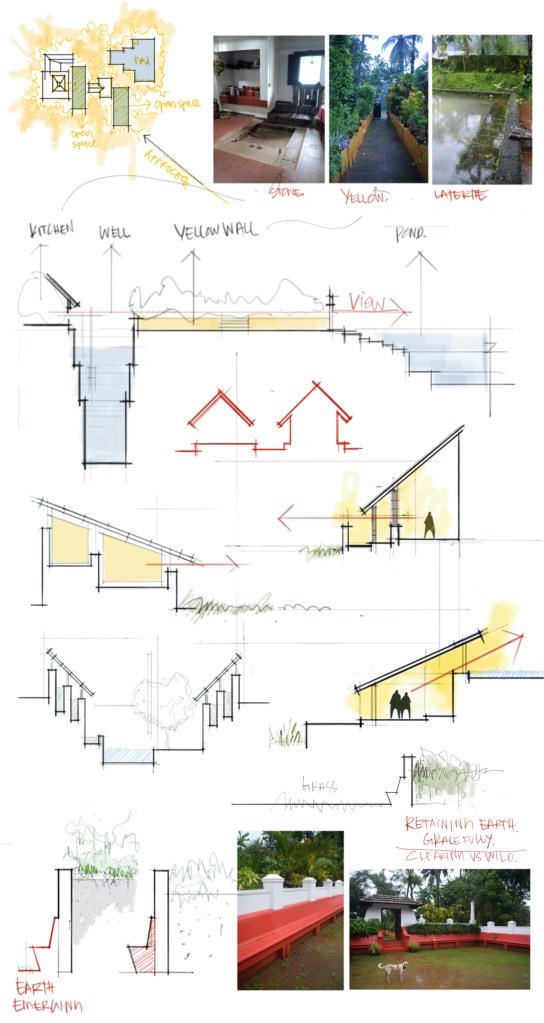
Sketches (some real / some imagined) from my recent trip to Kannur (July 2023). This is my second visit. Incidentally both the times I visited (almost 9 years apart), it was during monsoon. I witnessed concentrated spells of rain, very different from the Mysore rains. I was amazed by how the sloping roof modulated scale, view, water and heat – as elemental as the ubiquitous umbrella – light and playful. The 300 yr old estate bungalow we stayed provided ample reminders in the fundamental quality of architecture – surfaces, colour, light, landscape (both contained and wild), connection to nature. I loved how some of the walls, which meandered through the landscape. They articulated shifting topographies gently. They were holding earth with different attitudes. The form and shape expressed its loyalty to the ground it was holding. The colours stood in delightful contrast to the lush green rain drenched surroundings.
Ending here on a note from Chipperfield, reminding the “fantastical reality” of an old building :
In the book, you wrote, “The length and sequence of the architectural process isolates us from the substantial matter of the project……. from the simple, physical consideration of our craft” Shouldn’t the physical realisation of things influence your conceptual process? All architects have the problem that conceptualisation and realisation are separated by our professional process. If I am a sculptor, the relationship between my conception and my ability to realise it is absolutely direct, through my hands. If I am an architect, this realisation can pass through many, many layers, so by the time that realisation is done, there can be no feedback to the conceptualisation. So the conceptual process is removed in time and it has to anticipate the physical, material reaction. In a way as an architect, I am jealous of the sculptor who can understand the result, because sometimes the physical result can relax you, and my belief is that sometimes ideas that are only explored on paper can be too nervous and unnecessary, and when you see something in reality – you go to an old building and you can see a very beautiful room with a window, a stone floor and two columns -, it’s nothing, but it has a fantastic reality. On paper, we have to convince ourselves that our idea is a good one.We need stimulus from our designs, but they are not necessarily reality. So I think that for architects generally, this dynamic or sometimes loss of dynamic-between the concepts we are working on and pure reality is problematic.
Source : El Croquis, David Chipperfield (2006-14), In an interview with Juan Antonio Cortes titled “Concilcation of Opposites: Concepts”
“Some books should be tasted, some devoured, but only a few should be chewed and digested thoroughly.” Francis Bacon
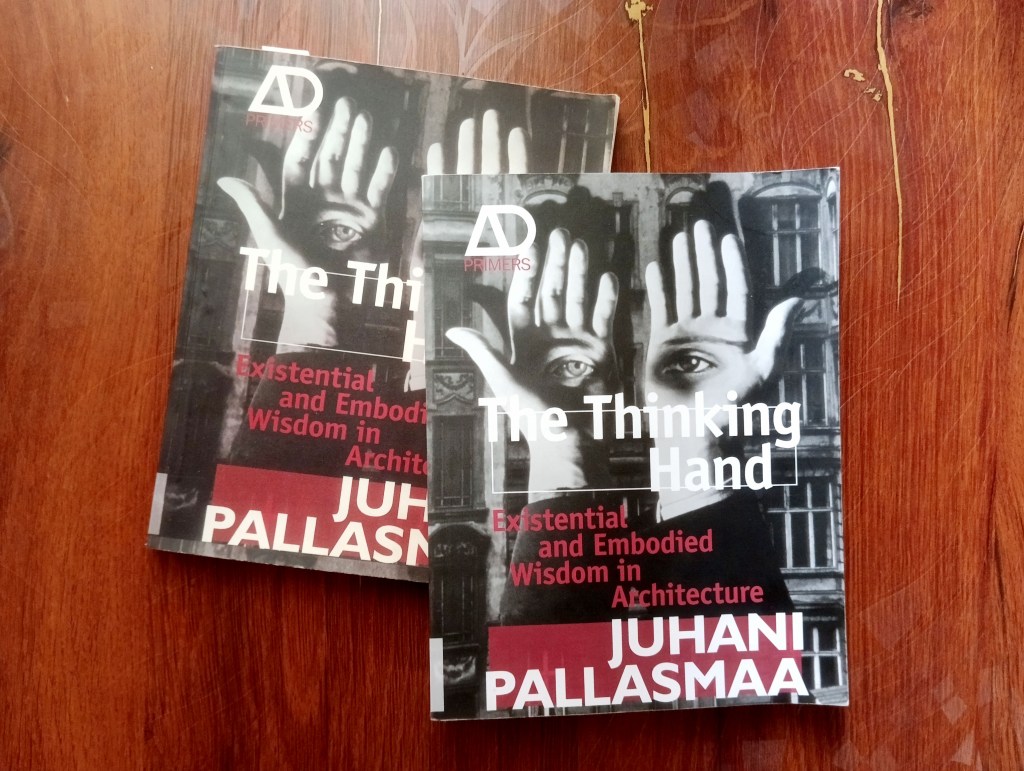
I have 2 copies of Juhani Pallasmaa’s ‘The Thinking Hand’. One of the few (or may be the only one) books on architecture i have read from the first page to the last page. A book very close to me. It has sustained 13 years of interest. Pallasmaa’s ‘The Eyes of the Skin’ is a more frequently read and referenced text . If you are an admirer of that text, this book is a great continuation.
The first one I read in 2010. I was in my third semester at the Theory and Design Master’s Program at CEPT. And it had taken almost the first year of my course to make reading a prominent part of my learning curve. I had read very less as an undergrad student. This book had just been published then and had arrived at CEPT library. After reading the library copy, i bought a copy to myself so that i can underline it and add my notes. It is in that mood i had read the book voraciously. I have to admit here, that the first copy is a photocopy. I think it costed me 300 bucks. The ‘xerox’ shop at CEPT made a wonderful job of photocopying book for the students. Most humane form for breaking the law i guess – by sharing knowledge. If you take a quick glance at the book now , you won’t make out that it is a photocopy. Even the cover is laminated colour photocopy. Unless someone has seen the original, this is good enough.
I recently (2022) bought the original book at ten times the cost. Still very expensive. I always felt guilty reading the photocopy, as i have been rereading parts of it for last 13 years! and i I have merrily ‘extracted’ a lot of quotes for my lectures and essays. This book puts in perspective for me on what is the role of architectural theory – its limits and possibilities. It is brilliantly articulated in these two phrases : “the discipline of architecture has to be grounded on a trinity of conceptual analysis, the making of architecture, and experiencing” and “whereas a theoretical survey that is not fertilised by a personal encounter with the poetics of building is doomed to remain alienated and speculative”.
By the way i have underlined notes in these two books, I can see my two different selves between the two books. Even though the first self is more ideal, optimistic than the sober, bit worn down academic; i am comforted to know i have highlighted similar sentences between both the versions and the consistence of my inclination towards certain ideas which still keep me going.
Below are a selection of my highly revisited quotes from my ‘extracts’ (all bold emphasis mine):
1. “In my view, the discipline of architecture has to be grounded on a trinity of conceptual analysis, the making of architecture, and experiencing – or encountering – it in its full mental, sensory and emotional scope. The point that I wish to emphasise is that an emotional encounter with architecture is indispensable both for creating meaningful architecture and for its appreciation and understanding. Design practice that is not grounded in the complexity and subtlety of experience withers into dead professionalism devoid of poetic content and incapable of touching the human soul, whereas a theoretical survey that is not fertilised by a personal encounter with the poetics of building is doomed to remain alienated and speculative – and can, at best, only elaborate rational relationships between the apparent elements of architecture.” (146)
2. “In addition to operative and instrumental knowledge and skills, the designer and the artist need existential knowledge moulded by their experiences of life. Existential knowledge arises from the way the person experiences and expresses his/her existence, and this knowledge provides the most important context for ethical judgment. In design work, these two categories of knowledge merge, and as a consequence, the building is a rational object of utility and an artistic/existential metaphor at the same time.
All professions and disciplines contain both categories of knowledge in varying degrees and configurations. The instrumental dimensions of a craft can be theorised, researched, taught and incorporated in the practice fairly rationally, whereas the existential dimensions are integrated within one’s own self-identity, life experience and ethical sense as well as one’s personal sense of mission. The category of existential wisdom is also much more difficult to teach, if not outright impossible. Yet, it is the irreplaceable condition for creative work” (119)
3. “The great gift of tradition is that we can choose our collaborators; we can collaborate with Brunelleschi and Michelangelo if we are wise enough to do so” (146)
4. “Drawing is an observation and expression, receiving, at the same time. It is always a result of yet another kind of double perspective; and giving a drawing looks simultaneously outwards and inwards, to the observed or imagined world, and into the draughtsman’s own persona and mental world. Each sketch and drawing contains a part of the maker and his/her mental world, at the same time that it represents an object or vista in the real world, or in an imagined universe. Every drawing is also an excavation into the drawer’s past and memory. John Berger describes this seminal merging of the object and the drawer him/herself: “It is the actual act of drawing that forces the artist to look at the object in front of him, to dissect it in his mind’s eye and put it together again; or, if he is drawing from memory, that forces him to dredge his own mind, to discover the content of his own store of past observations”” (90)
5. In fact, every act of sketching and drawing produces three different sets of images:/the drawing that appears on the paper, the visual image recorded in my cerebral memory, and a muscular memory of the act of drawing itself. /All three images are not mere momentary snapshots, as they are recordings of a temporal process of successive perception, measuring, evaluation, correction and re-evaluation. A drawing is an image that compresses an entire process fusing a distinct duration into that image. A sketch is in fact a temporal image, a piece of cinematic action recorded as a graphic image.” (91)
6. “The capacity to imagine situations of life is more important talent for an architect than the gift of fantasising space “Aulis Blomstedt (114)
7. Heidegger considers teaching even more difficult than learning: ‘Teaching is even more difficult than learning […] Not because the teacher must have a larger store of information, and have it always ready. Teaching is more difficult than learning because what teaching calls for is this: to let learn. The real teacher, in fact, lets nothing else be learned than – learning.”” (120)
8. “One of the most demanding requirements of an architect is the capacity to sustain a sense of inspiration and freshness of approach for several years, and sometimes through several successive alternative projects.” (084)
9. Architecture does not invent meaning; it can move us only if it is capable of touching something already buried deep in our embodied memories. (136)
10. “My confidence in the future of literature consists in the knowledge that there are things that only literature can give us, by means specific to it, Italo Calvino in his Six Memos for the Next Millennium;
In my view, the task of architecture is to maintain the differentiation and hierarchical and qualitative articulation of existential space. Instead of participating in the process of further speeding up the experience of the world, architecture has to slow down experience, halt time, and defend the natural slowness and diversity of experience. Architecture must defend us against excessive exposure, noise and communication. Finally, the task of architecture is to maintain and defend silence. (150)
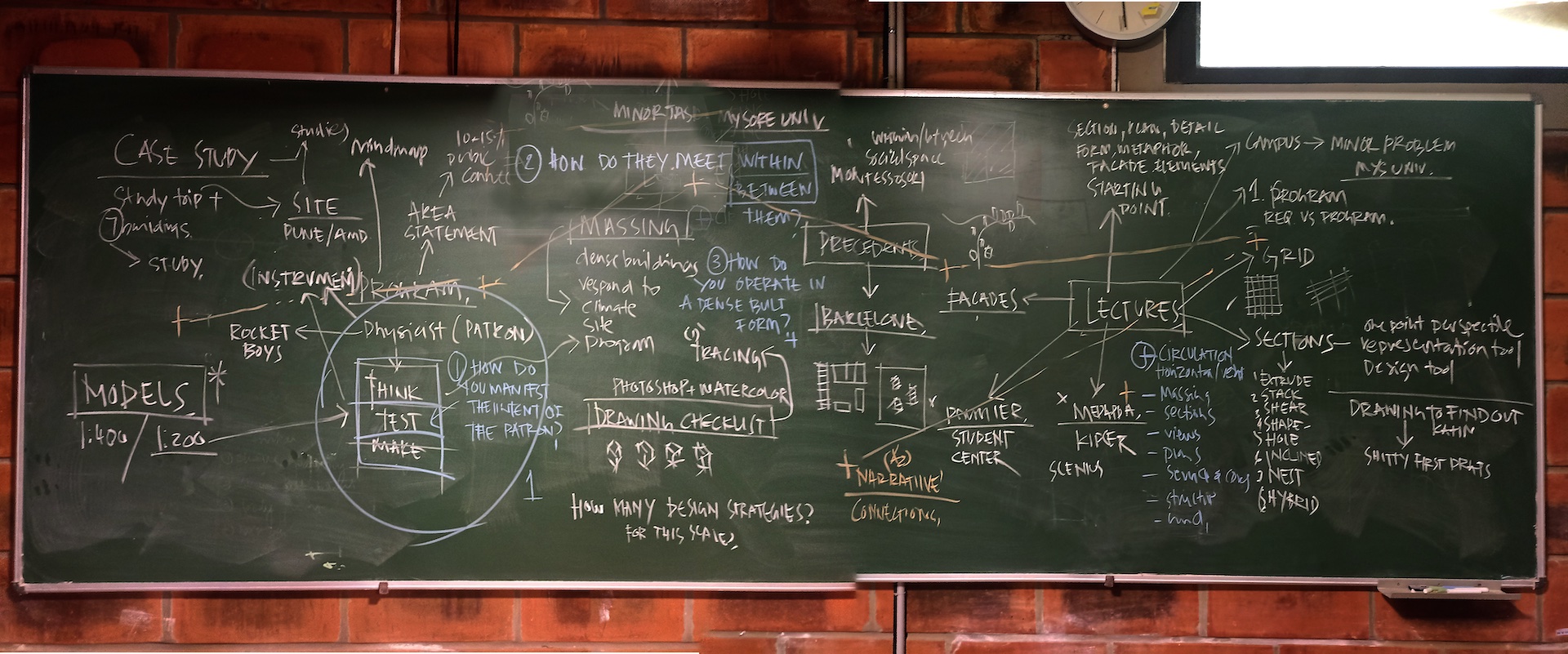
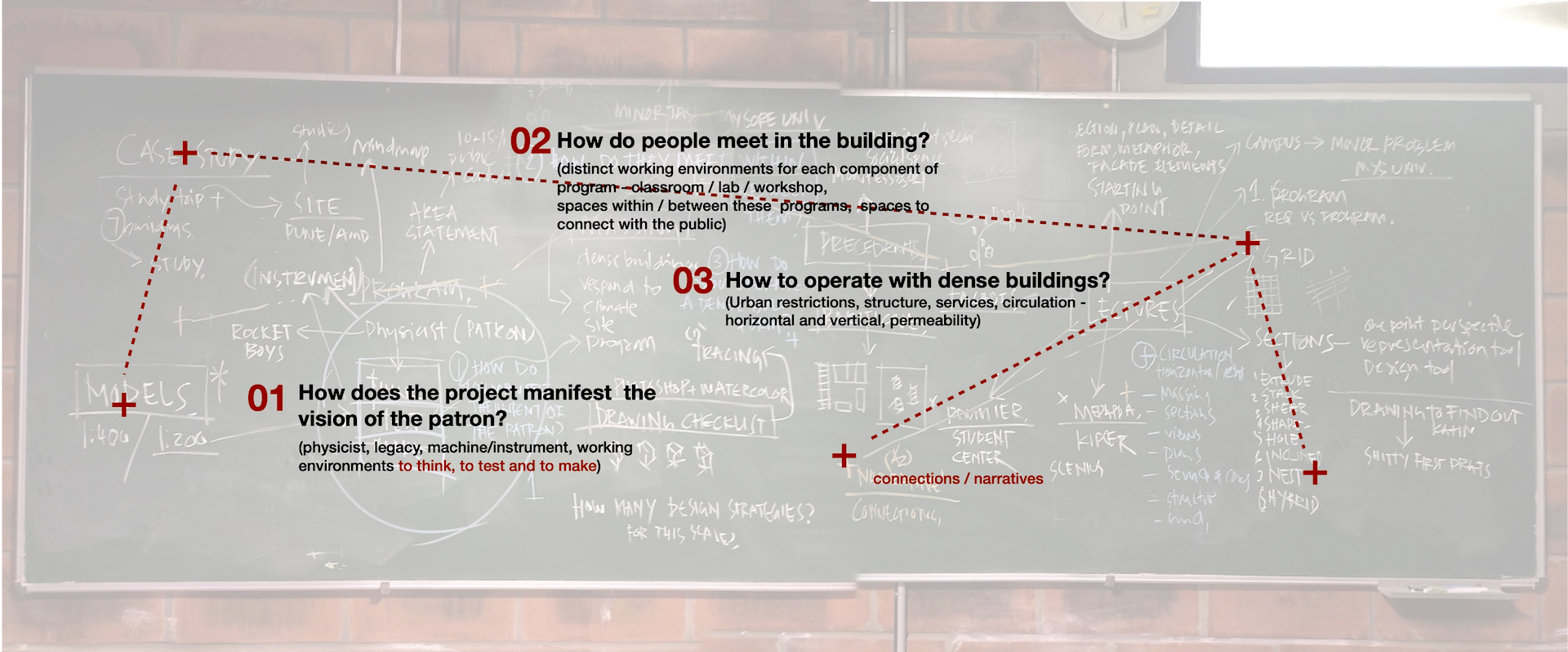
Blackboard – Semester 6, Batch 2020, WCFA, May 2023
Here is the blackboard from a recent AD 06 class. I have discussed this earlier (here and here) on thinking aloud with the blackboard – “It traces the emphasis and the hesitations of the teacher, simultaneously” – This is a ritual i try once in the middle of the semester – taking stock of all the things we discussed in the semester – design brief, precedents, keywords, lectures (internal and external), case studies, assignments, casual references discussed / shared on classroom/whatsApp.
We are in the age of unopened classroom and whatsapp links. In a little survey I made, the probability of a link opened by a student is 2:15. I will give allowance for myself considering the links are not always directly design related. In context of that probability this act becomes a very useful event to first map all the things and make connections between them. It also brought more clarity to me on what are priorities for this semester. Even though what is listed can be overwhelming, i ended with the key question “How many design strategies or clues are required for a certain scale of project?”. Below is the post production of the class discussion as the structured narrative.
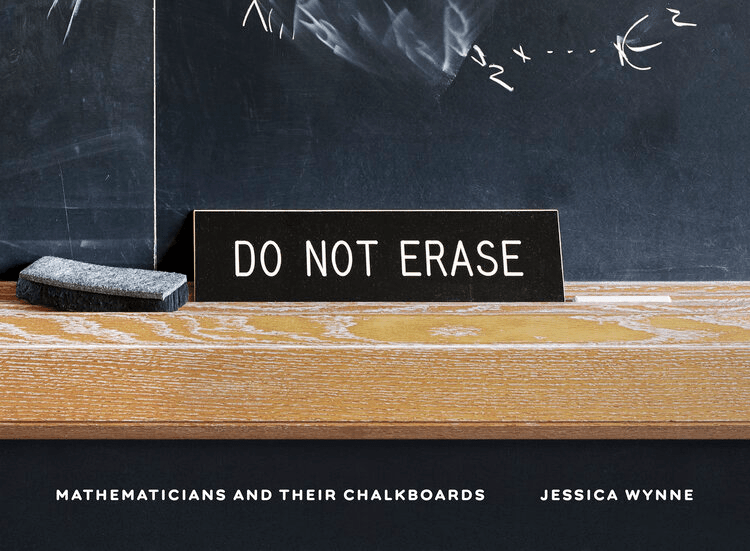
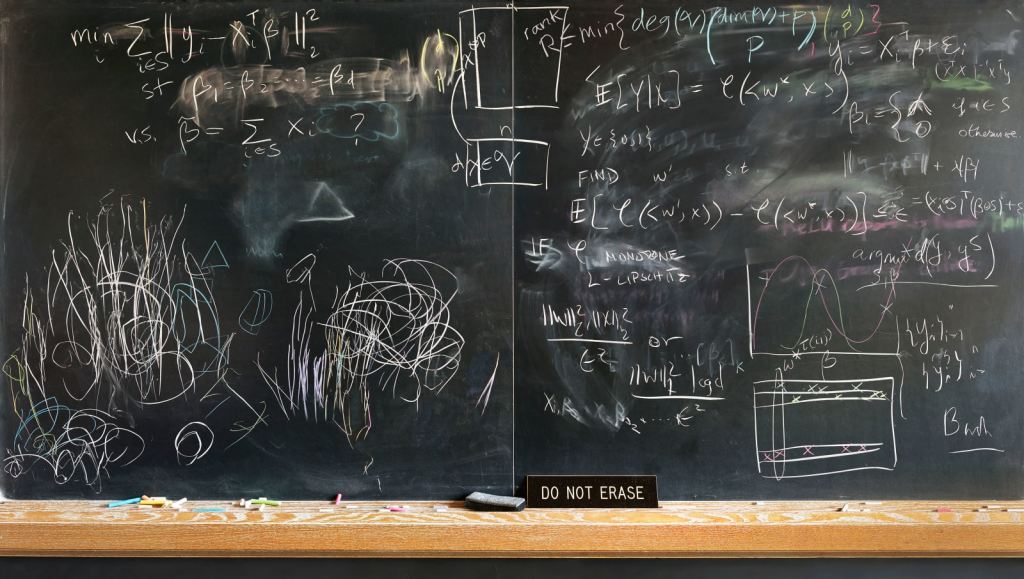
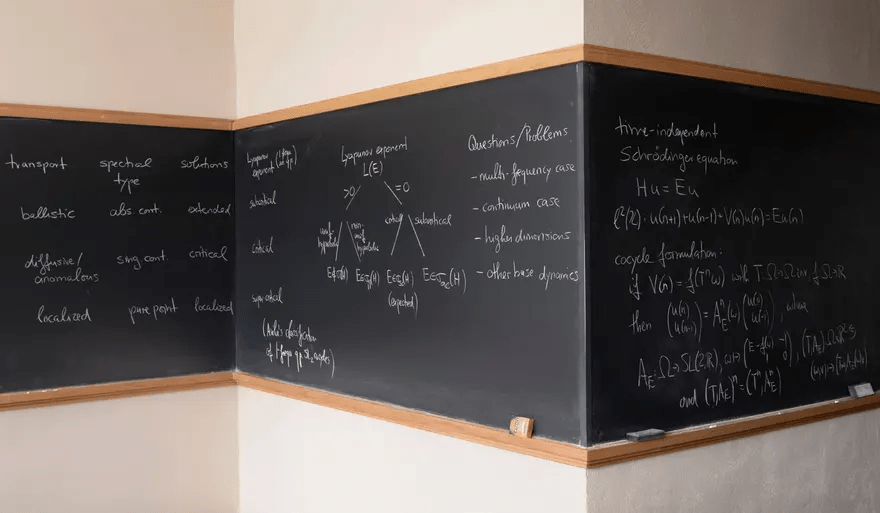
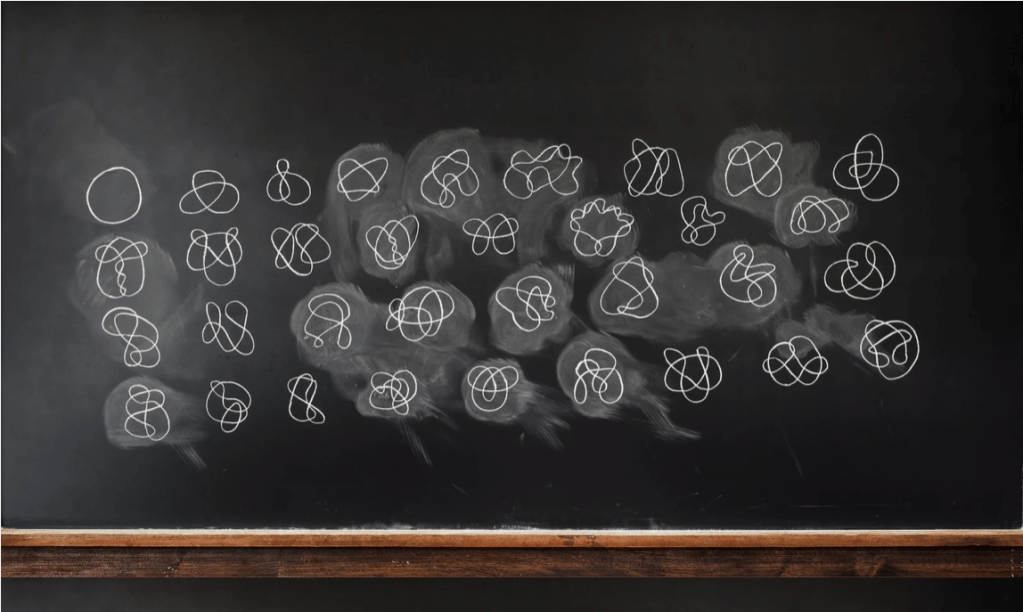
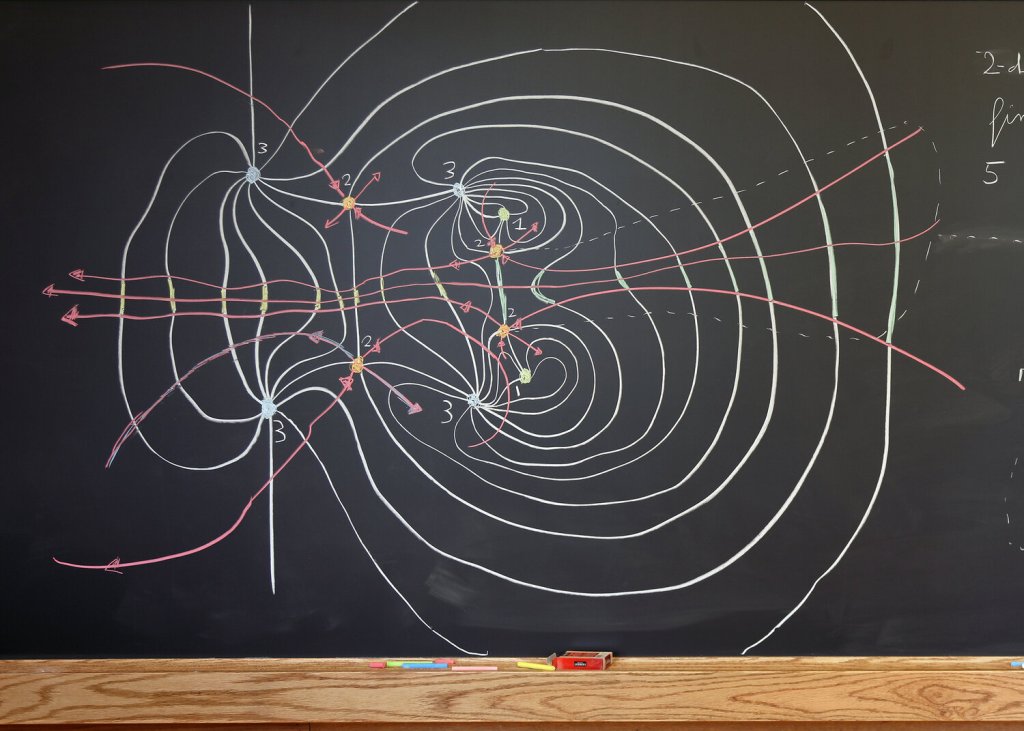
I came across this delightful curation by photographer Jessica Wynnes calledDo Not Erase which “presents remarkable examples of this idea through images of mathematicians’ chalkboards. While other fields have replaced chalkboards with whiteboards and digital presentations, mathematicians remain loyal to chalk for puzzling out their ideas and communicating their research….The photographs are accompanied by essays from each mathematician, reflecting on their work and processes. Together, pictures and words provide an illuminating meditation on the unique relationships among mathematics, art, and creativity… Do Not Erase is a testament to the myriad ways that mathematicians use their chalkboards to reveal the conceptual and visual beauty of their discipline; shapes, figures, formulas, and conjectures created through imagination, argument, and speculation“. (1) “Professor David Damanik, a mathematician at Rice University, who is among those featured, says he uses blackboards to build a narrative. “On the blackboard, it is easier to develop your story and your argument.” (2) Here are some images from the book :
Laura Balzano, University of MichiganDavid Damanik, Rice UniversitySahar Khan, Columbia UniversityHelmut Hofer, Institute for Advanced Study
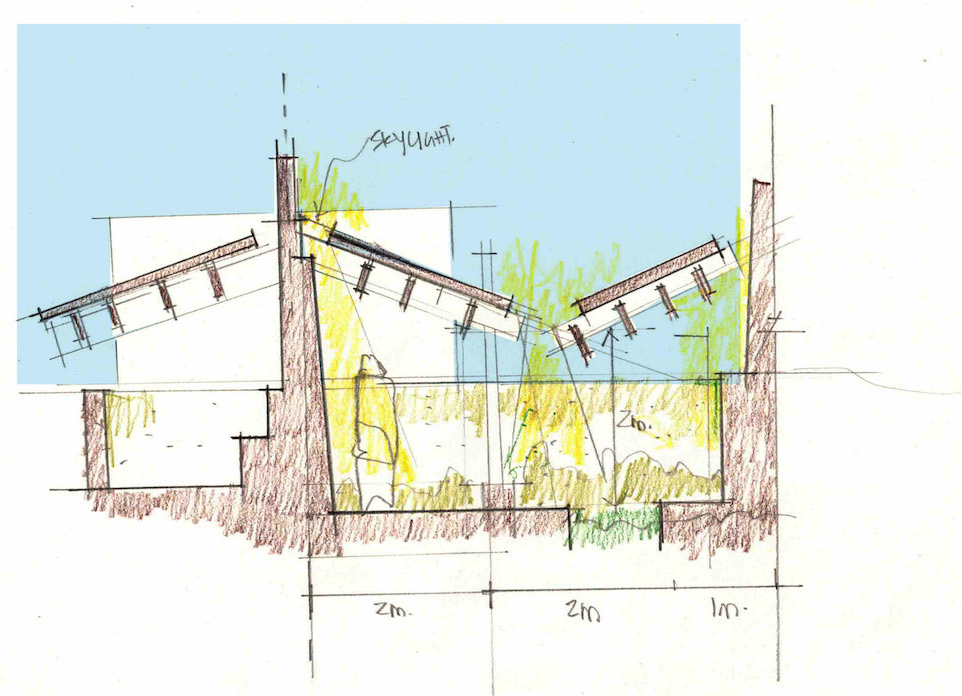
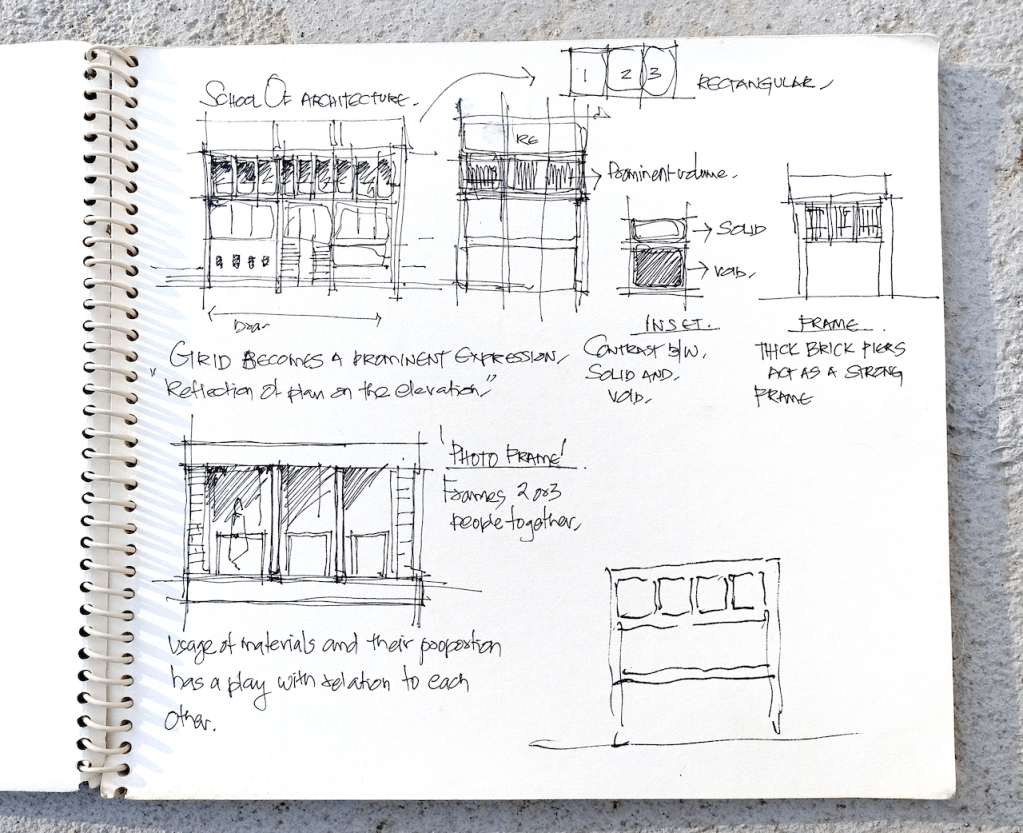
This drawing is from my 2008 sketchbook. It was my first month at CEPT as a post grad student. I was still overwhelmed coming to this new city and esteemed campus. The move from Mysore to Ahmedabad was both exciting and anxious. We were elated that Prof. Doshi will be visiting our design studio. Prof. Snehal Shah was our design studio faculty, who insisted Doshi visit our studio and also teach. We were fortunate he made a few visits to our class at regular intervals from the beginning to the final review. It was also a rare privilege, as this might have been one of his last longer academic engagements being part of a studio. In one of the early classes, to introduce ourselves, he asked to bring sketches to share our interests and skills. This was one of the drawings i showed. I made some sketches of the SA building. It was both an embarrassing and fertile moment for me. Doshi pointed out that only the central grid has 3 frames and and other grids have 4 frames (not 3 as i had drawn!). I also embarrassingly argued with him that there was only was 3 frames even in the other grids. He drew on my notebook (right bottom corner), to explain me. Our studio was also located inside the same SA building . He took me out of the studio and showed the four frames in the building he designed . Now you can imagine how naive and overwhelmed i was then. As a constructive lesson, he upped the assignment for the next class, where we had to measure a part of the CEPT Campus and draft to scale – so we had to be more careful and observant of what we drew. On that day he asked us to pin up the drawings and not say or explain anything. I remember very vividly him saying that, with an impish smile, that our ‘drawings will reveal the background, interests, skills and everything about us’ – without us speaking a word. Drawing a small sketch cross section on a paper, he said one should draw slowly, the skin should feel the scale and profile of the space you are in – and one should sense if the height of the corridor in the section is 2.1 or 2.4 m high – so the scale is both perceived and registered in the drawing.

 mofussillab
You must be logged in to post a comment.